
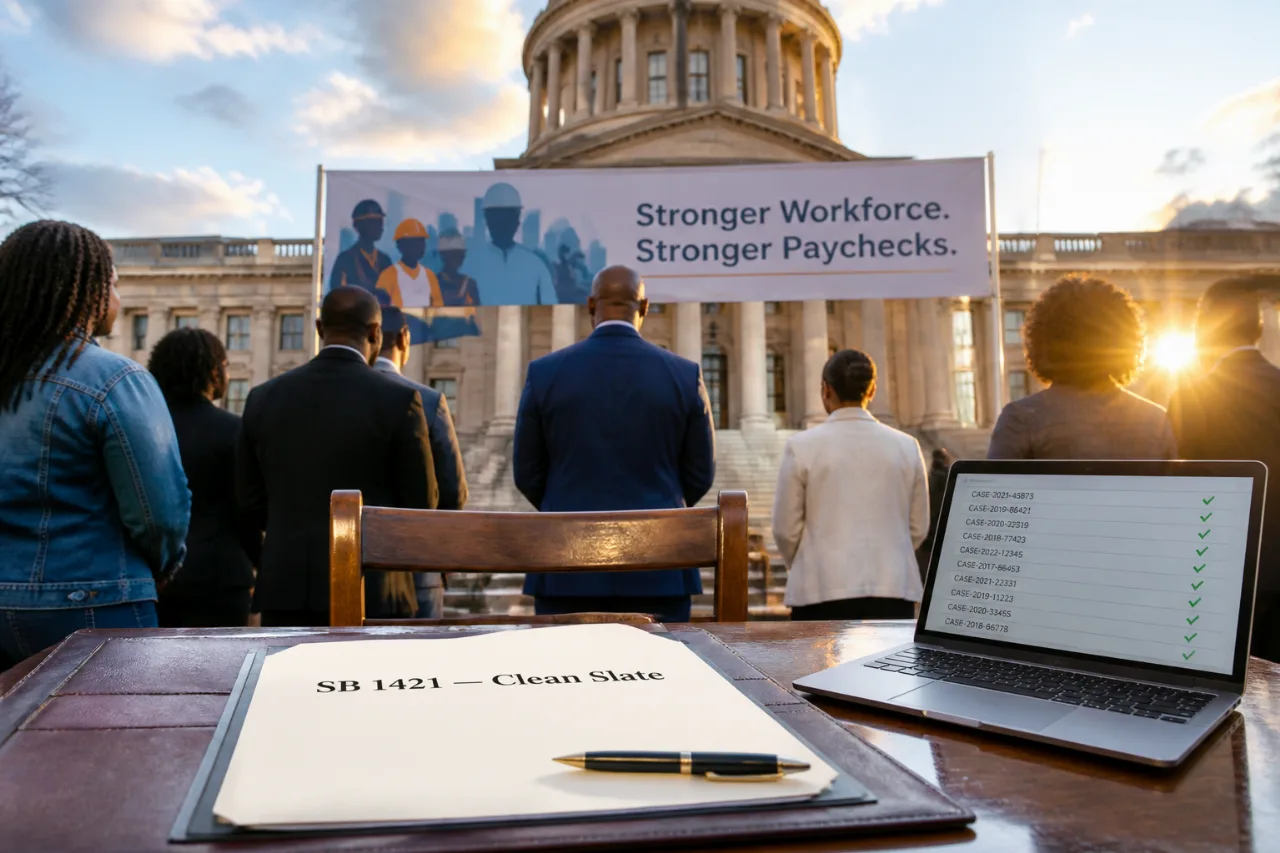
Missouri Gov. Mike Kehoe on July 9 signed SB 1421, a package that includes a bipartisan Clean Slate provision establishing an automated process to identify and clear eligible low-level drug convictions from public records. The measure — advanced with sustained support from employers and business groups — is designed to remove hiring barriers that advocates say have constrained the labor supply.
Business case: workforce relief and wage gains
Business leaders and chambers were prominent supporters of the initiative, arguing that outdated criminal records continue to prevent qualified people from entering the workforce. Organizations pushing the change highlighted Missouri’s labor shortage and modeled the economic effects of easier record relief.
"This reform will help ensure thousands of Missourians get a fair chance to move forward and reenter the labor force — and that's a win for workers, employers, and communities across the state," said Maha Jweied, CEO of the Responsible Business Initiative for Justice.
Advocates estimate the policy could translate into as much as $2.3 billion in higher annual wages statewide by making more people employable. The campaign for the reform spanned several years: more than 20 Missouri businesses and chambers lobbied for the change over a five-year period, according to the bill’s backers.
- SB 1421 includes an automated expungement mechanism for certain low-level drug offenses.
- Supporters say the change addresses procedural barriers that left fewer than 1% of eligible people receiving record relief.
- Backers project an economic upside of $2.3 billion in increased annual wages.
What the law does and who it affects
The new process will automatically flag and expunge qualifying cases without requiring individuals to navigate the traditional, often costly petition process. That aims to help people who otherwise remain disqualified in background checks used by employers, landlords and licensing boards.
Businesses have framed the change as a practical solution to hiring bottlenecks: by clearing long-eligible records from routine checks, employers can consider a broader pool of applicants without altering hiring standards. The law’s framers and supporters emphasize that the policy targets low-level offenses and is limited to those who meet statutory eligibility rules.
| Metric | Figure |
|---|---|
| Advocacy period | 5 years |
| Businesses/chambers involved | More than 20 |
| Estimated annual wage gain | $2.3 billion |
| Share of eligible individuals previously receiving relief | Fewer than 1% |
Legal experts and community groups who supported the measure noted the fairness angle: many people who are legally eligible for clearance never navigate the existing system, leaving lasting employment and housing consequences. By automating the process, the law aims to reduce administrative friction and expand access to relief.
For households and local firms, the immediate impact will appear in hiring pipelines and potentially in wage growth if a meaningful share of newly eligible workers secure jobs or better-paid positions. For employers struggling with vacancies, the law offers another tool to widen recruitment without changing workplace standards. The actual economic outcomes will depend on how quickly the automated system is implemented and how many records meet the eligibility rules.
Implementation details, timelines and administrative costs will determine the speed and scale of the policy’s effects on businesses and workers. Observers will watch whether other states follow Missouri’s example as part of a broader trend toward targeted record-sealing reforms backed by private-sector advocates.