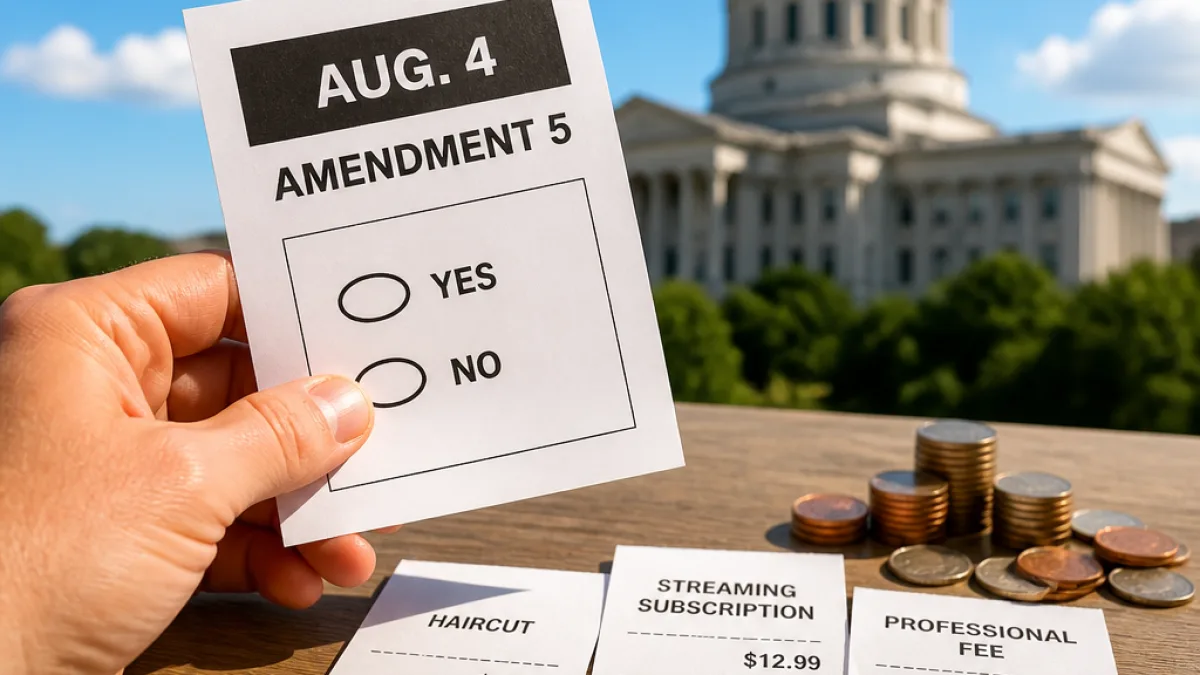
In three weeks, Missouri voters will decide whether to begin dismantling the state income tax under Amendment 5, an effort that would launch up to a 10‑year phaseout of the levy that today funds roughly $9 billion a year in state revenue. Backers say the change modernizes the tax code and gives residents more control over when they pay taxes; opponents warn it would slap new charges on ordinary services and could trigger cuts to state programs.
What the amendment would do
A yes vote on Aug. 4 would start the gradual elimination of Missouri’s income tax. To make up the lost revenue, the state would expand sales and use taxes to cover many services currently untaxed. That could mean sales taxes on a wide range of activities and subscriptions, including digital services and routine professional work.
- Estimated current revenue at stake: about $9 billion annually from the income tax.
- Services likely to be taxed: subscriptions, personal care (for example, haircuts), professional services (veterinarians, HVAC and plumbing), and other service categories under consideration.
- Phaseout timeline: up to 10 years, starting if voters approve the amendment.
Arguments from both sides
Supporters argue the plan shifts taxation from income to consumption, which they say is fairer and more predictable. Camellia Peterson of Americans for Prosperity – Missouri has told audiences across the state that the wealthy currently exploit income‑tax loopholes and that aligning taxes with spending would ease the burden on working families.
“The wealthy who are able to take advantage of all of the income tax loopholes…They're not paying sales tax on a lot of the services and luxury items that they use, so this really spreads that burden out more and gives working Missourians a break and more money in their own pockets.”
Opponents counter that the change is, in their words, a “tax swap” that would disproportionately affect seniors and lower‑income residents who rely on services and subscriptions that would become taxable. Critics also warn that the switch could create funding gaps for programs that now rely on income‑tax dollars.
“It's not a tax cut, it's a tax swap… I call it the everything tax because it'll be just about everything.”
Practical impact and unanswered questions
Supporters contend sales tax rates wouldn’t necessarily rise if the amendment passes; instead, the tax base would broaden. Opponents worry that some residents — including seniors who do not pay income tax on Social Security — would end up paying more through expanded sales taxes.
| Current tax | Potential changes under Amendment 5 |
|---|---|
| State income tax | Phased out over up to 10 years |
| Sales and use tax | Expanded to include many services and subscriptions |
The campaign over Amendment 5 is intensifying in the final weeks before voters head to the polls. Residents preparing to cast ballots should consider how the proposal would change when and how they pay taxes and watch for campaign materials explaining specific services that could become taxable.
For Missourians, the outcome will shape the state’s revenue model and could influence long‑term budget decisions, business recruitment and household budgets. The measure’s broad scope — and the long phaseout period — means changes would unfold over years, not overnight, but the initial vote on Aug. 4 will set that process in motion.