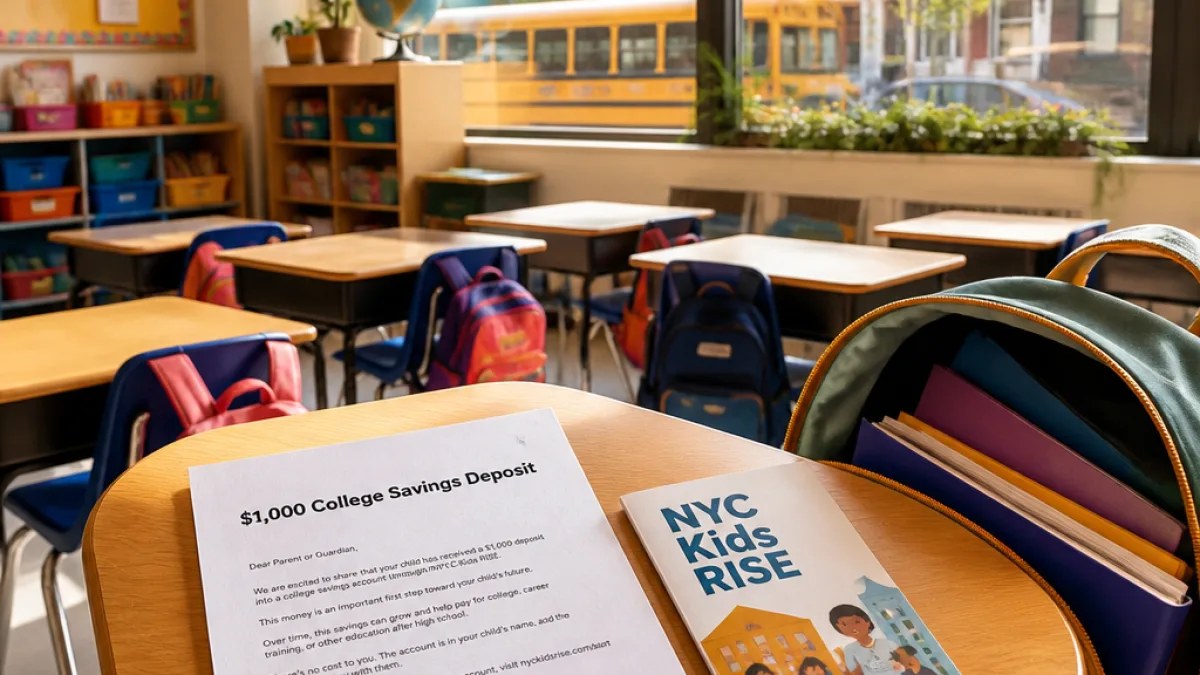
New York City will place $1,000 into college savings accounts for every child who enters kindergarten in the public school system as part of the city’s newly adopted $125.8 billion budget, city officials announced. The program expands an existing initiative and is slated to automatically enroll nearly all students in kindergarten unless families choose to opt out.
What the program does and who is eligible
The deposit is an expansion of NYC Kids RISE, which previously credited students with $100 at the start of kindergarten. Under the new plan, every public school kindergartner in New York City — home to the nation’s largest school district with nearly 900,000 students — will receive a $1,000 seed contribution to a college savings account that families can use for tuition at four-year colleges, community colleges or vocational schools.
- Automatic enrollment for public school kindergarten students, with an opt-out option for parents.
- Funds are held in a college-style savings account similar to a 529 plan; families may add money over time.
- Intended to compound over the student’s pre-college years; officials and some analysts cite projected growth.
City leaders and the equity argument
Mayor Zohran Mamdani and City Council leaders put the program forward as part of a broader affordability agenda. City Council Speaker Julie Menin called it the largest program of its kind in the country and framed the investment as a tool to reduce intergenerational wealth gaps.
"This is simply one of the most effective ways we can truly address income inequality," Council Speaker Julie Menin said at a news conference announcing the measure.
City officials highlight that a one-time $1,000 contribution, even without additional family deposits, could appreciate over 12 years. Some analysts cited by city discussions estimate that the initial deposit could grow to about $2,800 by the time a child reaches college-aged enrollment, depending on market returns and account fees.
Questions and limits raised by experts
Despite the program’s promise, experts and advocates caution against overstating its financial impact. Postsecondary costs vary widely across institutions and regions, and modern college tuition can exceed what a compounding $1,000 will cover. Observers point out that while the seed money may encourage saving and a college-going mindset, it is unlikely on its own to close the gap on rising higher education costs.
Supporters contend the universal nature of the program — no means test and automatic enrollment — may produce broader behavioral and informational benefits, particularly for families with less experience navigating college finance. Critics urge pairing the seed accounts with outreach, financial education and additional subsidies to make a meaningful dent in affordability.
Local implications and next steps
Implementation details remain important for parents and schools: how accounts are managed, what fees apply, what outreach will be provided, and how families can contribute or withdraw funds. The city will need to establish administrative systems to enroll students, notify families and coordinate with existing 529-type platforms.
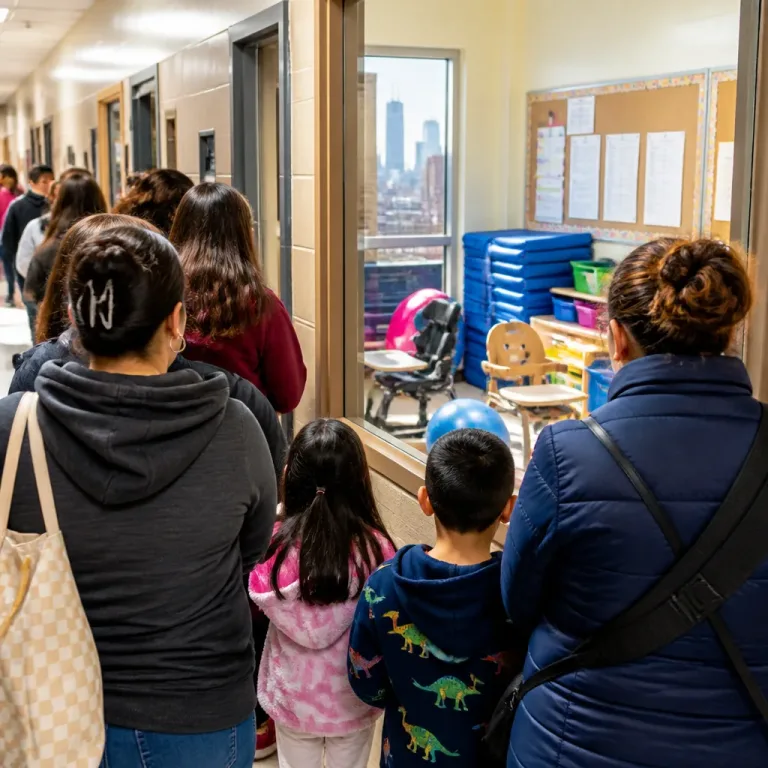
For many New York families, especially those balancing tight budgets, the program represents a tangible city investment in a child’s future. Whether that initial $1,000 translates into significantly greater college access will depend on how the city builds on this start with education, supplemental supports and community engagement over the next decade.