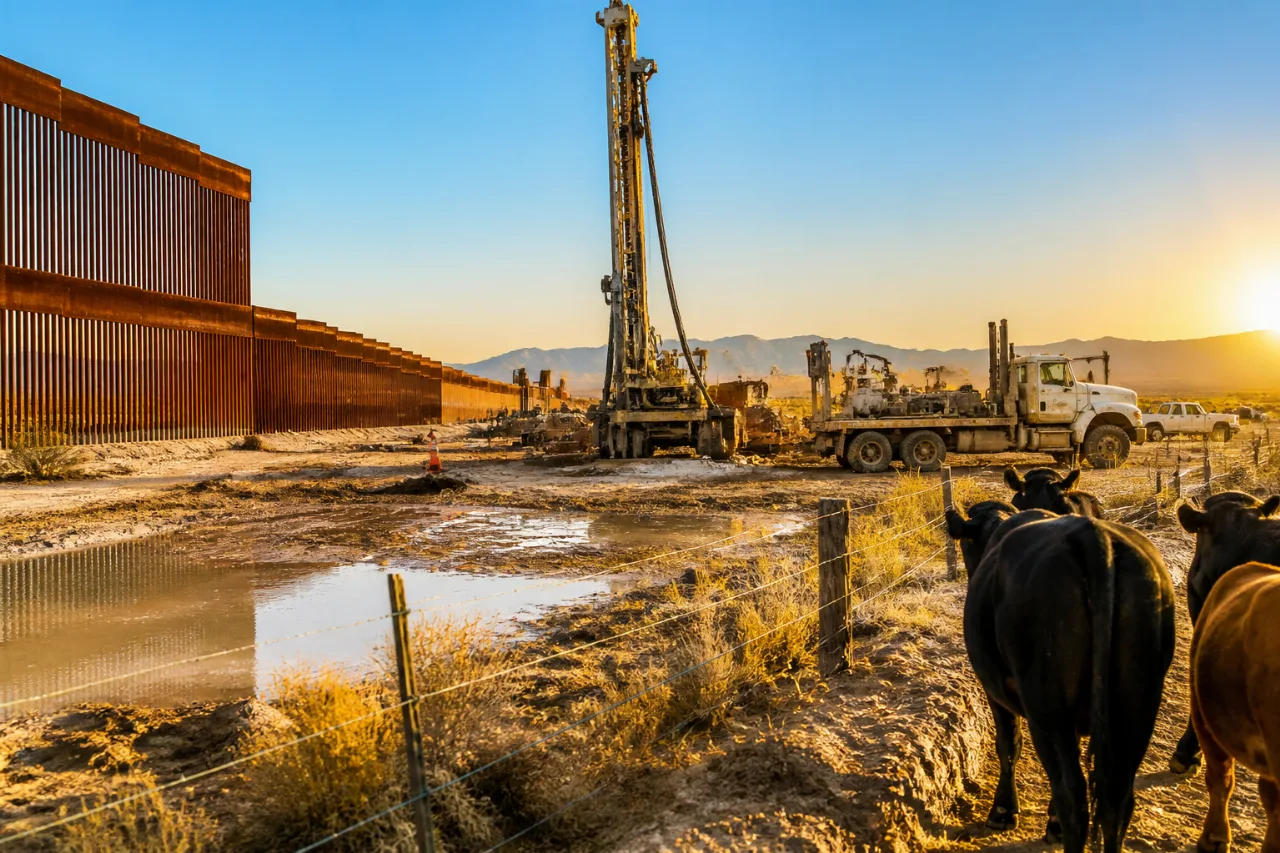
Federal contractors working on the Trump administration’s border wall have drilled groundwater wells along the U.S.-Mexico border without securing required New Mexico permits, state officials said, a move that local ranchers warn could threaten scarce water supplies during a severe drought.
Local growers and ranchers raise alarm
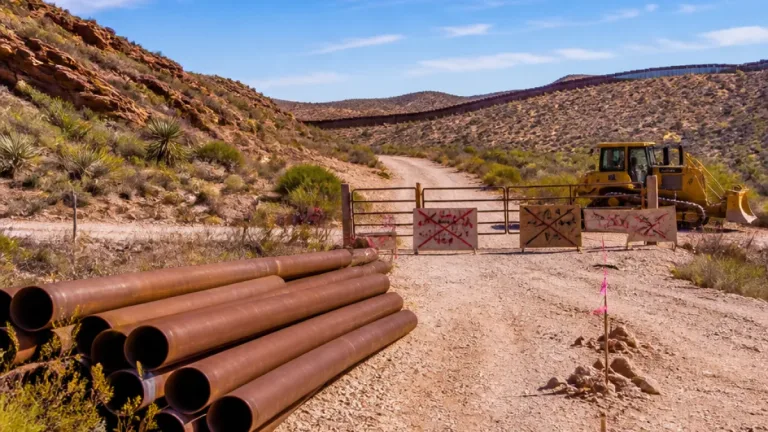
The New Mexico Office of the State Engineer told public radio that it counted at least six wells under development along the border and that none had the state permits normally required for groundwater extraction. The wells are associated with construction of a new double wall intended to supplement existing barriers.
One well is on the ranch of Russell Johnson, whose property in Luna County shares about 8.5 miles of border with Mexico. Johnson said crews were drilling on his land and appeared to have struck water.
"That's where they're currently drilling right now. It looks like they’ve hit water, too," Johnson said. "These wells that they’re drilling for border wall construction, they’re talking about trying to attain 300-plus gallons a minute, and it’s going to pump us dry."
Johnson, president of the Luna County Farm and Livestock Bureau, said more than 160 people attended a recent community meeting in Deming to voice concern about the work. He said another well is near completion on a neighbor’s ranch. He relies on a natural spring for household and livestock needs and said hauling water would not be a viable long-term substitute.
Context: drought and groundwater in New Mexico
A sustained western drought has stressed water supplies statewide. Groundwater accounts for more than half of New Mexico’s water use, and many wells are already exhibiting reduced yields, according to local accounts cited by residents and officials. Contractors have used groundwater on-site to mix cement for wall construction, prompting additional concerns about local depletion.
Borderlands biologist Myles Traphagen, who has monitored border-wall construction activities since the project began in the prior administration, reported identifying six wells along a 27-mile stretch of construction in Arizona. State officials’ counts and Traphagen’s observations together suggest multiple extraction sites have been opened or are being developed in the border region.
- At least six wells under development, according to state officials.
- One affected property: a Luna County ranch sharing 8.5 miles of international border.
- Reported construction stretch observed: 27 miles (Arizona, per a biologist monitoring the build).
| Item | Reported figure |
|---|---|
| Wells under development (state count) | 6 |
| Border length shared by Johnson’s ranch | 8.5 miles |
| Construction stretch monitored (Arizona) | 27 miles |
The State Engineer’s office enforces permitting for new groundwater wells and manages aquifer resources. Officials have said the wells in question did not have the necessary state permits, but the office has not publicly detailed enforcement actions or next steps.
What’s at stake
For ranchers like Johnson, the immediate concern is water for cattle and household use. He and other residents warned that high-capacity pumping — for example figures mentioned by locals as "300-plus gallons a minute" — could rapidly lower water levels in springs and shallow wells they depend on.
The issue also raises broader policy questions for New Mexico: how state water regulations are applied when the federal government undertakes construction on federal land at the border, and how to balance infrastructure projects with long-term aquifer sustainability amid climate-driven drought.
State and federal agencies did not release detailed comment in the materials reviewed, and it is unclear whether any permits will be sought retroactively or whether mitigation measures will be taken to protect local water users.
As construction continues, Luna County and border communities are watching for formal actions from the Office of the State Engineer and for any federal response to questions about water use and permitting.