
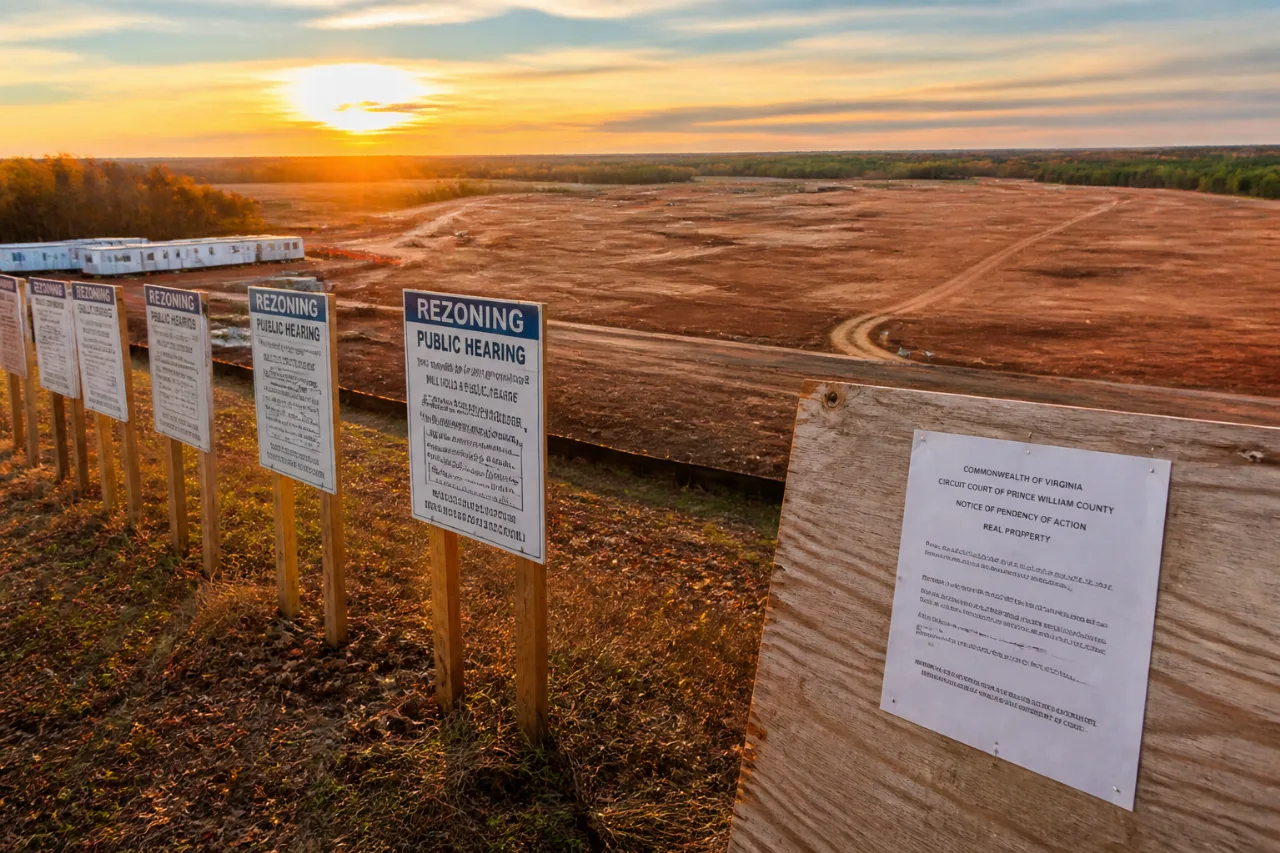
Plans to build one of the world's largest data-center campuses in Prince William County collapsed this week after the developer withdrew its final appeal following a prolonged legal battle. The project, spearheaded by QTS, a company owned by investment giant Blackstone, had envisioned developing roughly 2,100 acres—about twice the size of New York's Central Park—into a sprawling digital campus.
How the project unraveled
County and court records show the turning point came when a judge found the county did not comply with required public-notice procedures during the rezoning process that would have allowed the development. Opponents, including local residents and historians, had challenged the approval on those procedural grounds. With the court rebuke standing, QTS opted to end its pursuit rather than continue litigation.
The decision marks a rare but significant setback in a region that has aggressively courted data-center investment for years. Northern Virginia accounts for a substantial share of global capacity and has become the obvious location for projects that serve cloud computing, streaming services and the rapid expansion of artificial intelligence.
What the numbers show
State and industry figures underline why the site attracted corporate interest in the first place:
- 13% — the share of global operational data-center capacity Northern Virginia represents, according to a state legislative review.
- 25% — the portion of U.S. and Americas capacity concentrated in the region.
- 371 operating data centers listed in an industry database for Virginia, with 421 planned projects.
| Metric | Figure |
|---|---|
| Proposed campus size | 2,100 acres |
| Northern Virginia share of global capacity | 13% |
| Share of Americas capacity | 25% |
| Operating facilities in Virginia (industry list) | 371 |
| Planned projects in Virginia (industry list) | 421 |
Local impact and broader implications
For Prince William County residents and officials, the episode highlights tensions that have accompanied the region's rapid rise as a data-hub. Local concerns ranged from traffic and visual impacts to the preservation of historically significant land. The court's decision focused not on the merits of those concerns but on the county's failure to follow statutory notice rules during rezoning — a technical but consequential shortcoming.
Statewide, the outcome could influence how counties and companies approach future proposals. Virginia's long-standing incentives, robust fiber infrastructure and abundant power have made it a global magnet for server farms and network hubs, especially with surging demand driven by artificial intelligence. Yet the Prince William case demonstrates that community pushback and procedural missteps can halt even the largest projects.
Officials in other jurisdictions watching Virginia's data growth may take away two clear lessons: the economic promise of big data projects comes with local responsibilities, and strict adherence to public-notice and rezoning rules is essential if approvals are to withstand legal challenge. Developers, meanwhile, will need to factor in both local sentiment and the legal pathway when planning future campuses.
As Northern Virginia continues to host a dense cluster of data-center infrastructure, the fate of the Prince William proposal is a reminder that expansion is not automatic. The state retains advantages that attract investment, but this episode illustrates the friction that can arise when land-use decisions collide with community preservation and judicial review.
For residents wondering what comes next, county officials would be the first point of contact for any new applications or revised proposals. Any future developer would face the same statutory notice requirements that proved decisive in this case.