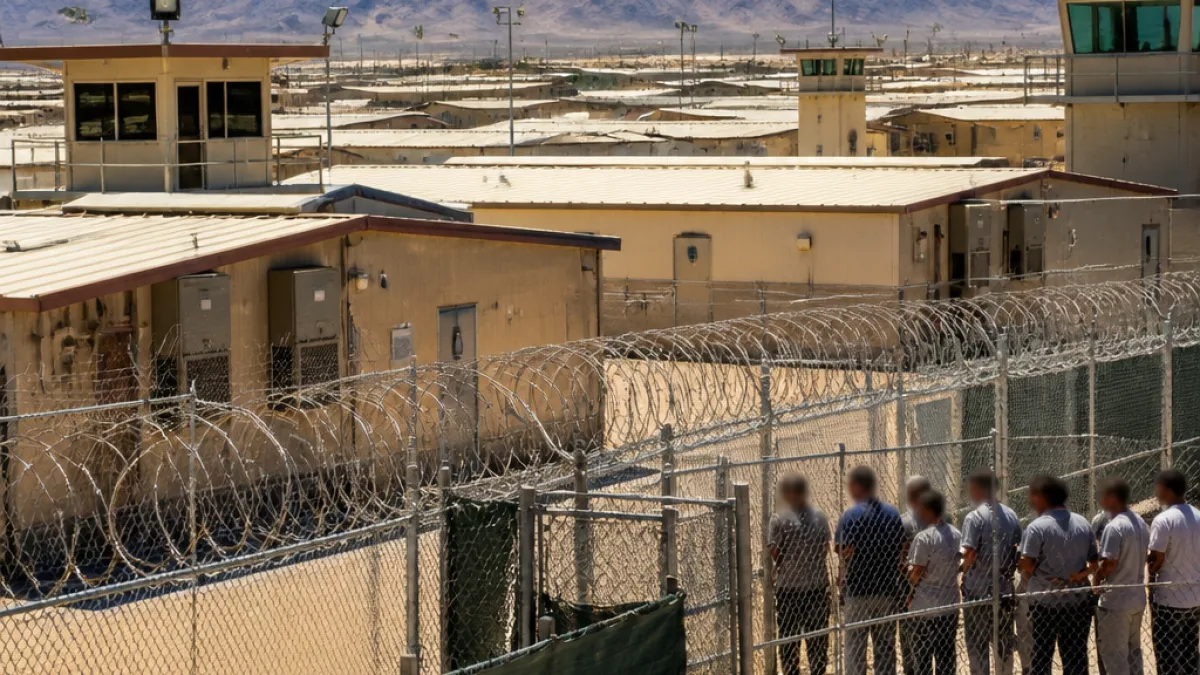
Two national civil rights organizations have released a report saying detainees at the largest immigration detention center in the country — Camp East Montana at Fort Bliss in El Paso — described routine beatings by guards, chronic malnutrition, unsanitary conditions and limited access to lawyers and family.
Allegations and response
The team from Human Rights Watch and the American Civil Liberties Union based their findings on interviews with 80 people held at the facility, according to the report released Wednesday. The organizations said the testimonies, when taken together, show patterns of conduct that violate U.S. and international human rights protections.
In a statement responding to the report, the Department of Homeland Security called the allegations "categorically false," saying detainees receive meals, water, medical treatment and opportunities to communicate with family members and attorneys. ICE said no detainees are being beaten or abused and that the agency takes detainee safety and health seriously.
Personal accounts and prior scrutiny
The report includes individual accounts of severe distress. One detainee identified as a 28-year-old Honduran man described prolonged depressive episodes and suicidal thoughts during more than five months in detention.
"I sometimes look at my bed sheets, and I wonder if it would be easier to hang myself instead of trying to survive this torture," the detainee was quoted as saying.
Advocates have raised concerns about Camp East Montana before. A recent federal watchdog review cited failures to issue use-of-force reports, instances in which medication was not provided to seriously ill detainees and rushed contracting that wasted taxpayer dollars, the groups noted.
Why this matters for El Paso and Texas
The facility at Fort Bliss is the largest immigration detention center in the United States, making any systemic problems there significant for detention policy statewide and nationally. Allegations of abuse and denial of care trigger legal, medical and oversight questions that could prompt investigations, litigation and calls for changes to detention practice.
- Scope: Report based on interviews with 80 detainees.
- Location: Camp East Montana, Fort Bliss, El Paso.
- Concerns noted: Alleged beatings, malnutrition, unsanitary conditions, restricted contact with counsel and family, and withheld medical care.
Federal agencies have responsibilities under both domestic law and international treaties to ensure humane treatment of people in custody. If the allegations are substantiated through independent oversight or legal proceedings, they could prompt policy changes at ICE and within the Department of Homeland Security.
| Detail | Reported figure |
|---|---|
| Number of interviews | 80 |
| Age of quoted detainee | 28 |
| Length of detention cited | More than five months |
Local authorities and advocacy groups in El Paso are likely to watch how federal officials respond. The report places pressure on oversight bodies to verify conditions, review use-of-force documentation and examine medical provisioning at the site.
Officials with the Department of Homeland Security and ICE have denied the report's core allegations. The next steps may include requests for access by independent monitors, congressional attention, or legal filings by detainees or advocacy organizations seeking inspections, medical records or redress.
The allegations at Camp East Montana underscore longstanding tensions around immigration detention in Texas, where large facilities and high detention populations have repeatedly drawn scrutiny from legal, medical and civil rights observers.