Riverside area motorists were placed on alert early Friday after the National Weather Service issued an updated dust advisory that included parts of Riverside County and nearby desert communities.
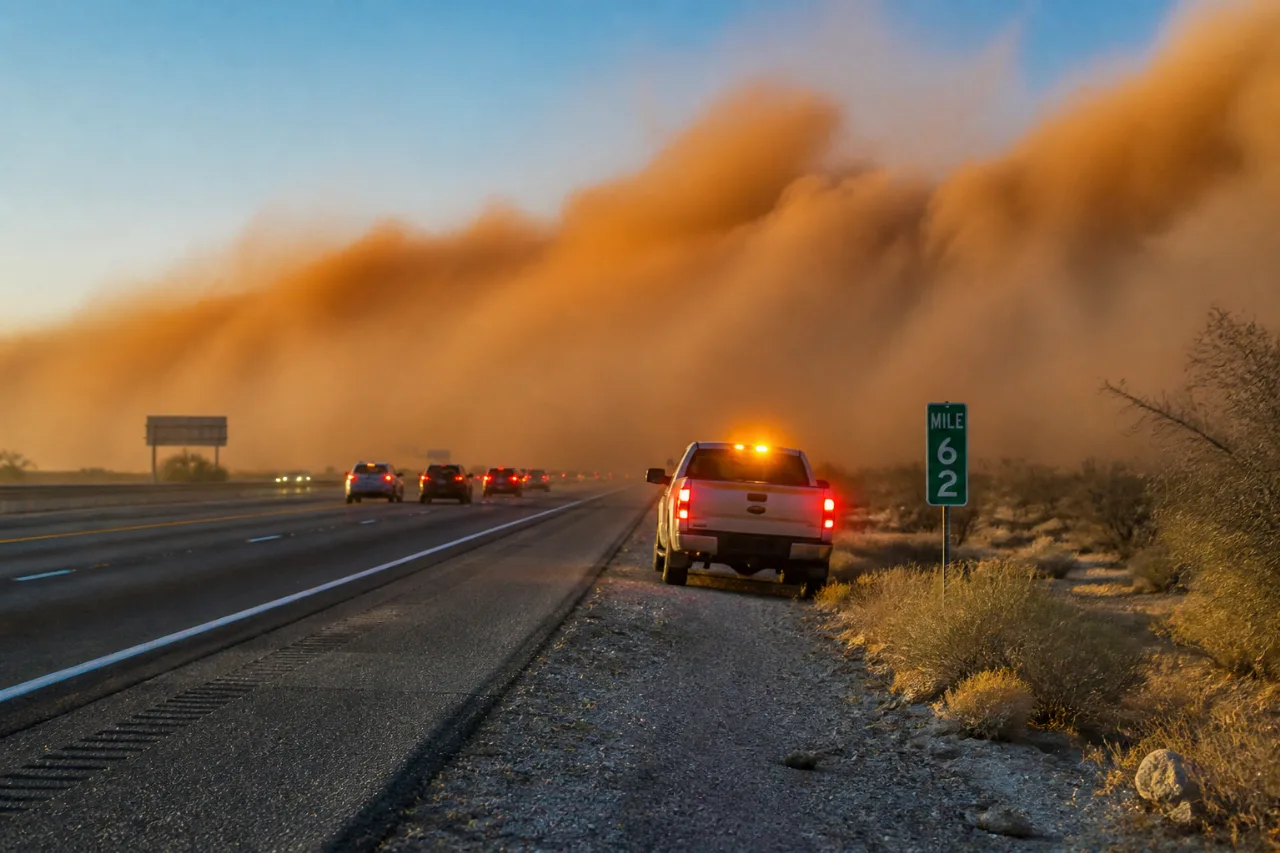
The advisory, released by the NWS Phoenix office at 3:27 a.m., covered a brief but hazardous period in the pre-dawn hours. The agency reported a fast-moving wall of dust tracking through the region and warned of sharply reduced visibility and dangerous driving conditions.
What residents need to know
The NWS described the dust as moving at roughly 35 mph along a line stretching from near Palo Verde east toward Blythe. The advisory window was limited; officials said it was in effect until about 4:30 a.m. Friday. Still, the agency stressed that even short-lived dust events can create immediate hazards on highways.
- Affected areas include eastern Riverside County near the Colorado River corridor and adjacent desert communities.
- Highway segments in the advisory include portions of Interstate 10 and Interstate 8.
- If caught in dense blowing dust, drivers are advised to pull off the roadway and keep lights and brakes off until visibility improves.
“Blowing dust brings reduced visibility, leading to dangerous driving conditions. If driving, avoid blowing dust if possible. If caught in dense blowing dust, pull off the road, turn off your lights and keep your foot off the brake.”
Roadways listed in the advisory
The NWS specified the following interstate segments as impacted during the advisory period:
| Highway | Mile markers |
|---|---|
| CA Interstate 10 | 123–156 |
| AZ Interstate 10 | 1–7 |
| AZ Interstate 8 | 1–12 |
Local drivers who travel the eastern reaches of I‑10 — including commuters, commercial vehicles and recreational traffic headed toward the Colorado River and desert recreation areas — should be particularly alert to rapidly changing visibility during dust events.
Local context and safety
Short-duration dust storms, sometimes called haboobs, are not uncommon in Riverside County’s desert and river corridor areas, especially in summer. They can form quickly and travel fast, often producing conditions severe enough to cause multi-vehicle collisions and roadway closures.
The NWS recommends that drivers avoid travel through blowing dust when possible. If visibility collapses, motorists should pull completely off the pavement, set the parking brake, turn off vehicle lights and keep their foot off the brake to avoid being rear-ended by other vehicles. For continuous updates and further local advisories, residents can check the National Weather Service and the county’s official weather advisory channels.