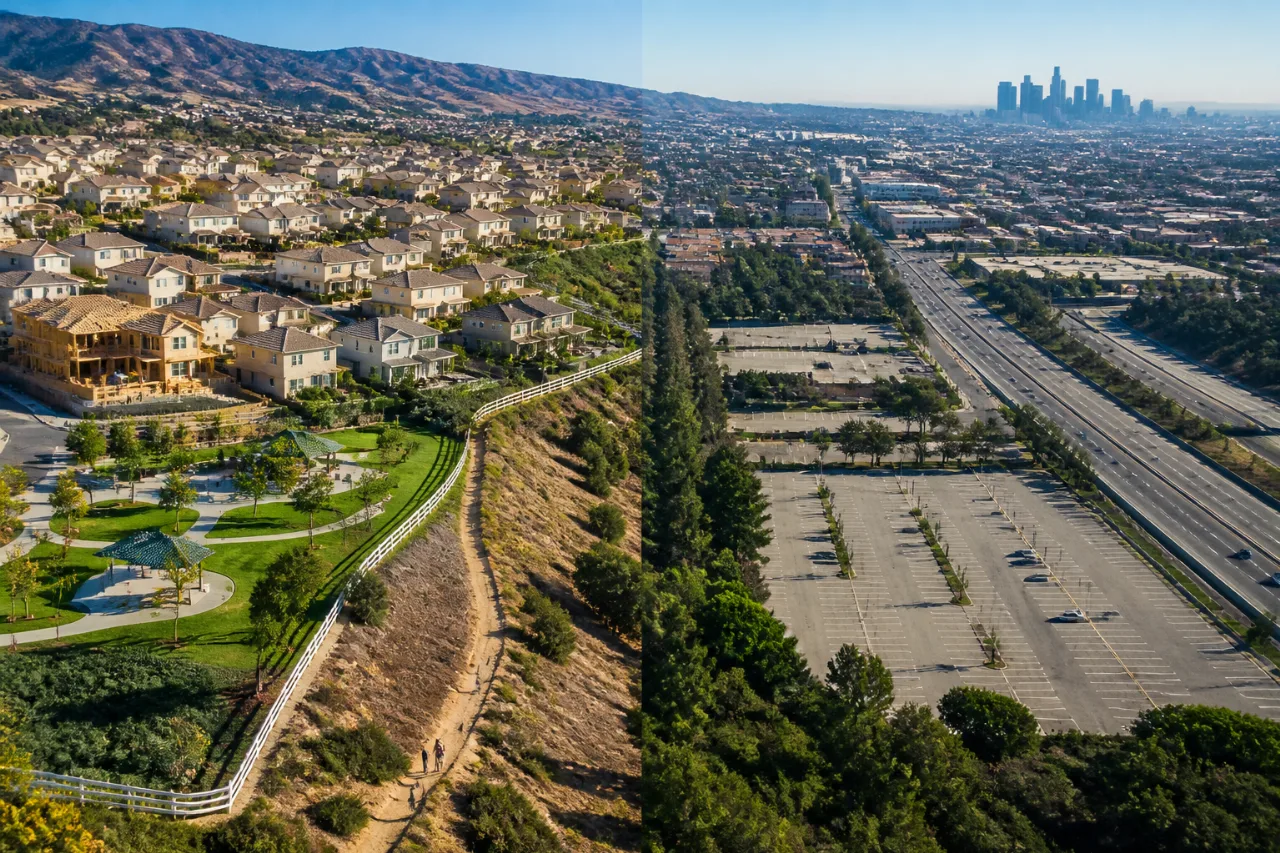
Santa Clarita, about 45 miles north of downtown Los Angeles, is bucking a countywide trend: while Los Angeles County lost 54,000 people between July 2024 and July 2025, the city has continued to grow, according to an analysis by the Los Angeles Times.
What the numbers show
The Times, citing U.S. Census figures and reporting by Terry Castleman, found that Santa Clarita’s population rose substantially over the past decade and a half. From 2010 through 2024, the city’s population increased roughly 33%, a rate far higher than most of the county.
But the increase carries nuance: data for the Newhall census county division, which includes greater parts of the Santa Clarita Valley and surrounding unincorporated areas, rose only about 9% over the same period. That suggests a significant portion of the city’s growth came from bringing nearby unincorporated residents into municipal boundaries, as well as new residential development within the city.
| Area | Change (2010–2024) |
|---|---|
| Santa Clarita (city) | +33% |
| Newhall census division | +9% |
How residents are feeling the change
City leaders say growth has produced both benefits and strains. Santa Clarita has added recreational amenities and protected open land to keep pace with newcomers. Officials note the city has built 43 parks and acquired about 16,000 acres of open space as part of efforts to manage growth.
"Shocker. Where else are you gonna find a place [like this]? It’s a lot of fun to live here," Santa Clarita Mayor Laurene Weste told the Los Angeles Times.
At the same time, Mayor Weste and city officials report pressure from the state to approve more housing. That tension is familiar across the region as cities wrestle with state housing mandates, zoning changes and the need for infrastructure investments.
Local consequences and issues to watch
For Los Angeles County residents and policymakers, the Santa Clarita example highlights several dynamics:
- Growth can be concentrated in suburbs with available land for development while other parts of the county lose population.
- Annexation and the incorporation of nearby unincorporated communities can amplify a city's reported gains.
- Rapid expansion increases demand for parks, open space preservation and public services, prompting local fiscal and planning responses.
The Los Angeles Times analysis and Castleman’s reporting do not suggest the countywide population decline is reversing; rather, they show that growth patterns vary sharply within the region. For Los Angeles-area residents, the Santa Clarita case will be one to watch as cities respond to state housing expectations and manage land use, infrastructure and service demands tied to population shifts.
Reporting for this article relied on analysis and reporting published by the Los Angeles Times and reporting by Terry Castleman on demographic trends in the region.