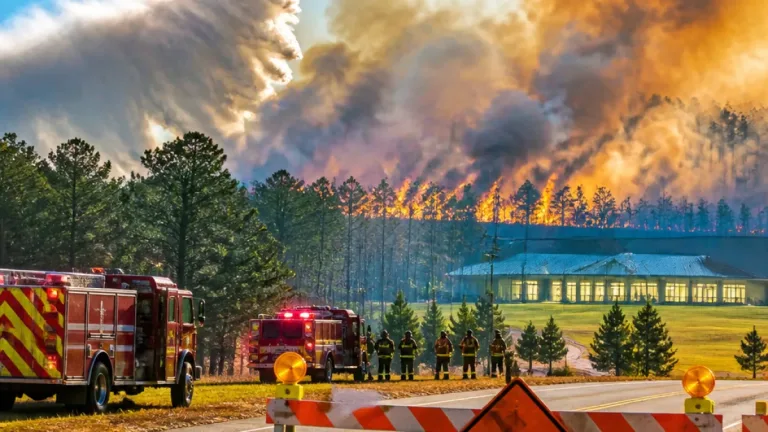
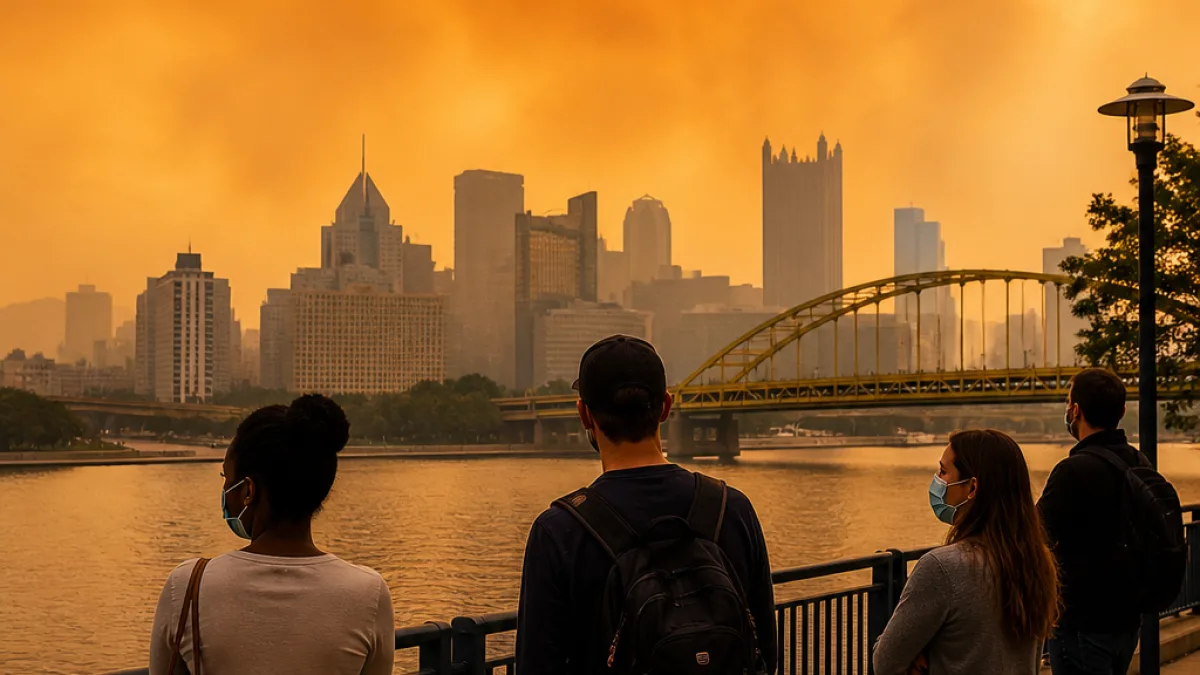
State officials issued a Code Red Air Quality Alert for all of Western Pennsylvania for Thursday as smoke from dozens of wildfires in northern Minnesota and southern Canada drifts into the region, lowering visibility and degrading air quality.
What to expect
Forecasters say the smoke will initially remain aloft and may create a hazy sun, but there is a strong possibility that smoke will settle to near-surface levels Thursday and Friday, producing an orange haze and poor air quality. The Pennsylvania Department of Environmental Protection is urging residents to curb outdoor activities while the alert is in effect.
Who should take extra care
The DEP specifically singled out children, older adults and people with respiratory conditions as groups that should avoid long or strenuous outdoor activity and consider moving planned activities indoors until conditions improve.
- Limit outdoor exertion: Reduce or postpone prolonged or intense outdoor activities.
- Protect vulnerable people: Children, seniors and those with lung or heart disease should stay inside when possible.
- Reduce additional pollution: Avoid gas-powered lawn equipment, wood-burning stoves or fireplaces, and open burning of leaves or trash.
Local impact and context
The guidance affects municipalities across multiple counties in the western part of the commonwealth, including metropolitan areas that routinely monitor air quality for public health advisories. Health officials often see increases in complaints of respiratory irritation and higher use of rescue inhalers when fine particulate matter rises. The alert reflects mounting smoke transported hundreds of miles by prevailing winds from active wildfire zones.
| Day | Expected conditions | Recommended action |
|---|---|---|
| Thursday | Hazy sun; smoke moving into region; possible near-surface smoke | Limit outdoor activities; vulnerable groups avoid prolonged exertion |
| Friday | Continued chance of lower-level smoke; reduced visibility; poor air quality | Keep activities indoors; reduce local sources of fine particles |
The DEP also encouraged actions residents can take to minimize contributions to fine particulate pollution, such as avoiding gas-powered lawn and garden equipment, cutting back on fireplace and wood-stove use and refraining from open burning of debris.
Local media outlets, including WPXI, are providing updates and alerting subscribers through news apps as conditions evolve. Residents should check official DEP air-quality tools and local public-health advisories for changes to the alert.
This advisory illustrates how large, distant wildfires can produce public-health hazards across state lines by transporting smoke and fine particles. Western Pennsylvania communities should prepare for short-term air-quality impacts and take steps to protect those most at risk until the smoke clears.