Proposal examined for reducing animal-vehicle collisions and protecting habitat
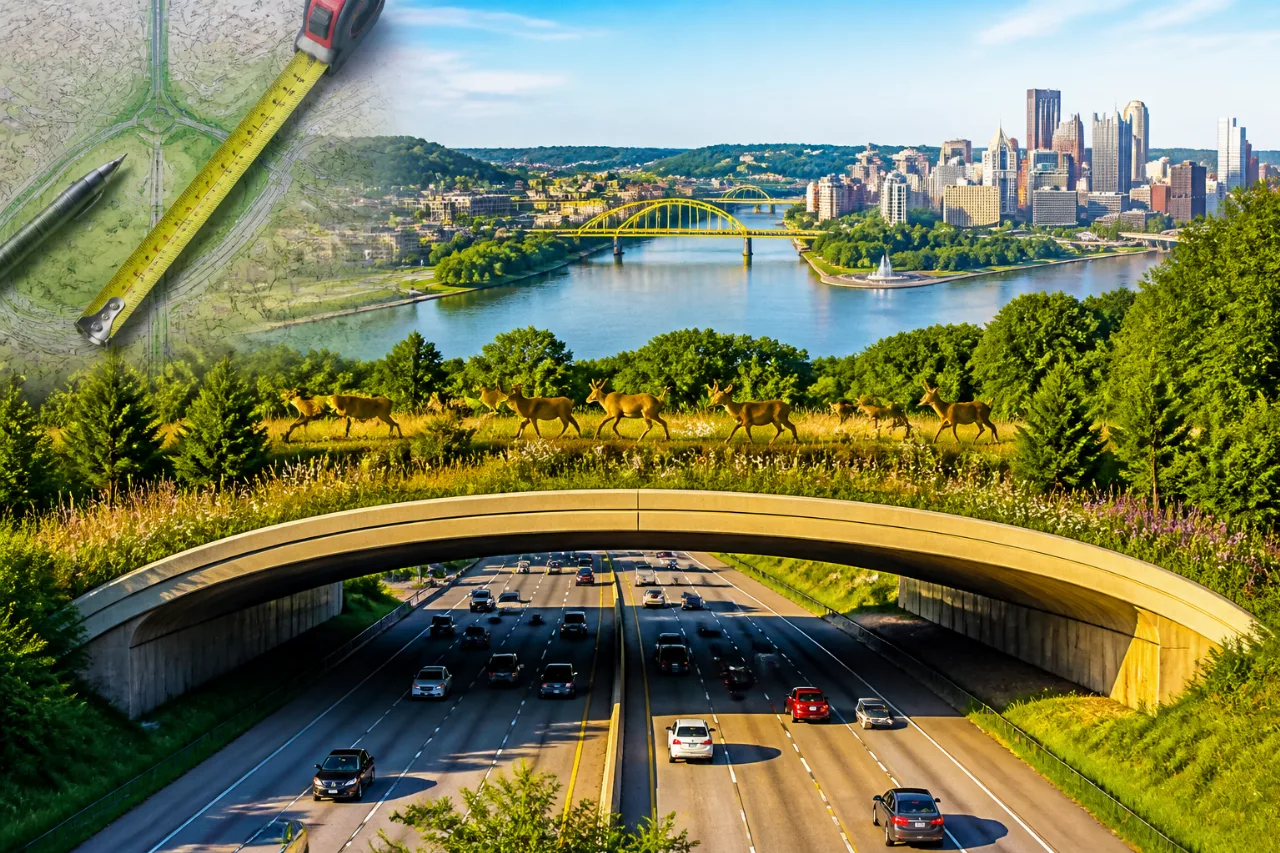
The Post-Gazette recently examined the idea of installing wildlife crossings in the Pittsburgh region, prompting renewed attention to how Allegheny County and surrounding jurisdictions balance public safety, transportation planning and habitat connectivity.
"Wildlife crossings coming to Pittsburgh? Maybe in the future"
The article framed the crossings as a possible future investment rather than an active project with committed funding or a timeline. Local officials, planners and residents face a range of questions if the idea advances: where crossings would be placed, how they would be designed to serve species native to Western Pennsylvania, and who would pay for planning, construction and long-term maintenance.
Why the idea matters locally
Wildlife crossings are engineered structures or corridor improvements intended to allow animals to move safely across roads and highways. In the region, advocates point to the potential to reduce collisions that injure motorists and wildlife, and to improve habitat connectivity fragmented by development and transportation corridors.
- Safety: Reducing animal-vehicle collisions can lower human injury and property damage.
- Conservation: Crossings can reconnect habitats for species movement and genetic diversity.
- Planning and cost: Siting and building crossings involve engineering, environmental review and multi-agency coordination.
Those considerations carry implications for Allegheny County budgets and Pennsylvania transportation planning. If crossings move from concept to design, they typically require coordination among municipal governments, county planners, PennDOT and, in some cases, federal agencies when state or interstate highways are involved.
Challenges local leaders will need to address
Technical, fiscal and regulatory challenges accompany any proposal. Engineers must match structure type to local species and road geometry; environmental reviews must consider wetland and stream impacts; and funding sources must be identified. Local jurisdiction over roads versus state control can complicate decision-making.
| Consideration | Local impact |
|---|---|
| Siting | Requires mapping animal movement and identifying high-collision locations |
| Design | Varies by species — underpasses, overpasses or fencing may be needed |
| Funding | May involve municipal, county, state or grant funding; long-term maintenance costs |
Next steps likely to be incremental
The Post-Gazette piece framed the crossings as a possibility rather than a fixed plan. If local governments choose to pursue the idea, expect feasibility studies, pilot projects and public outreach to precede any construction. That process will determine whether wildlife crossings become a practical tool for reducing collisions and improving connectivity in the Pittsburgh region.
For residents, the debate touches on roadway safety, land-use priorities and how local and state agencies allocate limited resources. The question now is less whether wildlife crossings can work — they have been built elsewhere — and more whether Pittsburgh and Allegheny County will invest the planning effort and funds needed to adapt those designs to local conditions.