
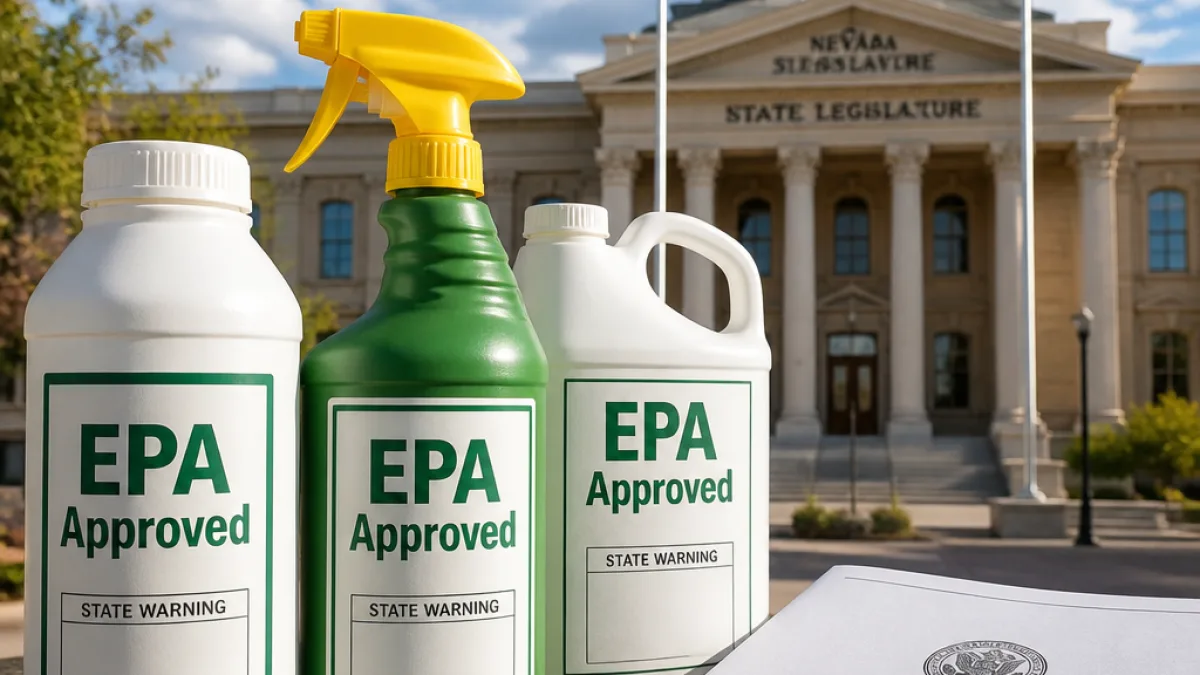
CARSON CITY — A recent U.S. Supreme Court ruling prevents Nevada from imposing state-specific health warnings on pesticide labels that are different from federal labeling requirements, legal experts and state documents show. The decision reinforces federal control under the Federal Insecticide, Fungicide, and Rodenticide Act (FIFRA) and narrows the scope for state-level labeling changes.
What the ruling means for Nevada
The court’s decision in Monsanto v. Durnell concluded that states may not demand additional or different warnings on pesticide labels than those approved by the U.S. Environmental Protection Agency. Under FIFRA, the EPA is the primary regulator of pesticide labels, and that federal preemption blocks states from establishing separate labeling requirements that would add to or alter federally mandated instructions and warnings.
In Nevada, the Department of Agriculture manages registration, sale and use of pesticides and enforces rules against misbranding, but it cannot mandate label language that conflicts with or supplements EPA labeling requirements. Nevada’s existing pesticide law, outlined in Chapter 586 of the Nevada Revised Statutes, governs product registration and use but does not authorize state-specific label additions that would run afoul of federal preemption.
Who does what: federal and state roles
| Authority | Primary role |
|---|---|
| U.S. Environmental Protection Agency (EPA) | Approves pesticide labels and sets federal labeling requirements under FIFRA |
| U.S. Supreme Court | Interpreted federal preemption in Monsanto v. Durnell, barring states from adding separate label warnings |
| Nevada Department of Agriculture | Registers pesticides for sale and enforces state misbranding and use rules; cannot require additional label warnings that conflict with federal law |
Implications for residents, farmers and local officials
The ruling affects a range of stakeholders across Nevada. Homeowners, gardeners, ranchers and agricultural operators rely on pesticide labels for safe use instructions. Because labels approved by the EPA are the legal standard, state and local public-health messaging must rely on sources other than mandatory label text if officials want to convey additional health information.
Practical takeaways:
- Read EPA-approved labels: The label is the law for proper use, application rates and safety precautions.
- Consult Nevada Department of Agriculture: For questions about registration, allowable products and enforcement, contact the department’s Division of Plant Health and Compliance.
- Seek supplementary guidance: Public-health agencies can provide educational materials and advisories, but they cannot force different wording onto product labels.
The decision does not prevent Nevada from regulating pesticide sale, registration or use within the state; rather, it limits the state’s ability to change what appears on product labels when that change would add to or conflict with federal requirements.
For Nevadans looking for more information, the EPA’s pesticide label database and the Nevada Department of Agriculture’s resources remain the primary places to verify approved label language and to learn about state-level rules regarding pesticide registration and use.
This fact-based clarification follows legal analyses of the ruling and Nevada’s statutory framework governing pesticides and aims to help residents, growers and local officials understand where responsibility and authority now lie.