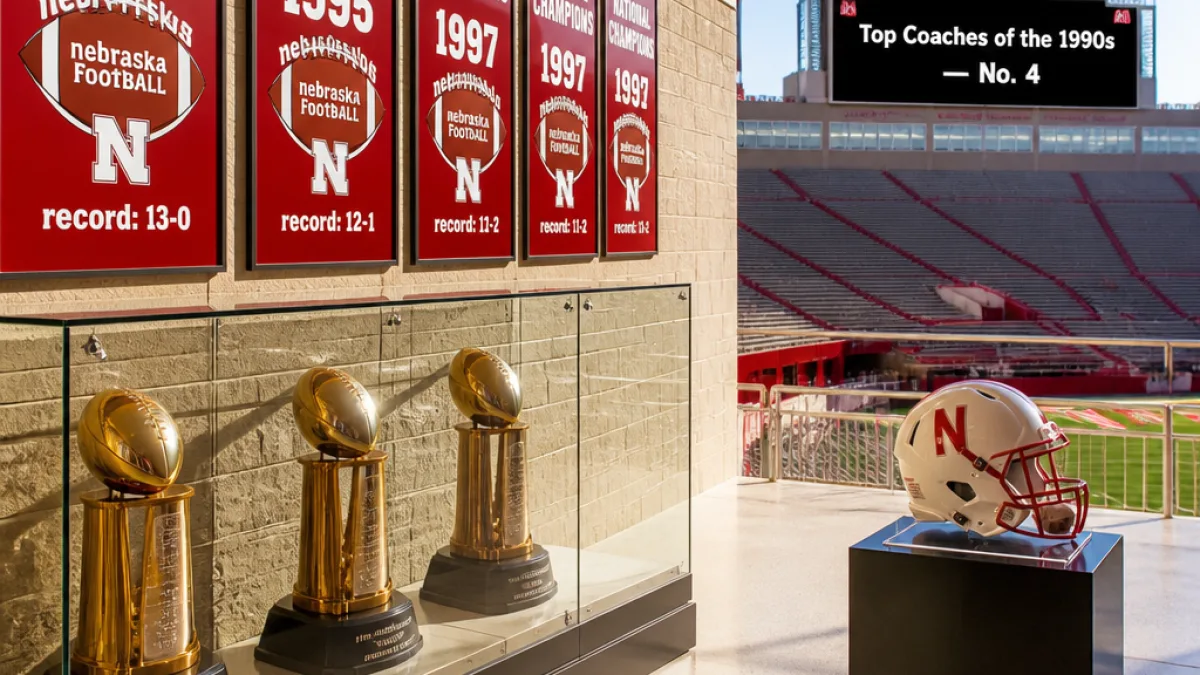
Lincoln — Former Nebraska head coach Tom Osborne has been named among the top college football coaches of the 1990s in a recent national ranking, finishing fourth on a list compiled by a popular sports outlet.
What the ranking says
The list, published this week, focused on coaching performance during the 1990s. Osborne was placed fourth, sandwiched between Florida's Steve Spurrier at No. 3 and Wisconsin's Barry Alvarez at No. 5. Florida State's Bobby Bowden was ranked first and Kansas State's Bill Snyder also made the top five.
The piece singled out Osborne's record and achievements during his Nebraska tenure. Osborne coached the Cornhuskers from 1973 through the 1997 season and compiled an overall head-coaching record cited in the ranking of 255-49-3. Within the 1990s specifically, the ranking highlighted:
- 87 wins in the decade (though he retired after the 1997 season)
- Five consecutive conference championships during the 1990s
- Three national championships — all coming in the final four seasons of his career
- Multiple top-five finishes and numerous wins over ranked opponents
| Career figure | Number |
|---|---|
| Overall record | 255-49-3 |
| Conference titles | 13 |
| National championships | 3 |
Why it matters locally
Osborne remains one of the most recognizable figures in Nebraska sports and public life. His coaching success helped cement the Cornhuskers' place among college football powers and continues to influence the program's identity and expectations across the state. For many fans in Lincoln and across Nebraska, rankings like this serve as a reminder of the program's high-water mark under Osborne's leadership.
The ranking also opens a fresh round of conversation about how to compare coaches across eras. The outlet focused narrowly on the 1990s, giving extra weight to consistency, conference dominance and postseason success within that decade. That approach placed Osborne — whose most celebrated team results came in the early- to mid-1990s — near the top.
Context and perspective
Osborne's coaching résumé is frequently cited in historical discussions: beyond his win-loss totals, his teams were known for sustained success late in his tenure. The ranking noted that all three of his national titles came in what were effectively the final years of his career, and that he compiled numerous wins over ranked opponents, including wins against top-10 teams.
County and state fans who remember the era say the Osborne teams set expectations that remain part of Nebraska football culture today. The piece's author also argued that, while other coaches on the list made persuasive cases for higher placement, Osborne's combination of conference titles, national championships and wins against ranked competition made a strong case for inclusion among the decade's best.
Local reaction on social platforms and among Huskers supporters typically mixes pride in the program's history with debate about comparative rankings. This latest list will likely reanimate those conversations as college football moves into another season of realignment, new coaching staffs and evolving measures of success.
Coverage and commentary on Nebraska football continue across outlets focused on the program; this ranking adds another retrospective look at a coach whose record remains central to the state's sports identity.
Peter Novak is the Nebraska correspondent at News Block.