
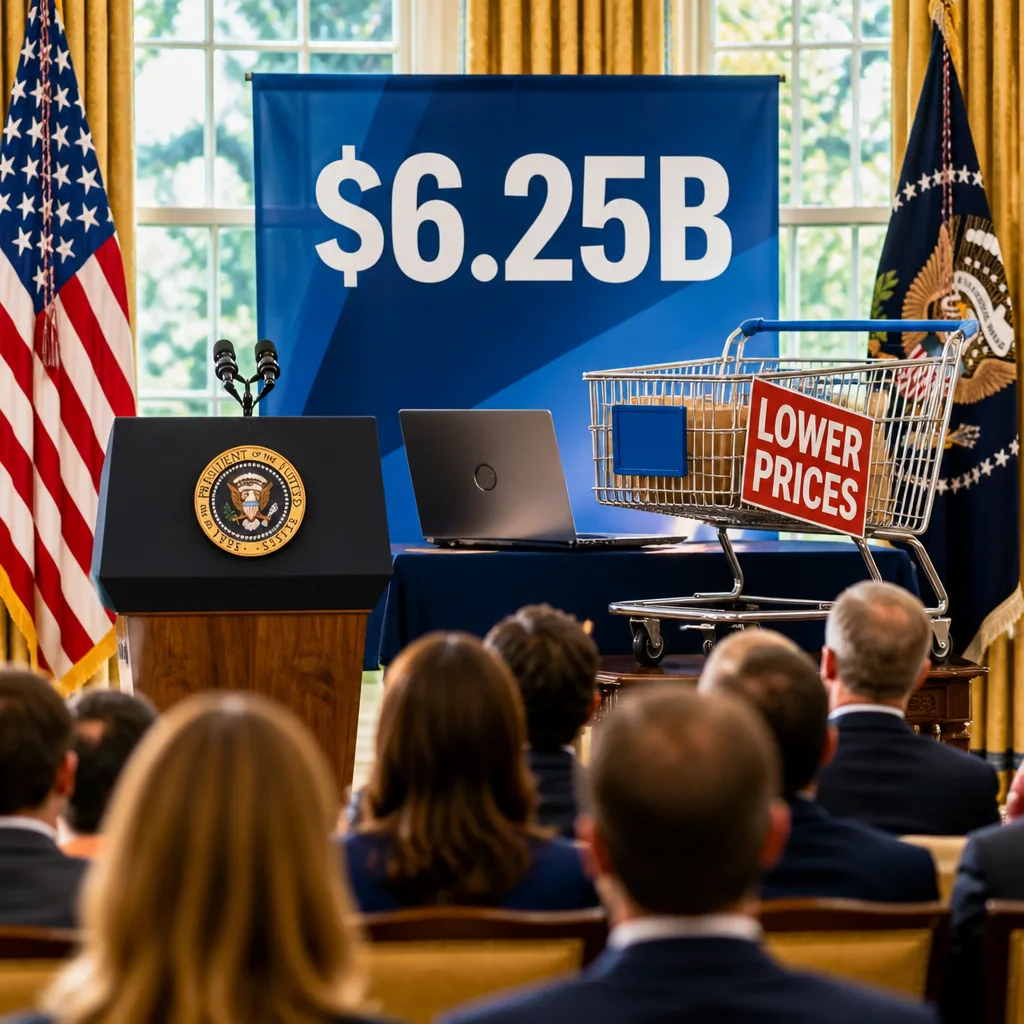
President Donald Trump has publicly credited Walmart for lowering prices and lauded Michael Dell for directing $6.25 billion to new investment accounts tied to the administration’s initiative, prompting criticism from former government ethics officials who say the president’s public endorsements risk tilting the competitive playing field.
What happened
At a White House Oval Office event celebrating the launch of investment accounts for children, President Trump celebrated the announcement and encouraged consumers to “Go out and buy a Dell computer.” The gathering included Dell CEO Michael Dell and his wife, Susan Dell. Earlier, the president said Walmart was reducing prices and took public credit for that development.
Ethics and market concerns
Former officials who oversaw government ethics raised alarms. Don Fox, former general counsel and acting director of the U.S. Office of Government Ethics, said the president’s actions amount to misusing public office for private gain and signal an improper endorsement of one company’s products over competitors.
"It's a clear violation of misusing public office for private gain, and also sort of implying that there is some sort of government-wide endorsement of Dell products over competitors for laptops and electronics," Don Fox said.
Richard Painter, who served as the chief ethics lawyer in the White House Counsel's Office under President George W. Bush, contrasted current practice with the Bush administration, noting that ethics officials then took special care to avoid company-specific appearances by senior officials and "bent over backwards" to prevent perceptions of favoritism.
Implications for households, businesses and investors
Public presidential praise of particular firms carries several practical effects for consumers and companies:
- It can influence consumer demand by signaling a presidential preference for specific products.
- It may affect investor behavior if shareholders perceive that favored firms could receive regulatory or policy benefits.
- It raises questions about fairness and equal treatment for competitors that do not receive public mention.
The president’s personal stock purchases in both Dell and Walmart this year, as reported, heighten concerns among ethics experts that his remarks could be perceived as benefiting his private financial interests as well as the companies themselves.
Context within recent practice
Trump’s remarks praising Dell were not an isolated incident; the president had urged consumers to buy Dell computers multiple times in a five-month span. Ethics lawyers say that degree of repetition and specificity departs from prior White House norms aimed at avoiding the appearance of government endorsement for particular companies.
| Company | Action referenced |
|---|---|
| Dell | Celebrated $6.25 billion funding of Trump Accounts; urged people to buy Dell computers (repeatedly) |
| Walmart | President said Walmart is lowering prices and publicly took credit |
The intersection of presidential rhetoric, corporate behavior and the president’s own financial interests presents a test of existing ethics guardrails. Former ethics officials argue past administrations were more cautious about appearing to favor single companies, suggesting a shift in norms that could have long-term effects on how businesses engage with the federal government and how households interpret presidential endorsements.