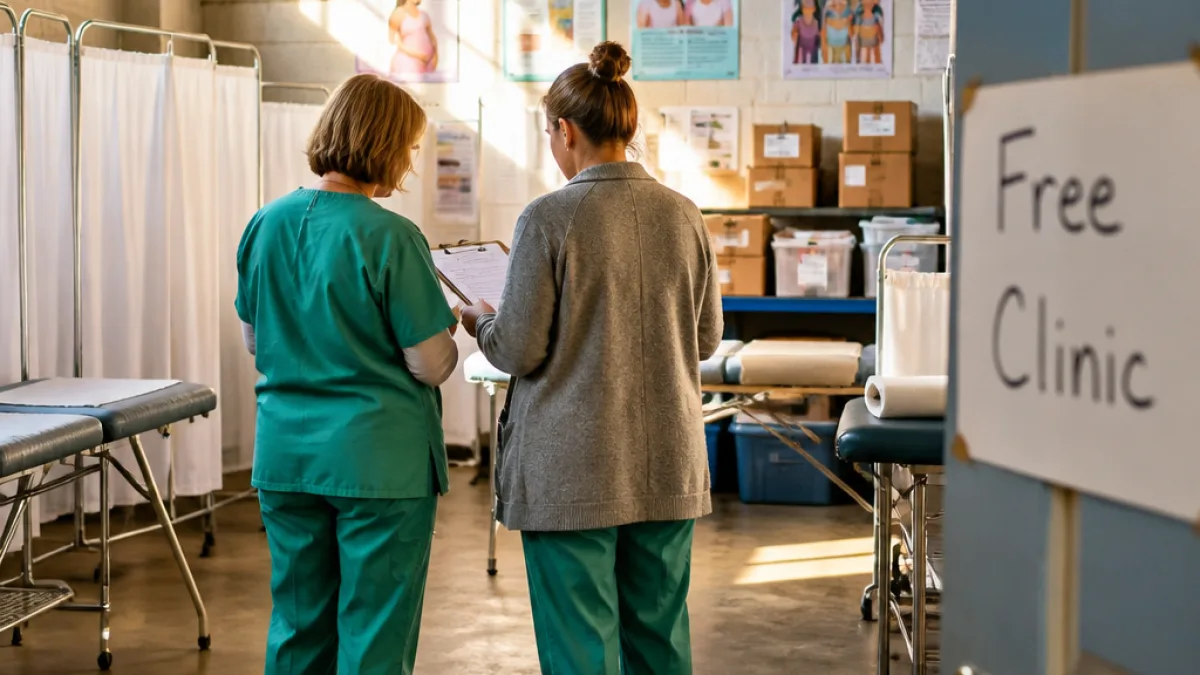
In an old warehouse behind a Baptist church in Tuscaloosa, a group of retired nurses, social workers and veterans has opened a volunteer-run clinic to provide maternal and reproductive care to women who otherwise have limited local options. Their work comes as Alabama—particularly counties within the Mississippi Delta region—ranks among the highest in the nation for maternal mortality.
Local volunteers stepping into a health-care breach
The clinic, part of the Alabama Association of Free and Charitable Clinics network, operates with volunteers who bring decades of professional experience but limited institutional resources. Organizers say the facility is intended to shore up services in a region where specialized providers are sparse and many residents lack insurance.
“There are not enough.”
The comment, from the clinic’s executive director, Lynn Armour, succinctly captures the volunteers’ motivation and the broader challenge: community-run efforts can help, but they cannot replace a comprehensive, system-level response to maternal health needs.
Concrete barriers to care in West Alabama
The situation in Tuscaloosa highlights several measurable impediments:
- Distance: The last Planned Parenthood clinic in Alabama is nearly 60 miles away in Birmingham.
- Uninsured population: Upward of 350,000 Alabamians remain uninsured, increasing reliance on safety-net providers.
- Volunteer reliance: Clinics depend on retired and volunteer staff to deliver essential services.
| Issue | Local detail |
|---|---|
| Nearest Planned Parenthood | Birmingham — about 60 miles |
| Estimated uninsured in state | Approximately 350,000 people |
| Clinic network affiliation | Alabama Association of Free and Charitable Clinics |
Policy context and limits of volunteer efforts
State leaders have promoted telemedicine and the Alabama Rural Health Transformation Program as ways to expand access. Still, volunteer clinics and charitable networks cite limits: they can deliver basic and preventive services, but long-term, systemic needs — including consistent prenatal care, emergency obstetrics and broader insurance coverage — require sustained policy and funding responses.
For residents in West Alabama, the volunteer clinic fills an immediate gap: offering maternal care closer to home and providing a layer of support for uninsured women. Yet organizers warn that such grassroots solutions are stopgaps without broader legislative and health-system changes.
Local residents seeking care through volunteer clinics should check directly with those clinics or the Alabama Association of Free and Charitable Clinics for hours, services and eligibility rules. For policymakers and health officials, the Tuscaloosa example underscores the urgency of addressing maternal mortality and expanding reliable, accessible care across rural communities.