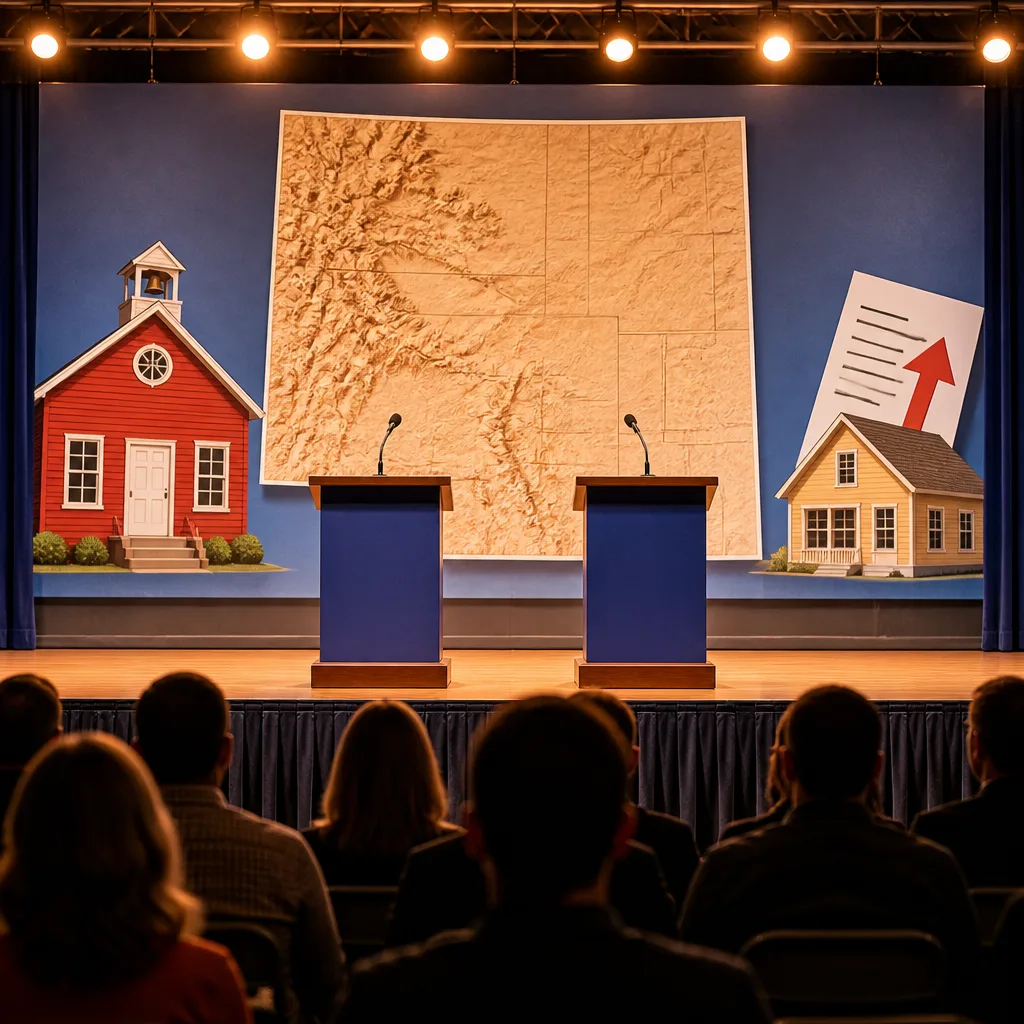
ROCK SPRINGS — In a debate focused on taxes and schools, incumbent Rep. Scott Heiner and challenger Ken Roberts outlined sharply different approaches to property tax relief, education spending and local control.
Tax measures and school dollars
Heiner defended a legislative record he said balances tax relief with education needs, pointing to major measures adopted in recent sessions. He highlighted a statewide effort that created a 25% residential property tax exemption for the first $1 million of a home’s value and cited a separate proposal he sponsored that would have offered a 50% exemption on homes valued up to $200,000.
| Measure | Key element |
|---|---|
| Senate File 69 | 25% exemption on first $1 million of residential value |
| House Bill 130 (sponsored) | Proposed 50% tax break on homes up to $200,000 |
Heiner also pointed to a state recalibration that he said added $125 million annually to public schools, and emphasized expanding options such as charter schools and state scholarships to increase parental choice.
“An education is better for parents who are involved in education -- that's what we’re trying to do,”
Local control and differing priorities
Roberts focused on limiting government and returning decision-making power to locally elected school boards. He questioned whether the recent legislature prioritized Wyoming issues and suggested more attention should go to mental health resources and locally determined solutions for schools. He also warned that further tax reductions could strain communities that rely on property tax revenue to support local services, including schools.
- Funding trade-offs: Proposals to reduce property taxes can lower household costs but also reduce local revenue that supports schools and other services.
- Parental choice: Expanding charter schools and scholarships shifts how families access public education options.
- Local control: Debate centers on the balance between state-led reforms and authority held by school boards elected by residents.
For parents and students, the issues at stake are tangible: how schools are funded, which programs remain in place, and what choices families have for their children’s education. Changes to property tax policy and state education funding formulas can alter classroom staffing, program offerings and local tax bills — outcomes voters will weigh as they assess the candidates’ competing visions.
The exchange in Rock Springs framed the race as a broader question of priorities: whether to pursue aggressive tax relief and expanded school choice or to prioritize local control and protect revenue streams that support schools and community services.
As the campaign continues, voters seeking clarity should watch for how each candidate proposes to preserve core school services while addressing property tax concerns and for any specifics about how proposed tax changes would be phased in or offset at the state or local level.