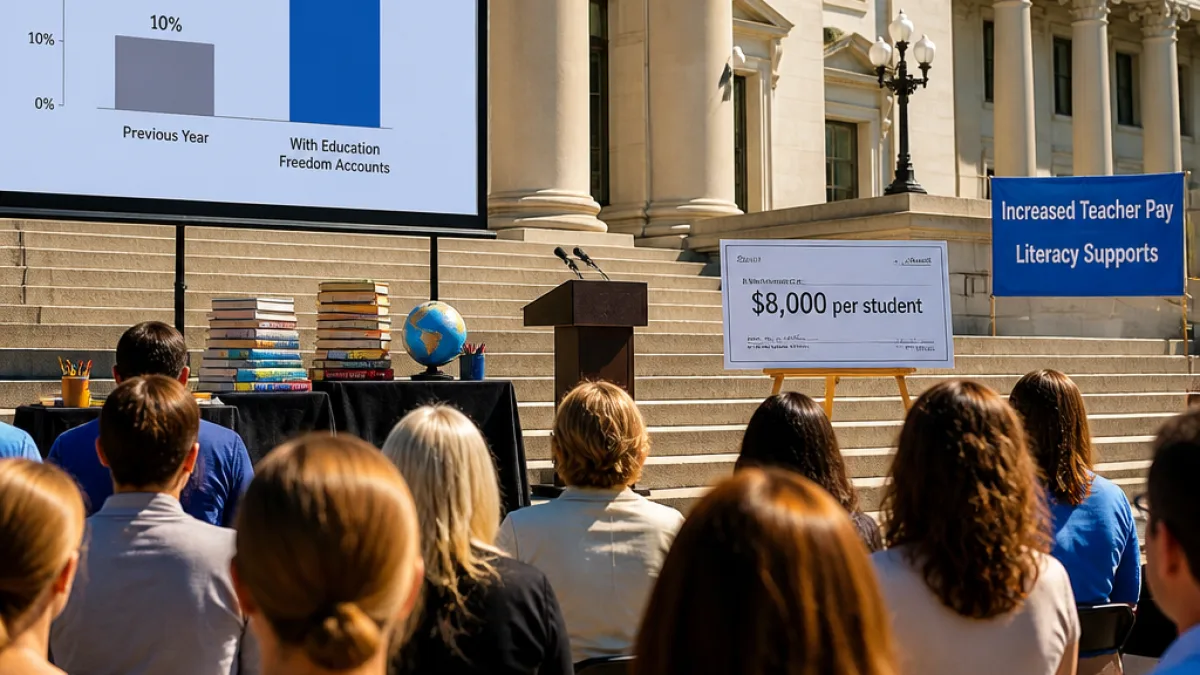
LITTLE ROCK — Arkansas officials on Tuesday pointed to early results they say show student achievement climbed after the state expanded its universal school choice program.
State leaders cite gains in core subjects
Gov. Sarah Huckabee Sanders said a recent report found students participating in the Education Freedom Account program scored above the national average in math and English. She also said the state saw a roughly 20% increase in student performance “in every single subject” last year.
"Arkansas is investing in education where it matters, and it's paying off, and we're seeing a big difference," Sanders said.
Sanders described the initiative as pairing universal school choice — which provides families with funds to pursue alternatives to assigned public schools — with increased support for public schools and educators.
Program specifics and state investments
The governor’s office says eligible families receive about $8,000 per student annually through the Education Freedom Account program. Officials reported roughly 50,000 students participated during the most recent school year and had signed up for the forthcoming year.
- $8,000: annual funding per eligible student for private school tuition, charter schools or homeschooling
- 50,000: students reported to have participated in the most recent school year
- 12,000: educators who received pay increases
- $2,000: minimum raise reportedly provided to current teachers
| Measure | Reported figure |
|---|---|
| Student performance increase | About 20% (state officials) |
| Program participants | ~50,000 students |
| Per-student funding | $8,000 annually |
| Educator pay actions | Raises for more than 12,000 teachers; at least $2,000 for current teachers |
In addition to tuition funds, the state said it has deployed "literacy coaches" to support struggling schools and boosted starting pay for teachers.
What this means locally and statewide
The governor framed the program as transferring decision-making power to parents while simultaneously shoring up public education through targeted funding increases and personnel investments. If the reported test-score gains are borne out by independent analyses, they could strengthen the case for similar policies among state policymakers. Critics and advocates alike have typically called for transparent, third-party verification of academic impacts tied to wide-reaching policy changes.
For county school districts and educators, the mix of expanded choice and increased public funding raises operational questions: how districts will adjust enrollment projections, manage state funding shifts, and deploy additional literacy coaches or other resources. Families considering changes to their children’s schooling will need to confirm eligibility rules and application timelines for the Education Freedom Accounts.
State officials have presented the figures as early evidence the overhaul is improving outcomes, but the release did not include a full independent data set for review. Lawmakers and education stakeholders will likely press for more detailed reporting as Arkansas prepares for the upcoming academic year.
Reporting from the state capital; further developments and any third-party analyses will be monitored.