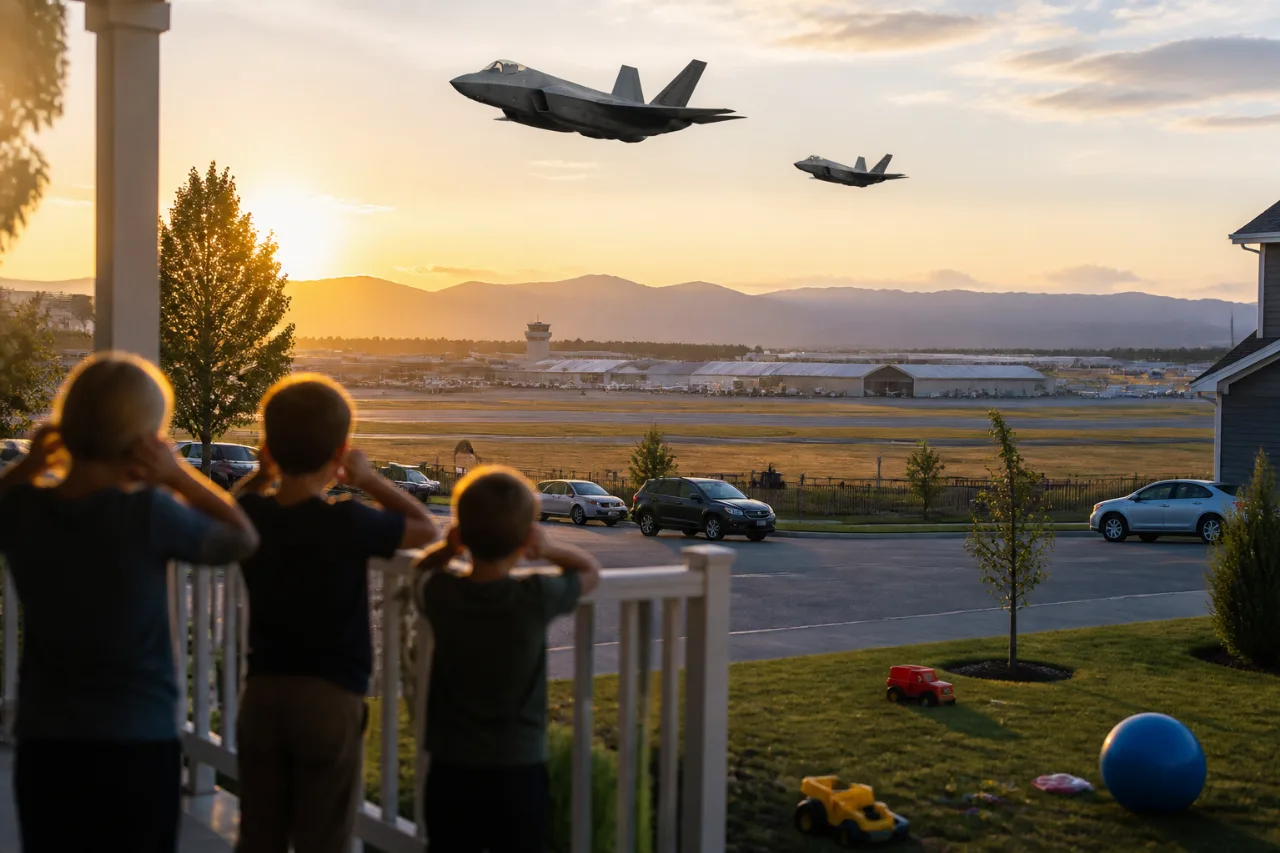
A city committee that has asked that F-35 fighter jets be removed from Burlington International Airport says federal officials have told Vermont’s congressional offices they will not alter the mission — a development that leaves thousands of residents continuing to contend with the jets’ noise.
The committee estimates noise from the jets affects more than 6,600 residents. Local officials and public-health researchers have raised concerns about the potential effects of sustained aircraft noise on children’s health and learning.
What officials said
Members of the Burlington committee met last month with staff for Rep. Becca Balint, Sen. Peter Welch and Sen. Bernie Sanders. According to the committee, Balint’s state director, Jessica Nordhaus, told them the Air Force delivered “a firm no” on changing the mission in Vermont and indicated there would be no mission at the base if the F-35s were not present.
“It's my belief that … this federal administration will not be a partner with regard to the F-35s, and that is just something that we have to recognize,” said Ward 2 Councilor Eugene Bergman on June 29.
Committee members said staff for Welch and Sanders conveyed that their principals had not asked Air Force leadership to move the mission. Burlington officials and residents now face the prospect that the jets will remain in the near term, even as community concern grows.
Local impact and upcoming flights
The presence of the jets has prompted intense debate about noise, quality of life and the suitability of stationing advanced fighters near a densely populated urban area. The committee noted that F-35s were scheduled to fly over more than a dozen towns, including Colchester and Burlington, as part of Independence Day observances marking the nation’s 250th.
- Residents affected: More than 6,600 reported as impacted by noise
- Local action: Burlington committee seeking relocation of F-35s
- Federal stance: Congressional staff report the Air Force declined to change the mission
Councilor Bergman, who led talks with congressional staff, said he expects federal officials will not partner with the city to remove the aircraft. Still, he emphasized the city can continue to raise concerns and publicize what he described as the “fundamental wrong” of basing the planes in an urban area.
Who’s involved
This conflict pits local quality-of-life concerns against national defense decisions made by the Air Force and communicated to Vermont’s congressional delegation. The key actors include:
| Actor | Position/role |
|---|---|
| Burlington city committee | Seeking relocation of F-35s from local airport |
| Ward 2 Councilor Eugene Bergman | Led talks with congressional staff; publicly skeptical of federal cooperation |
| Rep. Becca Balint (staff) | Received Air Force response described as a “firm no” on changing the mission |
| Sen. Peter Welch and Sen. Bernie Sanders (staff) | Reportedly have not sought a change to the Air Force mission |
Local officials must now balance continued advocacy with the reality that the federal military mission appears set to remain. The committee has signaled it will continue pressing the issue publicly even without support from congressional leaders.
What this means for Burlington residents
In practical terms, Burlington residents can expect the F-35s to remain a feature of life near the airport for the foreseeable future. That includes recurring training flights and occasional flyovers tied to national events. The city and community organizations may continue to document noise impacts and pursue mitigation measures, but relocation appears unlikely without a change in federal posture.
City officials and community advocates say they will keep residents informed about meetings with federal representatives and any new assessments of health or noise impacts.