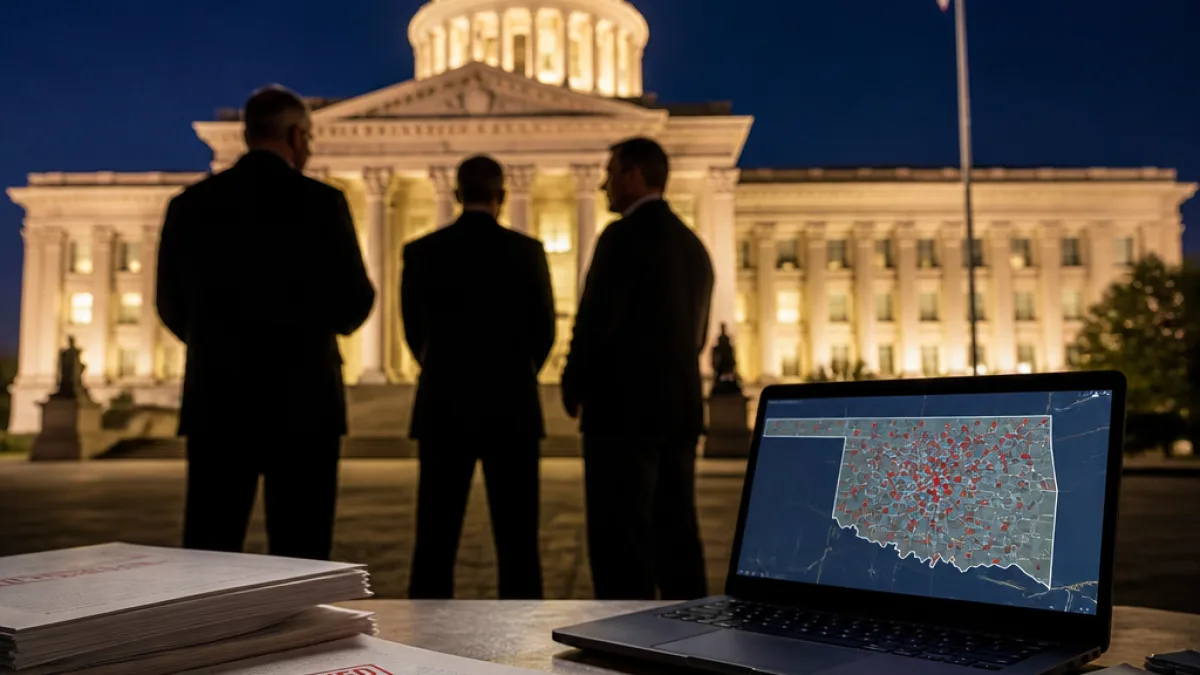
WASHINGTON — Declassified documents released by the White House this week identified Oklahoma as one of several states where voter registration data was copied by what the papers describe as a foreign cyber actor. The disclosures arrived alongside a national address by President Donald Trump that raised questions about the security of past elections.
What the documents say
The newly released materials list voter information taken from state databases. According to the documents, the data could have included names, party affiliations, e-mail addresses, physical addresses and telephone numbers. The White House materials characterized the activity as the work of a "bad cyber actor from China," language that appears in the declassified packet.
"bad cyber actor from China"
The federal release did not provide a detailed, state-by-state forensic timeline in the materials published publicly Thursday night.
Oklahoma’s response and legal safeguards
The Oklahoma State Election Board responded by outlining the state statutes and public-records rules that govern access to voter registration data. Officials stressed that state law limits who may obtain the full registration list but also noted that the Oklahoma Open Records Act generally requires voter registration information be publicly accessible with some exceptions.
- Access is limited to bona fide Oklahoma residents who are U.S. citizens;
- Official representatives of recognized political parties in Oklahoma may obtain the list;
- Candidates and their authorized representatives have access; other access can be granted as authorized by state law.
Those categories reflect a November 2025 change to state law (26 O.S. § 7-103.2) cited by the election board. The law attempts to balance transparency with privacy and security concerns, the board said.
What this means for voters and campaigns
For everyday Oklahomans, the documents renew questions about how widely voter details circulate and who can legally hold that information. Campaigns, party organizations and certain outside groups routinely use voter lists for outreach and organization, but the state emphasizes there are legal limits on access and use.
| Information cited in documents | Examples listed |
|---|---|
| Personal identifiers | Names, addresses, phone numbers, e-mail addresses |
| Political data | Party affiliation |
Election officials did not, in the materials released publicly, name how many records were affected in Oklahoma or provide a detailed technical account of the incident. Independent news organizations and federal agencies were still reviewing the declassified files and related statements for more context Friday.
The broader release comes as national reporting organizations and fact-checkers have already questioned other claims made during the president’s address. Oklahoma voters and groups that use registration lists should expect continued updates as more forensic details become available from federal and state authorities.
Local election administrators urged residents to monitor official channels — including the State Election Board’s website — for guidance and for any notices about changes to data access or security practices.
Cheyenne Parker, Oklahoma Correspondent, News Block