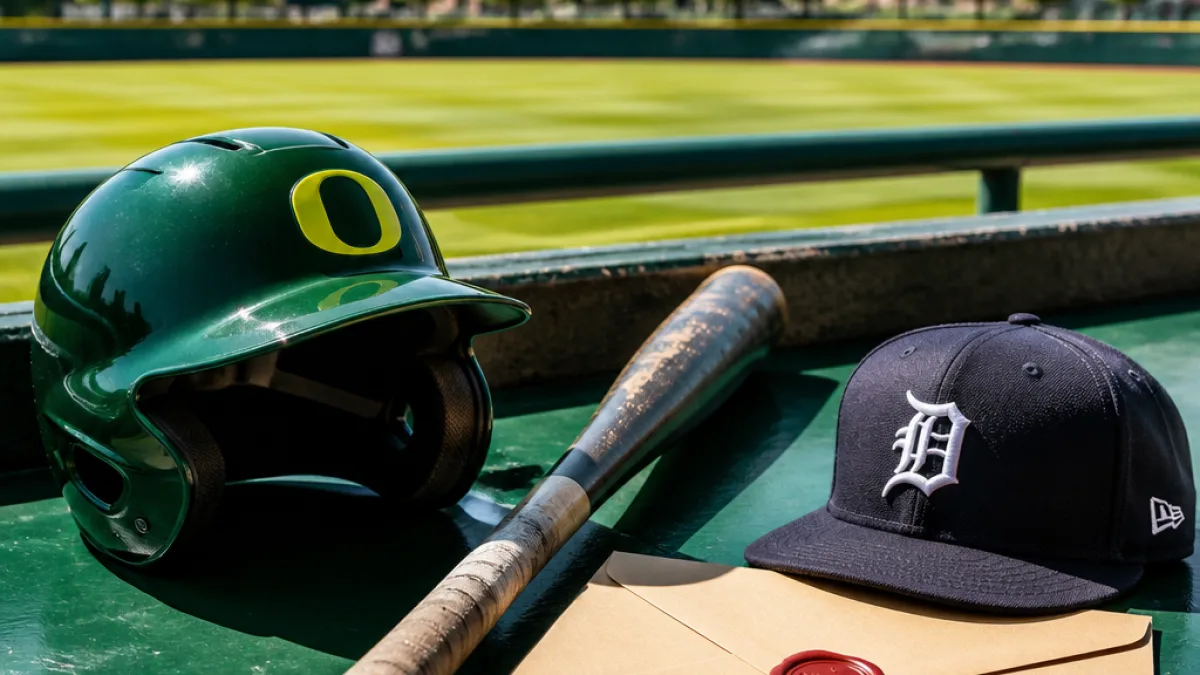
The Oregon Ducks' starting shortstop, Maddox Molony, was selected by the Detroit Tigers with the No. 187 overall pick in the sixth round of the 2026 MLB Draft, a development that leaves the player and the program weighing a pivotal choice.
Draft day choice looms
Molony, a junior who has one year of college eligibility remaining, now has until July 27 to decide whether to sign with the Tigers and begin his professional career in the minor leagues or to return to Oregon for a final season. The decision will carry consequences for both Molony’s development and the Ducks’ roster planning ahead of another push for postseason success.
Track record at Oregon
Across three seasons under coach Mark Wasikowski, Molony compiled a line that combined power and run production with strong defensive reputation. His cumulative totals with the Ducks include:
- .281 batting average (three seasons)
- 160 hits
- 117 runs scored
- 115 RBIs
- 37 home runs
Despite those career numbers, Molony’s most recent season saw an offensive downturn. He hit .233 with 12 home runs this year. Still, the combination of prior season production and defensive play made him an attractive mid-round selection for Detroit.
What this means for Oregon baseball
The Ducks completed the 2026 season with a 43-18 overall record and went 20-10 in conference play, coming up short in the Austin Super Regional against Texas. Molony’s potential departure would create a vacancy at a premium infield spot and force coach Mark Wasikowski’s staff to consider internal options and recruiting adjustments.
| Stat | Total |
|---|---|
| Batting average (three seasons) | .281 |
| Hits | 160 |
| Runs | 117 |
| RBIs | 115 |
| Home runs | 37 |
Molony also drew notice for his defensive abilities at shortstop, an attribute mentioned by professional scouts and college staff alike. For a program that is still chasing its first College World Series appearance since 1954, keeping experienced infielders can be a difference-maker.
Next steps
The decision window closes on July 27. If Molony signs, he will enter the Tigers’ farm system and begin the process of climbing the professional ladder. If he returns, he will rejoin a Ducks roster that has demonstrated it can compete at a high level in the postseason and will be expected to contend for deeper NCAA tournament runs.
Either outcome will be closely watched in Eugene and across Oregon’s baseball community. The choice is both personal and strategic: immediate professional opportunity versus a final collegiate season that could improve draft position and aid the Ducks’ team goals.