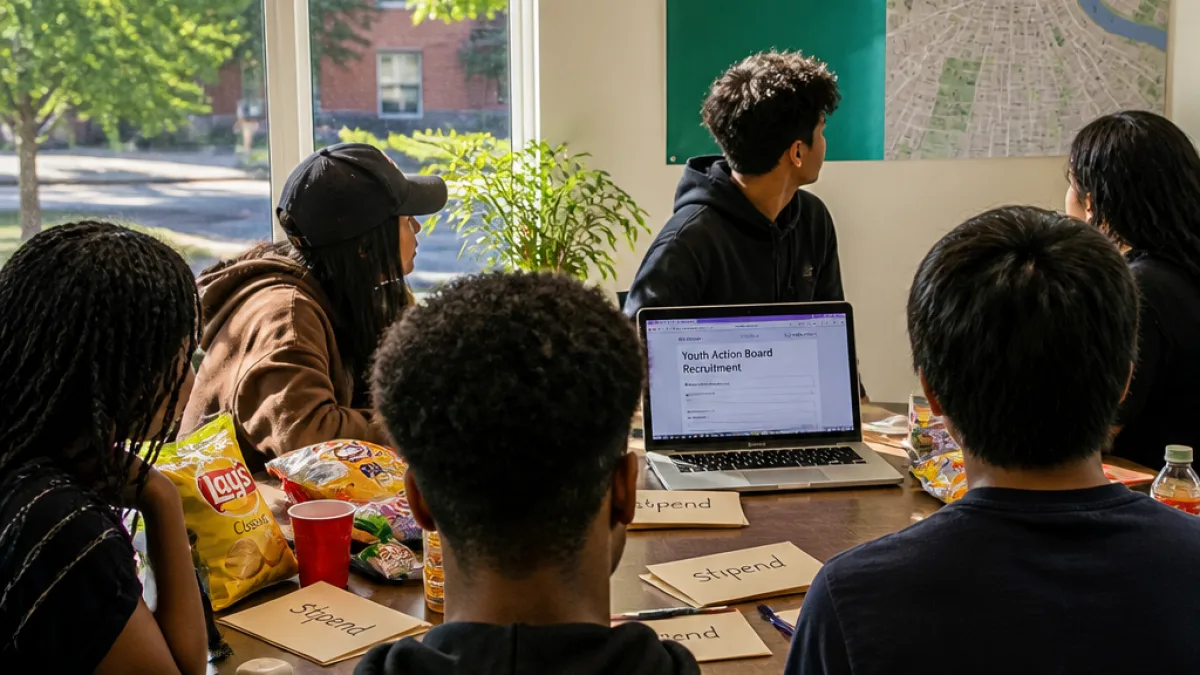
Salem-area leaders are leaning on young people who have experienced homelessness to help decide how federal and state dollars are spent on sheltering and support services. Backbone, a youth action board formed in 2021, is made up entirely of people ages 11 to 24 who have current or past lived experience with homelessness or housing insecurity.
From couch-surfing to the meeting table
One member, Aruna Sunflower, described how she didn’t recognize her own situation as homelessness while couch-surfing for months. Referred by the Mid-Willamette Valley Community Action Agency during intake at Youth Services, she joined Backbone expecting only to share her experience. She quickly became an active participant and now serves as the board’s secretary.
"I didn’t know I was going to get paid. I just was like, ‘Yeah, I’ll go and educate the people and share my experience.' And then I went to the meeting and I instantly loved it," she said. The board pays members $25 an hour and provides lunch during meetings.
Advising a regional funding body
Backbone advises the Mid-Willamette Valley Homeless Alliance, the regional organization that determines distribution of state and federal funding for shelter and related services across Marion and Polk counties. The alliance brings together elected officials, tribal leaders, healthcare representatives, law enforcement and service providers; Backbone gives the alliance a direct line to the perspectives of young people affected by housing instability.
- Board membership is limited to people aged 11–24 with lived homelessness experience.
- Members receive $25 per hour; meetings include provided lunch.
- The board currently has seven members and recently canceled a monthly meeting due to attendance problems and longtime members aging out.
Operational strain and recruitment needs
Backbone has hit a practical snag: several longtime members have aged out, and attendance has fallen to the point that the board had to cancel a meeting because a majority of members were not present. With seven members now, the board is actively recruiting new participants; applications are handled through a Google form advertised by the agency.
| Board detail | Fact |
|---|---|
| Membership count (current) | 7 |
| Age range | 11–24 |
| Pay | $25/hour |
Why local input matters
Officials who allocate sheltering funds often come from institutions that are not directly comparable to youth living on couches or in unstable housing. Backbone’s role is to bring that real-world perspective into conversations about where to site shelters, what support services matter most and how to reach young people who may not see themselves reflected in traditional definitions of homelessness.
For Salem residents and policymakers, the board’s struggles with recruitment and retention point to a broader challenge: ensuring that youth voices remain part of policy work even as individual members age out or move on. The alliance’s executive director, Misty Bolger, is the direct contact for board members, underscoring the formal channel the city-region now uses to receive youth input.
Those interested in applying or learning more can find the application through the Community Action Agency’s online materials. For now, Backbone’s return to steady meetings will be a bellwether for how effectively Salem-area leaders sustain youth participation in decisions about homelessness resources.