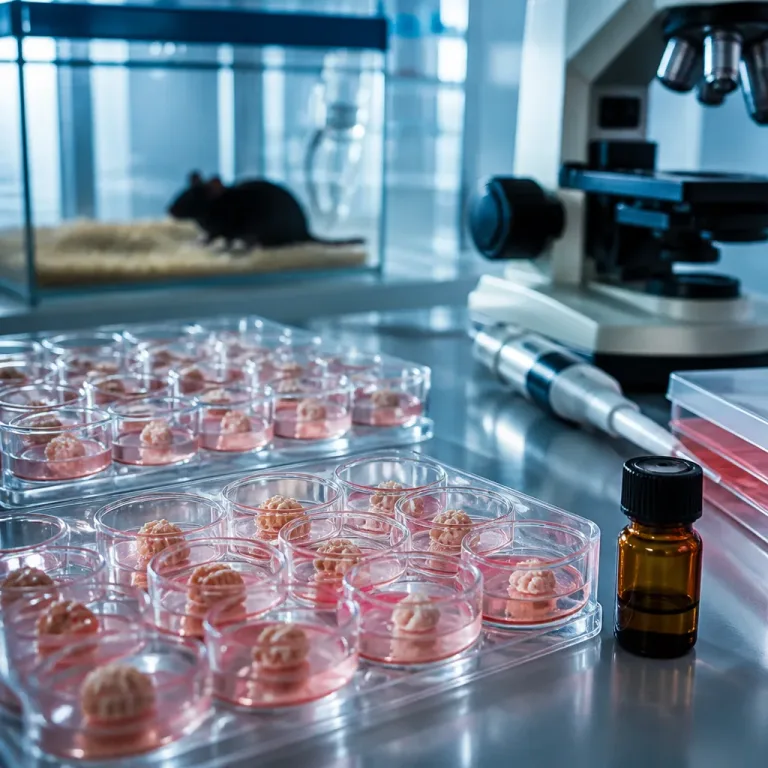
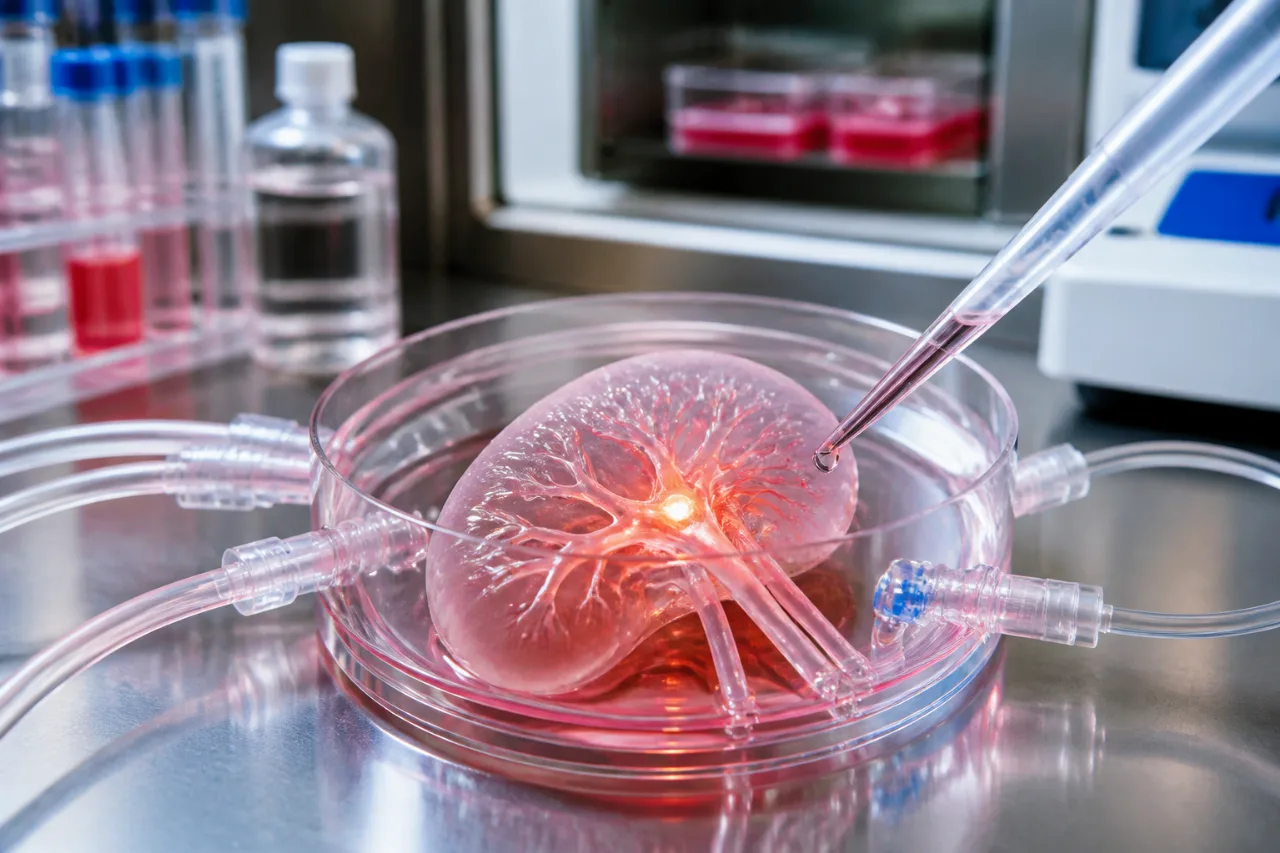
Researchers at the University of Southern California reported a new method to steer stem cell–derived kidney organoids toward more accurate and reproducible development by embedding engineered signaling centers that mimic the embryo’s localized cues. The work, published in Science, replaces uniform exposure to morphogens with spatially confined release of Wnt proteins from purpose-built cells, producing organoids that better reproduce the structure and orientation of developing kidneys.
Local signals, global effects
Traditional organoid protocols typically bathe cells in uniform concentrations of growth factors. The USC team instead constructed what they call "synthetic organizer" cells that emit controlled amounts of Wnt proteins from specific locations within the growing tissue. That localized signaling not only altered the molecular identity of nascent nephron cells but also directed their physical extension: tubules elongated toward the signal source, echoing the directional organization seen during natural kidney formation.
“It is important that we’re starting to get good reproducibility from organoid models that can lead to robust preclinical models of cell function and disease to benefit patients,”
— Nils Lindström, co-corresponding author and assistant professor at USC’s Keck School of Medicine.
Why the approach matters
The study combines developmental biology and tissue engineering to exert spatial control over self-organization. As co-corresponding author Leonardo Morsut described, the goal is to guide intrinsic patterning rather than to override it. The result is organoids with a previously unrecognized developmental axis that determines how nephrons orient themselves relative to the equivalent of collecting ducts—an insight that expands understanding of kidney morphogenesis.
- Technique: engineered cells that release localized Wnt signals inside organoids.
- Effect: directed nephron identity and guided tubule elongation toward the signal source.
- Implications: improved reproducibility for disease modeling, drug testing and potential regenerative applications.
Comparing strategies
| Traditional approach | USC synthetic organizer method |
|---|---|
| Uniform exposure to signaling molecules | Localized Wnt release from engineered cells |
| Variable reproducibility and symmetric growth | Improved consistency and directional tubule elongation |
| Limited control of nephron orientation | Discovery of a developmental axis guiding orientation |
The authors emphasize that increased reproducibility in organoid systems is essential for translating laboratory findings into reliable preclinical models. By harnessing cell-based organizers to recapitulate a key developmental niche—analogous to collecting ducts in the embryo—the study offers a path toward organoids that better mirror native tissue architecture.
Future work will be needed to evaluate how broadly the organizer strategy applies across organ types and whether it improves functional maturation relevant to disease modeling and therapeutic testing. For now, the USC team’s results represent a measured advance: a method to work with, rather than against, the self-organizing tendencies of stem cell–derived tissues.