The longest continuous soil‑warming experiment in the world has produced results with broad implications for climate projections: after roughly 37 years of year‑round heating, the most chemically resistant carbon in forest soils at Harvard Forest began to decompose, releasing carbon dioxide that previously had been assumed stable for centuries.
What the experiment did
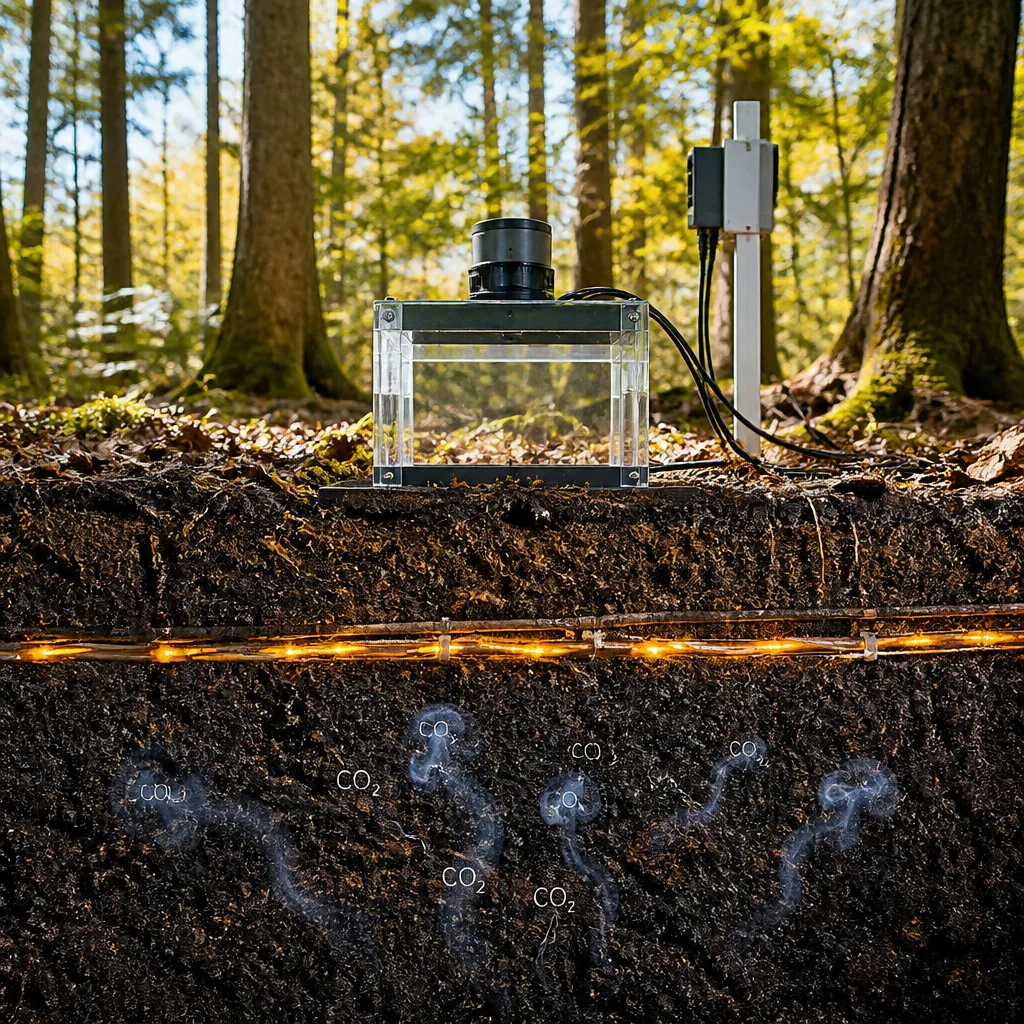
Researchers began the experiment in 1991, installing buried heating cables beneath a set of forest plots and maintaining an average soil temperature of 5°C above the surrounding ground continuously. That temperature gap was selected to represent the upper end of warming scenarios available at the time and to probe long-term ecosystem responses beyond short‑term pulses.
- Duration: Continuous warming from 1991 through the present study period (~37 years).
- Temperature offset: Approximately 5°C warmer than ambient soil.
- Main finding: Mineral‑associated organic matter—previously considered chemically protected—began to break down in the fourth decade.
How the system behaved over time
For decades the response followed expectations: microbial activity rose, accelerating the decomposition of the more labile, easily digested fractions of soil organic matter and producing an elevated flux of CO2 that gradually tapered. Many scientists had anticipated that after this initial pulse the system would reach a new, warmer steady state. Instead, observations from the prolonged heating reveal a later, slower response in which carbon thought to be locked away became vulnerable.
| Parameter | Value |
|---|---|
| Start year | 1991 |
| Temperature treatment | +5°C (continuous) |
| Duration | ~37 years |
Why this matters
Forest soils globally contain more carbon than the atmosphere and all living vegetation combined. Climate models and carbon budgeting often treat a large fraction of that pool—organic matter tightly bound to minerals or composed of resistant molecules—as effectively inert on human timescales. The Harvard Forest results indicate that sustained warming can eventually mobilize a portion of that reservoir, producing delayed feedbacks to the climate system.
The experiment illustrates two points important for policymakers and modelers: the magnitude of soil‑carbon feedbacks may be larger than many projections assume, and some feedbacks operate on multi‑decadal timescales rather than decades or years. That timing matters for near‑term mitigation strategies and for assumptions underlying long‑term emissions pathways.
Caveats and remaining questions
The study provides a unique long‑term dataset, but extrapolating from a single site to Earth’s diverse soils requires caution. Soil type, vegetation, moisture regimes and microbial communities vary widely. Still, the experiment offers a cautionary demonstration that processes previously treated as negligible or extremely slow can alter carbon dynamics under prolonged warming.
Future work will need to clarify what fraction of globally stored soil carbon is vulnerable under comparable sustained warming, how interactions with drought or land use change might accelerate responses, and how these delayed releases should be represented in climate models and national carbon inventories.
The findings highlight the value of long‑duration ecological experiments: some climate system responses emerge only after sustained perturbation, and they can reshape the assumptions underpinning mitigation planning.