The U.S. Department of Justice has put Idaho’s election office on notice, warning that local and state election officials could face criminal prosecution if noncitizens cast ballots in the 2026 federal elections. The letter, part of a nationwide push to identify and remove noncitizen voters, marks a sharp escalation in a legal dispute that has unfolded across multiple Western states.
What the letter says and what Idaho has done
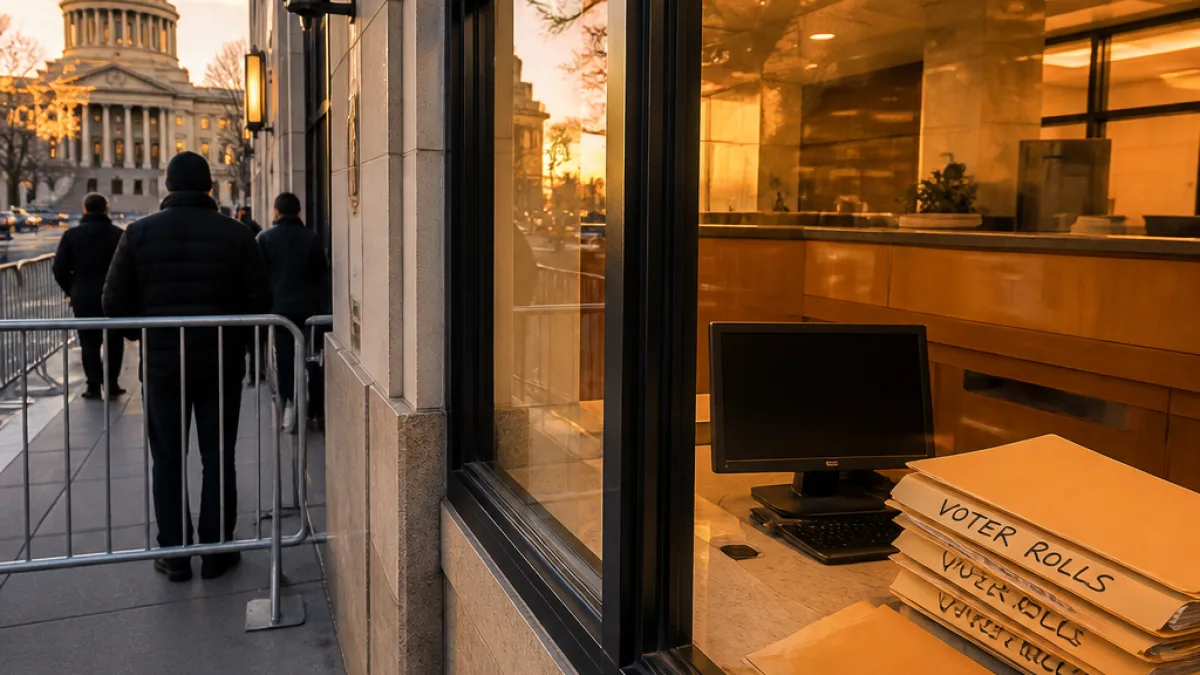
The complaint from the Justice Department’s Civil Rights Division centers on access to Idaho’s voter registration database — a file of roughly 1 million registered voters. Federal attorneys want partial Social Security numbers and driver’s license numbers to be turned over so those records can be checked against Homeland Security systems for citizenship verification.
Idaho Secretary of State Phil McGrane — a Republican — has declined to hand over that sensitive information. The Idaho Attorney General’s Office filed a request that the case against McGrane be put on hold, and U.S. District Judge B. Lynn Winmill approved a pause on May 21. That stay remains while the U.S. 9th Circuit Court of Appeals considers the Justice Department’s appeals in related cases from Oregon and California.
Federal push, mixed results in courts
The Justice Department has filed similar requests or suits in multiple states. As of late June, the department had sued 30 states seeking access to voter rolls; however, no court had yet ruled in its favor in the Western cases referenced. DOJ lawyers have said the files would be used with a Homeland Security database to confirm citizenship.
“[F]ederal law makes it a crime for ‘an election official’ in a federal election to ‘knowingly and willfully’ deprive … defraud … or attempt … to deprive or defraud the residents of a State of a fair and impartially conducted election process …”
The letter warns that criminal liability could attach to election officials who allow noncitizen voting to occur. Legal experts and election administrators around the country have noted that noncitizen voting is rare, and many states already have processes to remove ineligible registrants.
- About 1 million — size of Idaho’s voter registration list under dispute
- 30 states — number the Justice Department has sued seeking voter-roll data, as reported
- May 21 — date a federal judge approved a pause in the Idaho case
Local stakes and privacy concerns
For Idaho election officials, the conflict raises two competing concerns: the federal interest in preventing ineligible voting and the state duty to protect citizens’ personal data. Partial Social Security numbers and driver’s license details are widely treated as sensitive. State officials say giving that information to a federal system could raise privacy and security risks for Idaho voters.
| Item | Status |
|---|---|
| DOJ letters to states | Sent to all 50 states |
| Idaho lawsuit | Paused by federal judge May 21 |
| Federal appeals | Pending at 9th U.S. Circuit Court |
The pause gives Idaho time to await higher-court rulings that could shape how much access the Justice Department can lawfully obtain. That matters not only for Idaho but for other states watching how the courts balance election integrity, criminal law and voter privacy.
State election officials must now weigh legal exposure against their constitutional and statutory obligations. For voters, the immediate effect is limited: no change to voting procedures has been announced, and the litigation determines only access to records, not voter eligibility rules themselves.
As the 9th Circuit takes up appeals from Oregon and California, Idaho’s case will remain in limbo. The outcome could set precedents affecting how states protect voter data and how aggressively the Justice Department pursues allegations of noncitizen voting in federal elections.