The countercultural roar of American punk that helped define downtown scenes and college towns around the country has a clear Colorado thread: Jello Biafra, born Eric Reed Boucher and raised in Boulder. He lands at No. 62 on the Denver Gazette’s new Colorado 150, a sesquicentennial list recognizing people who shaped how the state is seen and how Coloradans view themselves.
Roots in Boulder and bargain-bin discoveries
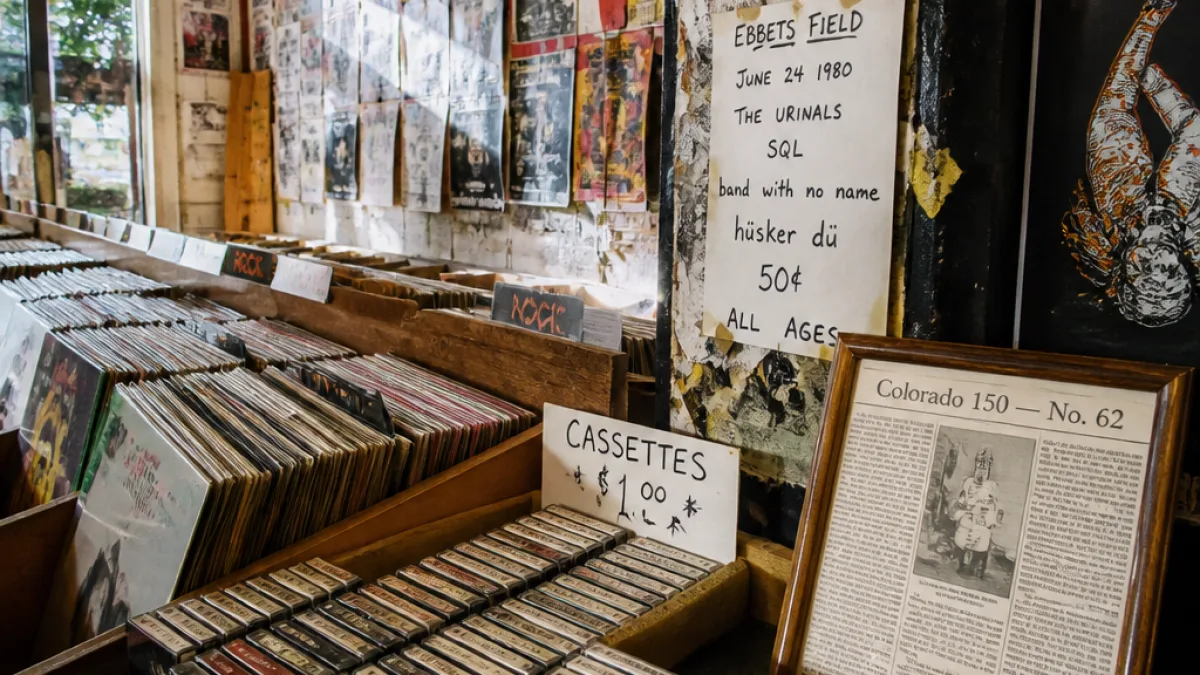
Biafra’s upbringing in Boulder — attending Boulder High School and raised by a librarian mother and a social-worker father — provided early exposure to civil-rights ideas and politics, according to the profile compiled for the Colorado Music Experience. The young Boucher scoured discount tape racks at Trade-A-Tape in Boulder, where he discovered records by The Stooges, Black Sabbath and MC5. Those records, he said, “blew his mind” and helped set the course for what became the Dead Kennedys.
"In some ways, Boulder was a great place to grow up,"
The name Jello Biafra itself was a deliberately constructed persona: a contrast between commercialized consumer culture and global human suffering, the profile explains. He adopted “Jello” as an inversion of mass-produced food and “Biafra” in reference to the short-lived Nigerian state that suffered a brutal blockade and famine in 1967.
Local stages, national reach
Biafra was part of a moment when punk moved from regional clubs to national notoriety. He saw the Ramones at Denver’s famous club Ebbets Field in 1977 — a show that connected him to a wider network of punk acts and scenes. He later formed the Dead Kennedys, a band that became synonymous with political provocation and the hardcore punk sound.
- Hometown: Boulder
- Rank: No. 62 on the Denver Gazette’s Colorado 150
- Early influences: The Stooges, Black Sabbath, MC5
This profile appears as part four of a six-part Colorado 150 series, which counts up the top 150 pathmakers in blocks of 25. The series highlights figures as diverse as Barry Fey, Amy Adams, Gus Van Sant and John Fielder — underscoring the variety of people who have helped shape Colorado’s cultural identity.
Why it matters locally
Boulder’s reputation as a placid college town often obscures a sharper, insurgent cultural history. Biafra’s trajectory from local record racks and high-school hallways to the frontlines of punk illustrates how Colorado scenes fed broader cultural movements. For younger musicians and local venues, the story is a reminder that small storefronts, discount bins and regional clubs can be incubators for influential art and political dissent.
| Item | Detail |
|---|---|
| List | Denver Gazette's Colorado 150 |
| Rank | 62 |
| Affiliation | Dead Kennedys / Colorado music scene |
As Colorado marks its 150th year, pieces like this place local counterculture in the state’s broader story. They also prompt practical reflection: the venues, record shops and community spaces that supported early punk are part of the infrastructure that still matters for artists today. Documenting those roots helps communities understand how cultural influence grows and endures.
— Reporting from Boulder.