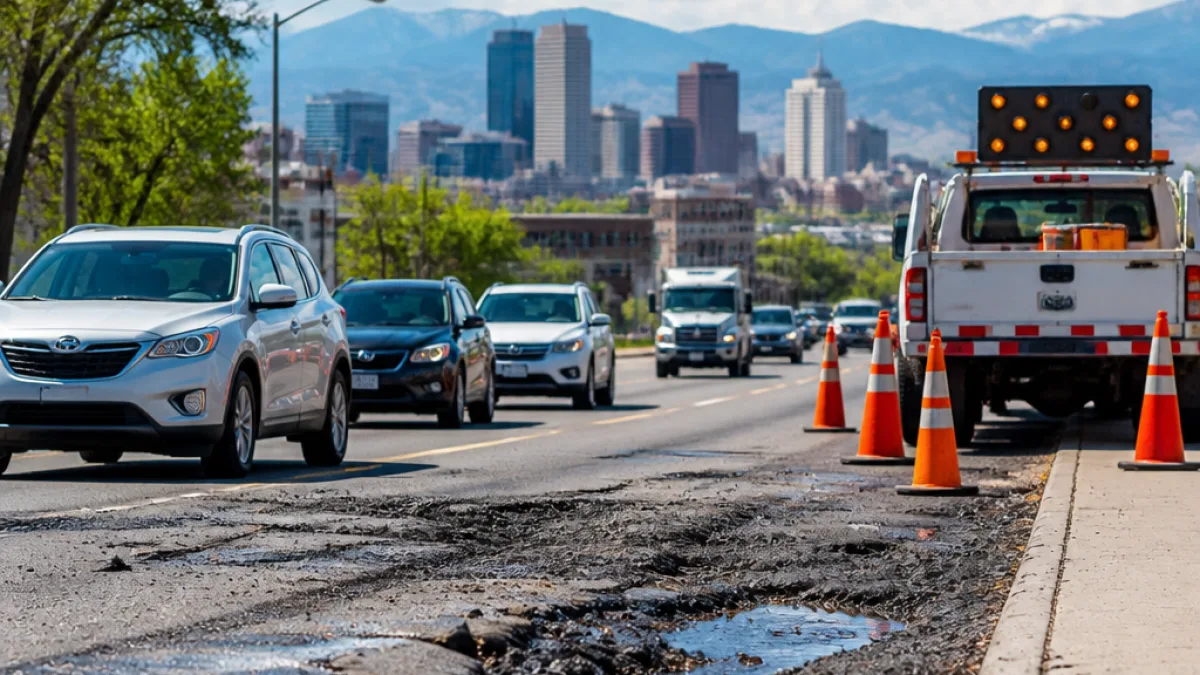
Colorado ranks fourth among U.S. states for the risk its roads pose to vehicles, according to a new study released July 10 by off-road parts retailer Extreme Terrain. The report also found that Coloradans are relatively unconcerned about those risks, ranking 24th in driver worry nationwide.
How the study measured road danger
The report generated a “road abuse risk” score by combining several road-stress factors. Investigators considered:
- Poor pavement
- Freeze-thaw exposure
- Road salt use
- Flooding
- Extreme heat
Data sources cited in the study include the National Oceanic and Atmospheric Administration, the Federal Highway Administration and the American Public Works Association’s Clear Roads research program. To estimate how worried drivers are about vehicle damage, the authors compared the risk score with a search-demand index built from Google Trends regional interest across 39 vehicle repair search terms in six damage categories.
What Colorado drivers worry about
According to the study’s press release, Colorado drivers’ top vehicle damage concern was suspension and alignment, followed by tire and wheel damage. The report found that while many states show a close match between measured road risk and driver concern, Colorado shows a notable gap — high measured risk with middling public worry.
Regional patterns and rankings
The study observed regional concentrations: cold-weather states dominate the list of highest road-damage risk because freeze-thaw cycles are a major driver of pavement breakdown. In fact, the study found 29 states where freeze-thaw cycles were the biggest potential source of damage.
| Top five states by road-abuse risk | States most worried about road damage |
|---|---|
| Rhode Island | Michigan |
| Massachusetts | Wyoming |
| New Jersey | Georgia |
| Colorado | California |
| Connecticut | Michigan (also listed among most worried) |
The study also noted that some states display a substantial mismatch between measured risk and public concern. Rhode Island, which the analysis placed at the top for road risk, ranked only 41st in driver worry, a gap the authors flagged as especially large.
Local implications
For Coloradans, the findings underscore familiar maintenance challenges. Freeze-thaw cycles are common across much of the state, particularly at higher elevations and on roads that see heavy winter use. The study’s emphasis on suspension, alignment and tire damage reflects complaints that many local drivers report after hitting potholes or poorly maintained pavement.
Transportation agencies at the county and municipal level are responsible for maintenance decisions and prioritizing repairs. While this study is an independent analysis from a retail company rather than a peer-reviewed academic paper, its findings add to a growing body of data that public works departments and elected officials can use when discussing budgets, resurfacing schedules and winter maintenance practices.
Motorists can respond in practical ways without waiting for large-scale repairs: maintaining proper tire pressure, checking alignment after rough road encounters and avoiding potholes when safe. For policy makers and planners, the study highlights the value of targeted investments to reduce vehicle damage costs and improve safety.
Methodology note: The study combined environmental and infrastructure inputs with Google Trends search data across 39 repair-related terms to produce its rankings. Agencies cited by the report include NOAA, FHWA and the American Public Works Association’s Clear Roads program.
As state and local officials continue to weigh infrastructure spending, the report provides another data point suggesting Colorado’s roads may be more damaging to vehicles than many drivers realize.