Chesapeake's recent vote to recommend new zoning rules and a citywide policy for data centers sharpens a regional debate that will shape land use and development across Hampton Roads — including in Hampton, which has not yet signaled its own direction.
Local planning enters the spotlight
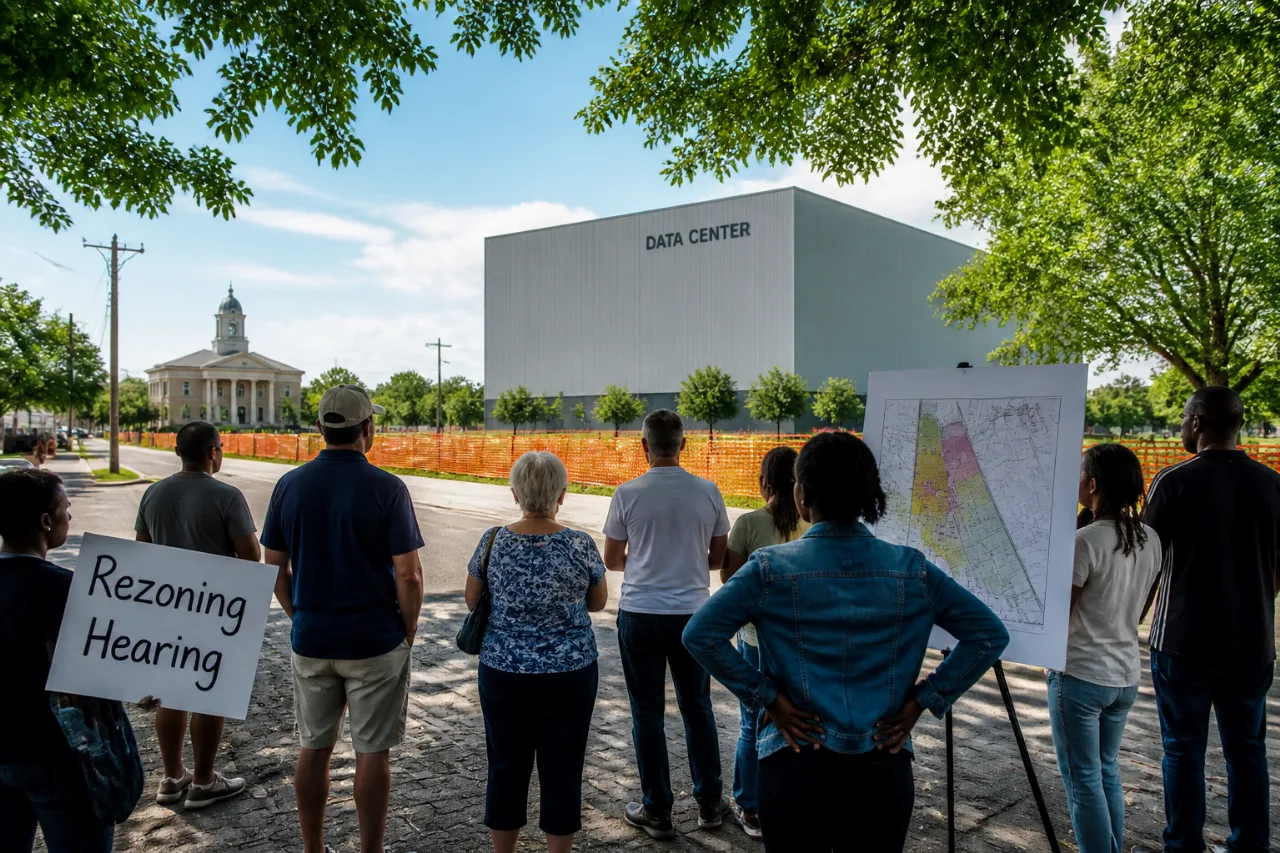
On the heels of months of public meetings, Chesapeake's Planning Commission approved recommendations that would rezone certain industrial districts and create an overlay specifically for data centers. The move advances the issue to the Chesapeake City Council, which retains final authority.
Supporters of the commission's recommendations argued for a cautious, measured approach that lets the city capture economic benefit without allowing industrial facilities to appear next to homes overnight. One perspective made clear the distinction between smaller facilities and large-scale projects:
"We recommend allowing small scale edge data centers in appropriate commercial districts."
Others pushed for firmer limits on large campuses, saying the goal is not to halt growth but to protect residential neighborhoods from industrial encroachment. As one resident put it:
"We were not asking to stop economic development. We're simply asking that industrial scale data centers must not be placed at our back doors."
Resident Lee Damore praised Chesapeake's approach to crafting rules before approving large projects: "I give Chesapeake credit for recognizing we have to protect ourselves. We're not in a position where we can build the first day and then try to put the guidelines in afterwards," according to reporting on the hearings.
How Hampton fits into a patchwork of regional policies
The Chesapeake vote comes as neighboring cities take markedly different paths toward managing the fast-growing data center industry. Newport News has moved forward with a new development by breaking ground on a facility at Jefferson Lab. Suffolk has instituted a temporary moratorium on new data centers while officials consider policy. Virginia Beach has taken a clear, restrictive stance; its mayor delivered blunt public opposition toward the facilities.
Notably, several cities — including Norfolk, Hampton and Portsmouth — have not yet announced firm policies. That leaves local officials and residents here watching and weighing how the industry could affect property values, traffic, electric grid demands and local tax bases.
- Chesapeake: Planning Commission recommended rezoning and an overlay district, advanced policy to City Council.
- Newport News: Broke ground on a data center at Jefferson Lab.
- Virginia Beach: Publicly opposed large data centers.
- Suffolk: Approved a temporary moratorium on new data center development.
- Norfolk, Hampton, Portsmouth: No public policy announced yet.
| City | Current stance |
|---|---|
| Chesapeake | Rezoning & overlay recommended; City Council to decide |
| Newport News | Moving forward with new center at Jefferson Lab |
| Virginia Beach | Publicly opposed |
| Suffolk | Temporary moratorium |
| Norfolk | No announced policy |
| Hampton | No announced policy |
| Portsmouth | No announced policy |
Practical questions for Hampton
For Hampton residents, the Chesapeake debate highlights practical considerations leaders here will face when they decide whether to welcome data centers and under what conditions. Those issues include:
- Where large power draws and cooling infrastructure can be sited without burdening neighborhoods.
- How to balance potential tax revenue and jobs against perceived environmental and quality-of-life costs.
- Whether to allow smaller "edge" facilities in commercial corridors while restricting campus-scale developments near homes.
Regional variation in policy also affects competition for projects. Cities that offer clear rules and predictable permitting may attract different proposals than those that impose moratoria or strict limits. That matters because data centers can be both a source of local investment and a heavy consumer of electricity and land.
As Chesapeake's recommendations move to council, Hampton officials will be watching the outcome and the local conversation for lessons. With neighboring jurisdictions already choosing divergent paths, the choices made here will determine how Hampton positions itself in a regional market that is growing but also drawing increased scrutiny from communities and planners across Virginia.
Residents who want to weigh in should track their city council and planning commission agendas; these forums will be where policies take shape and where local priorities are translated into zoning language and permitting standards.