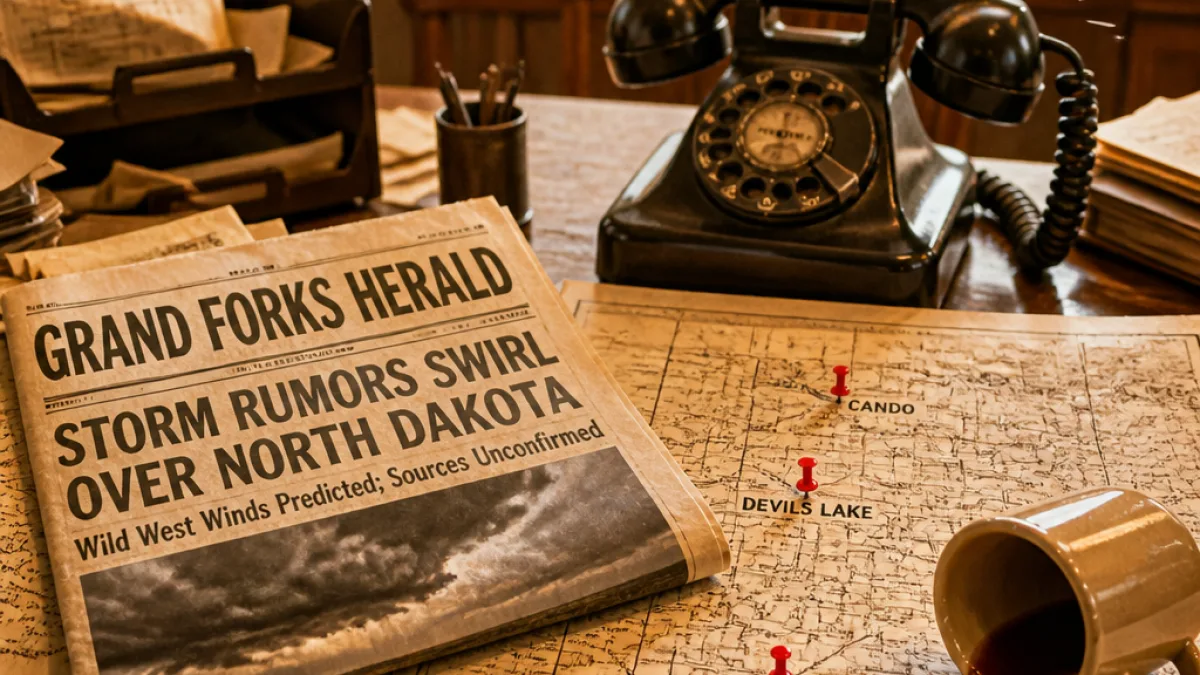
On July 12, 1932, readers of the Grand Forks Herald were confronted with alarming mail and inquiries claiming that tornadoes and hailstorms had demolished towns across North Dakota. The paper investigated and found the reports unfounded: towns named in the wave of messages reported only light showers and no storm damage.
Rumor outpaced the weather
What began as scattered talk quickly escalated into accounts of "three towns swept away," buildings uprooted and fields pounded flat. Those reports reached the Herald in the form of numerous queries asking the paper to verify destruction in places including Cando, Devils Lake and Towner. Despite the urgency and repetition of the claims, local officials and newspaper correspondents in those communities reported calm conditions.
"It started with a little rumor," the Herald recounted of the episode — a description that captures how quickly unverified information multiplied.
What authorities found
The Herald followed up with the nearby publications and local officials. The Devils Lake Journal reported only light showers with no wind damage or hail. The Towner railway agent confirmed no sign of storms. The Cando telephone operator said all buildings stood and no injuries had been reported. In short: the dramatic tales circulating by telephone and word of mouth did not match the reality on the ground.
- Source of confusion: traveling reports and secondhand accounts
- Communities checked: Cando, Devils Lake, Towner and surrounding points in the northwest
- Outcome: no widespread damage; a few showers reported
How the episode matters now
That 1932 episode illustrates how quickly rumors can travel and how resilient local reporting was in separating fact from fiction. For North Dakota communities — then and now — local newspapers, telephone operators and rail agents played key roles verifying events beyond hearsay. The story is a reminder that, despite the speed and reach of modern social media, basic verification by local sources remains crucial.
| Town | Rumored condition | Actual report |
|---|---|---|
| Cando | Ruined, buildings gone | All buildings in place; no injuries |
| Devils Lake | Business district wrecked | Only slight showers; no wind or hail damage |
| Towner | Razed | Quiet; no storm signs |
Archival items like this one from the Grand Forks Herald offer a local lens on how communities respond to alarming news. They also underscore the practical value of reaching out to on-the-ground contacts — a habit that served North Dakotans in 1932 and still matters today.