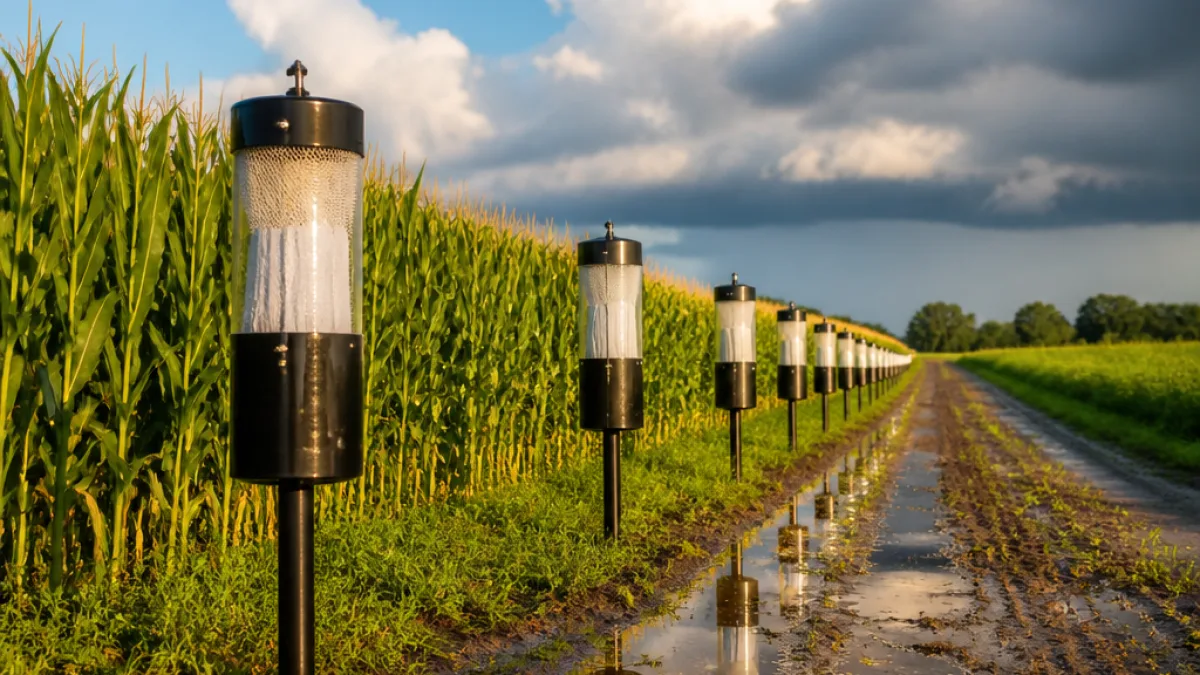
DES MOINES — Iowa is seeing an unusually light mosquito season so far, according to state surveillance data collected by researchers from Iowa State University. The program has placed about 100 traps around the state and, through mid-July, counted roughly 12,000 mosquitoes — a total experts say is the lowest in a decade.
Dry spring drove lower counts
Researchers attribute the decline primarily to a dry spring that limited the number of standing-water sites where mosquitoes lay eggs and larvae develop. The reduced number of breeding habitats appears to have translated into fewer adult mosquitoes caught in trap networks that have historically recorded far larger totals.
The university’s long-running program has some years when captures are far higher. In past seasons, traps collected on the order of 100,000 mosquitoes by this point in the summer, illustrating how much seasonal weather patterns can alter population size.
“I would say that it is a little bit of a surprise to see the low numbers that we’ve had,” Smith said.
Recent rains could shift trend
Although counts to date are low, researchers cautioned that last week’s heavier rains and localized flooding may produce more standing water and boost mosquito breeding in the coming days. The program’s lead has said an uptick is likely but noted there are not yet numbers to confirm an increase.
“I think that given the significant rain that we had, the amount of standing water, I think that there is bound to be an increase in mosquitoes here in the next week or so. But I don’t have any numbers that would, you know, fully support that yet,” Smith said.
- What changed: A dry spring reduced breeding sites across the state.
- Current tally: About 12,000 mosquitoes captured from roughly 100 traps.
- Watch for: Increased mosquito activity after recent rains and flooding.
| Metric | Value |
|---|---|
| Traps deployed | ~100 |
| Mosquitoes caught (mid-July) | ~12,000 |
| Higher-season benchmark (past years) | ~100,000 |
For Iowans, the immediate implications are practical. Fewer mosquitoes so far can mean more comfortable outdoor time and lower nuisance levels around homes, parks and recreational areas. But public-health and university researchers emphasize vigilance if standing water persists after storms: that is when populations can expand quickly.
The surveillance program’s statewide trap network provides an early indicator of seasonal trends, helping local public-health officials and residents gauge risk and choose preventive steps. Officials typically advise removing or treating standing water where possible and using repellents when mosquito activity picks up.
As the summer progresses, Iowa State University will continue weekly counts from the trap network. Those updates will show whether the recent rains cause a rebound in mosquito numbers or whether the light season holds through peak summer.