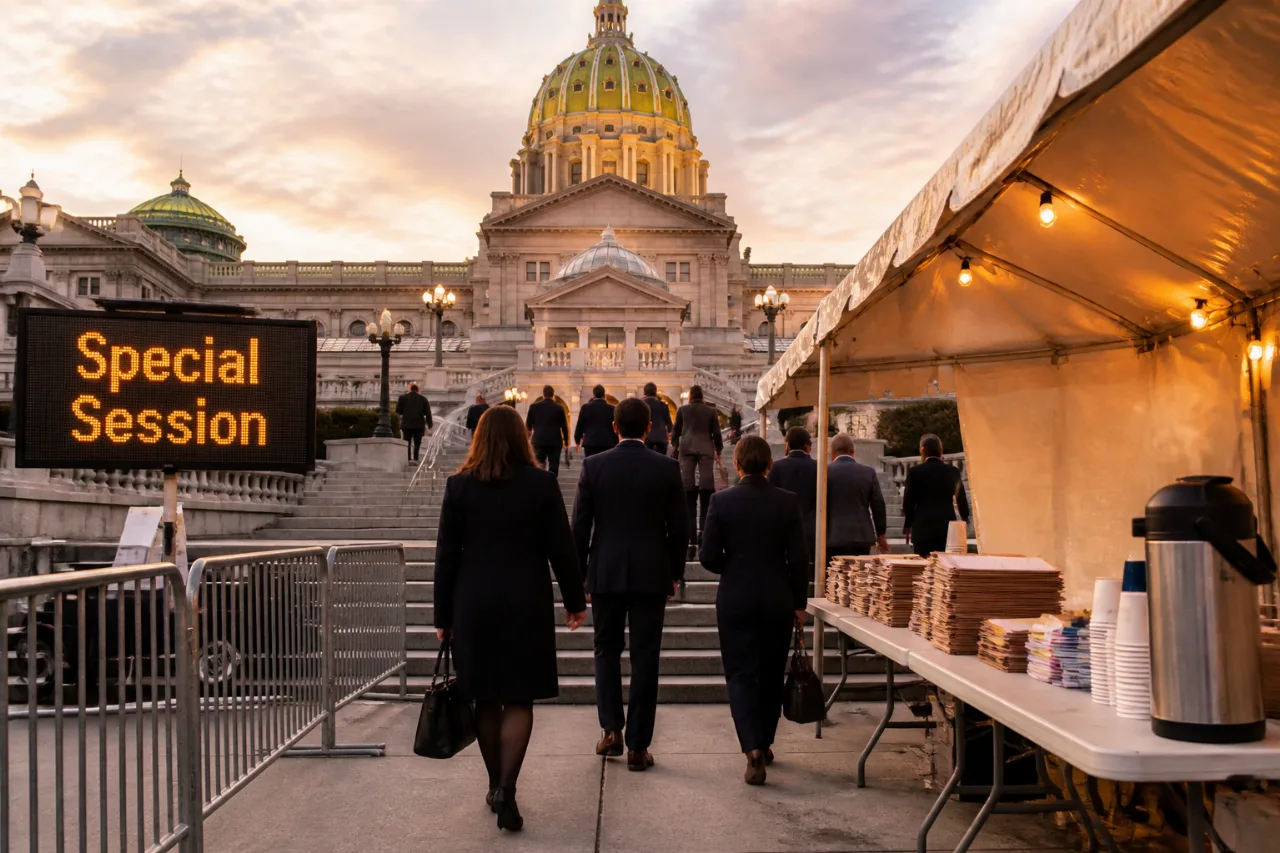
HARRISBURG — Lawmakers scheduled a rare weekend return to the Capitol as negotiators race to complete a nearly two-week-late Pennsylvania budget that by law must be balanced.
Weekend schedule set as talks continue behind closed doors
Top legislators were still meeting Friday as staff and elected officials circulated through the Capitol, but it was unclear whether Gov. Josh Shapiro and leaders had finalized an agreement. With the regular June 30 deadline passed, leaders said progress had been made and that additional public votes would be necessary to enact a full spending plan.
“Progress [on the budget] has been made to the point where a return to session is warranted,” state Senate Majority Leader Joe Pittman, R., said in a caucus email viewed by Spotlight PA.
Lawmakers planned committee votes beginning Friday night in the Senate, followed by a full Senate session Saturday afternoon. The House was set to reconvene for committee work Saturday night, with both chambers scheduled to be on the floor Sunday at noon.
| Day | Planned activity |
|---|---|
| Friday | Senate committee votes, 8 p.m. |
| Saturday | Senate full session, afternoon; House committee votes, night |
| Sunday | Both chambers return at noon |
What remains unresolved and what’s been left out
In April, the state House passed legislation to implement Gov. Shapiro’s $53.3 billion budget proposal with bipartisan support, but the Senate has not approved a comprehensive spending plan. The GOP-controlled Senate adjourned on the day of the deadline, prompting criticism from Democratic leaders that the chamber had "not finished the job." Negotiators have reportedly agreed to narrow the scope of talks in order to reach an agreement, sidelining several partisan items.
Among topics lawmakers indicated would likely be excluded from the immediate negotiations are proposals to:
- Regulate and tax marijuana;
- Raise the state minimum wage;
- Overhaul public education funding formulas.
A spokesperson for Gov. Shapiro told Spotlight PA that the governor would be working from the Capitol throughout the weekend while the legislature was in session but that there were no details to share about a potential deal as of Friday afternoon.
Why the timetable matters
Pennsylvania statute requires a spending plan by June 30 and the state constitution requires the budget to be balanced. Missing that deadline can complicate cash flow for agencies and delay program funding across counties and municipalities. Lawmakers and the governor must reconcile priorities and numbers for a plan that sets spending for schools, health care, public safety and other state services.
Statehouse observers said the compressed schedule for votes and limited public activity reflects negotiators’ desire to close outstanding differences quickly. Whether they will succeed over the weekend remained uncertain as Friday turned into a weekend of closed-door bargaining in the Capitol.
The outcome will determine funding levels and policy priorities that affect Pennsylvania counties, school districts and residents statewide for the coming fiscal year.