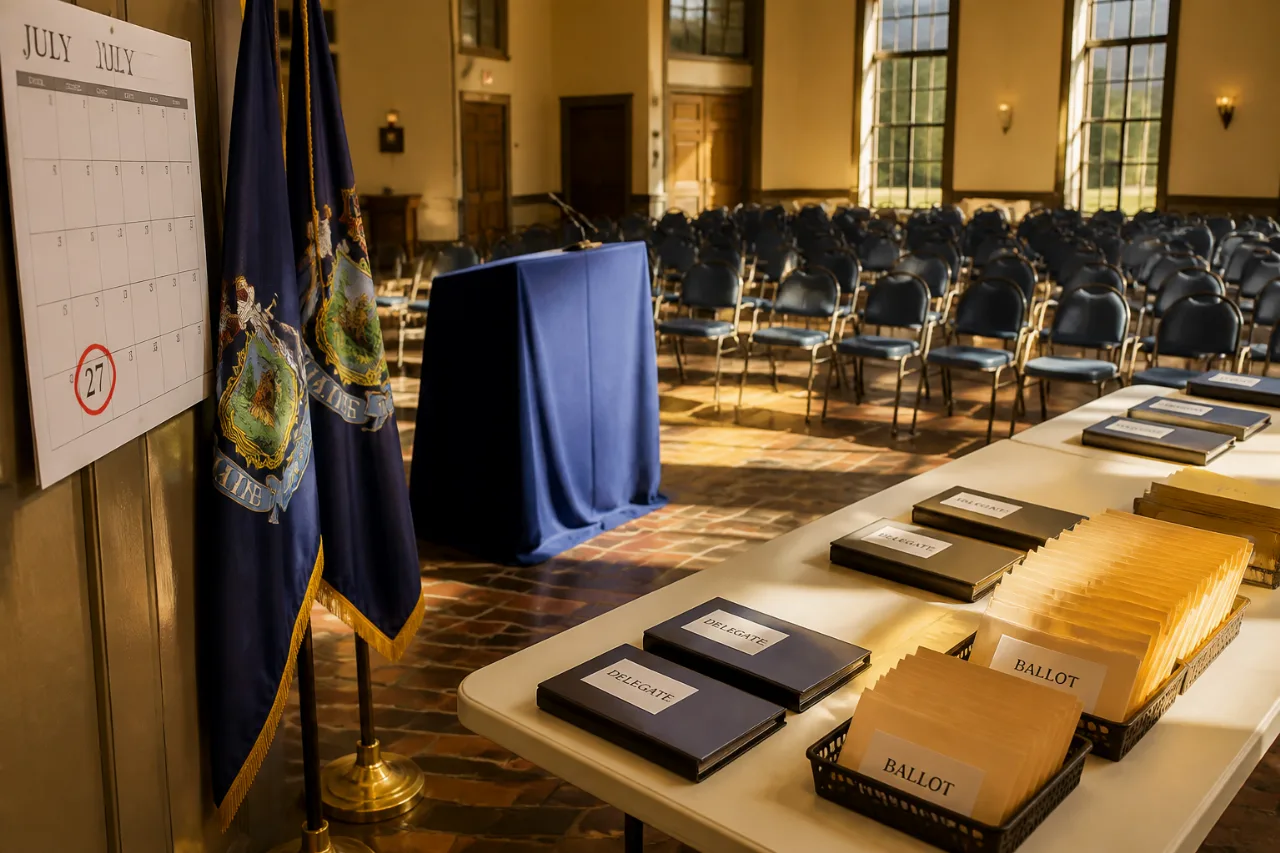
Democratic leaders in Maine have less than three weeks to pick a new nominee for the U.S. Senate after Graham Platner suspended his campaign late this week following a public allegation of sexual assault. Platner has denied the allegation. Under state law, the Maine Democratic Party must certify a replacement by 5 p.m. on July 27.
Party moves to convene and contenders emerge
The state party announced it will hold a nominating convention of roughly 600 delegates to select a replacement candidate; details on the process are still being finalized. The Secretary of State's office said Platner had not yet filed the paperwork to formally withdraw his name from the ballot as of Thursday morning, but a source told ABC News that Platner intended to submit that paperwork on Monday, the last day that would allow the party to choose a new nominee.
Several Democrats have publicly signaled interest or filed paperwork to run. Among those who have emerged as possible contenders are:
- Troy Jackson — former Maine Senate president and a fifth-generation logger from Allagash. Jackson posted on social media that he was entering the race shortly after Platner suspended his campaign and has filed FEC paperwork for an exploratory run.
- Shenna Bellows — Maine secretary of state and former ACLU of Maine director. Bellows, 51, recently ended a bid for governor after losing the June Democratic primary and announced she was seeking the Senate nomination.
- Nirav Shah — former director of the Maine Center for Disease Control and Prevention and a previous gubernatorial candidate; he formally announced a run for the Senate nomination on Thursday morning.
- Dan Kleban — brewery owner whose name has been mentioned among those weighing a run.
- Jordan Wood — a former Capitol Hill staffer who has been listed among potential candidates.
“I’m sure as hell not backing down now, when this fight is needed most. I’m in. And we're going to defeat Susan Collins,”
The quoted lines were posted by Troy Jackson soon after Platner announced he was suspending his campaign.
High-stakes timeline and local consequences
The vacancy comes at a pivotal moment: Sen. Susan Collins, a three-term Republican incumbent, is widely regarded as a formidable general-election candidate. The Maine GOP reacted quickly to the upheaval; state party chair Jim Deyermond told reporters he was untroubled by the Democrats' scramble, saying the party was confident Collins would be re-elected regardless of the Democratic nominee.
For Democrats, the immediate task is logistical and political: ensure a replacement can be chosen according to party rules and that the candidate can mount a competitive campaign with limited time to organize, raise money and introduce themselves to voters across Maine’s diverse regions, from the more urban coastal communities to rural northern and downeast towns.
| Key date | Action |
|---|---|
| July 27, 5 p.m. | Deadline for Maine Democrats to certify a replacement nominee for the November ballot |
Ranked-choice voting in Maine complicates primary dynamics but does not affect the party's convention process for replacing a nominee. Several Democrats who ran in the June primary or considered joining it have publicly declined interest in replacing Platner; others have moved quickly to file paperwork or signal intention.
What to watch next
- Whether Platner files formal withdrawal paperwork and when that occurs.
- The date and rules for the Democratic nominating convention and who the roughly 600 delegates will support.
- How quickly a replacement can assemble a statewide campaign and fundraising apparatus to compete in November against a well-known incumbent.
The contest will unfold in the coming weeks as Democrats weigh electability, regional balance and the capacity to mount an intensive statewide campaign. The party’s choice will shape what promises to be one of Maine’s most closely watched races of the year.
— Fiona Merrill, News Block