
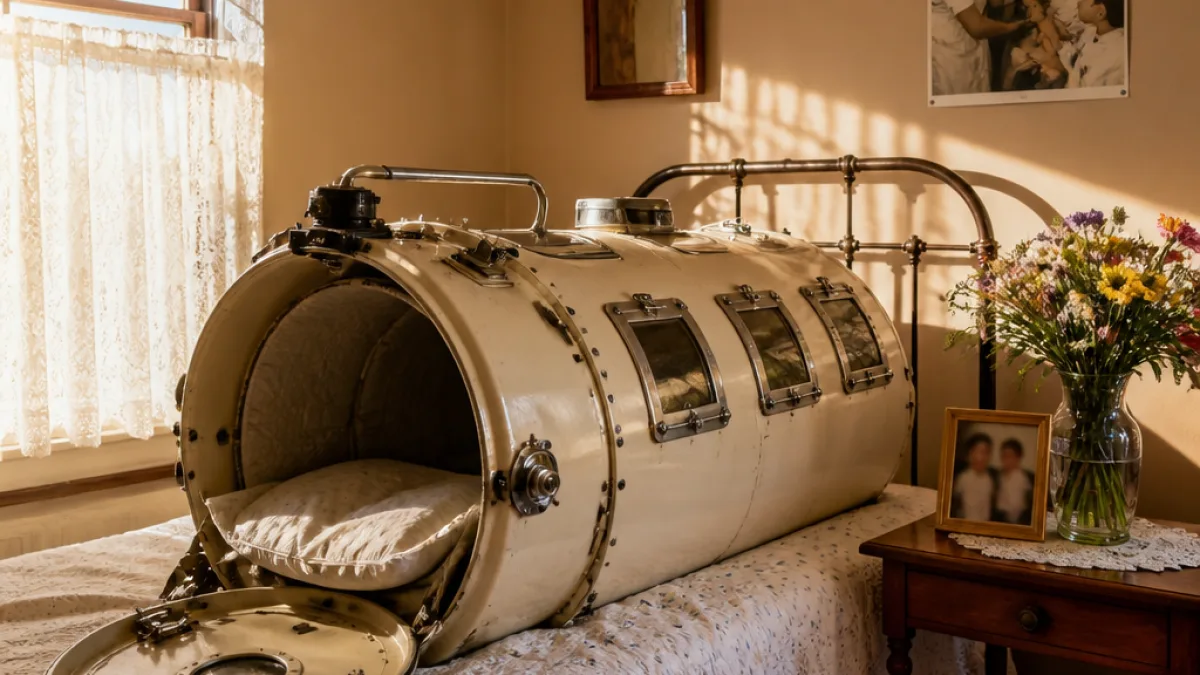
Martha Lillard, who spent much of her life relying on an iron lung after contracting polio at age 5, died June 26 in Oklahoma. She was 78. Family members say she was the last person in the United States known to use the large mechanical respirator that became a symbol of the polio era.
Her younger sister, Cindy McVey, 75, told The Associated Press she does not know an official cause of death but believes long-haul COVID-19 factors played a role. McVey said her sister outlived early prognoses that suggested she might not reach adulthood.
"They told her she wasn't supposed to live past 20 years old," McVey said. "She had the enthusiasm and the drive to continue living and make the best of her life."
Life adapted around the machine
Lillard's body was encased in the iron lung's cylinder for sleep and respiratory support; the device worked by changing air pressure inside the chamber to move air in and out of the lungs. Despite paralysis from the neck down early in life, she received therapies that restored some motion: partial use of her left arm and some movement in her legs.
Her family arranged schooling, travel and daily life around the machine. She attended Shawnee High School using an intercom system so she could interact with teachers and classmates. As a child she attended classes for short periods and received tutoring outside the classroom. Her family even modified travel plans — calling ahead to confirm hotel doors and using a custom trailer to make road trips possible.
From feared disease to near-eradication
Polio once caused widespread fear in the United States, especially affecting children. Vaccines began to roll out in 1955 and drove case counts downward over the following decades. By 1979 the disease was declared eliminated from routine spread in the U.S.
| Milestone | Detail |
|---|---|
| Vaccine availability | 1955 |
| U.S. cases reduced | Fewer than 100 annually in the 1960s; fewer than 10 in the 1970s |
| Declared eliminated in U.S. | 1979 |
- Age at diagnosis: 5 years old
- Age at death: 78; died June 26
- Residence: Oklahoma
Lillard's story reflects how families and communities adapted to disability in an era before modern accessibility standards. She learned to use emerging technologies — including the internet later in life — to stay informed and connected. Her sister recalled that Lillard spent many years living independently and could prepare meals despite limited range of motion.
Her passing closes a chapter on a visible reminder of mid-20th century American public-health history. For many Oklahomans who remember polio outbreaks or the sight of iron lungs in hospitals, Lillard's life and longevity underscore both the advances of vaccination campaigns and the personal resilience of those who lived through the disease.
Family members have not released further details about funeral arrangements.