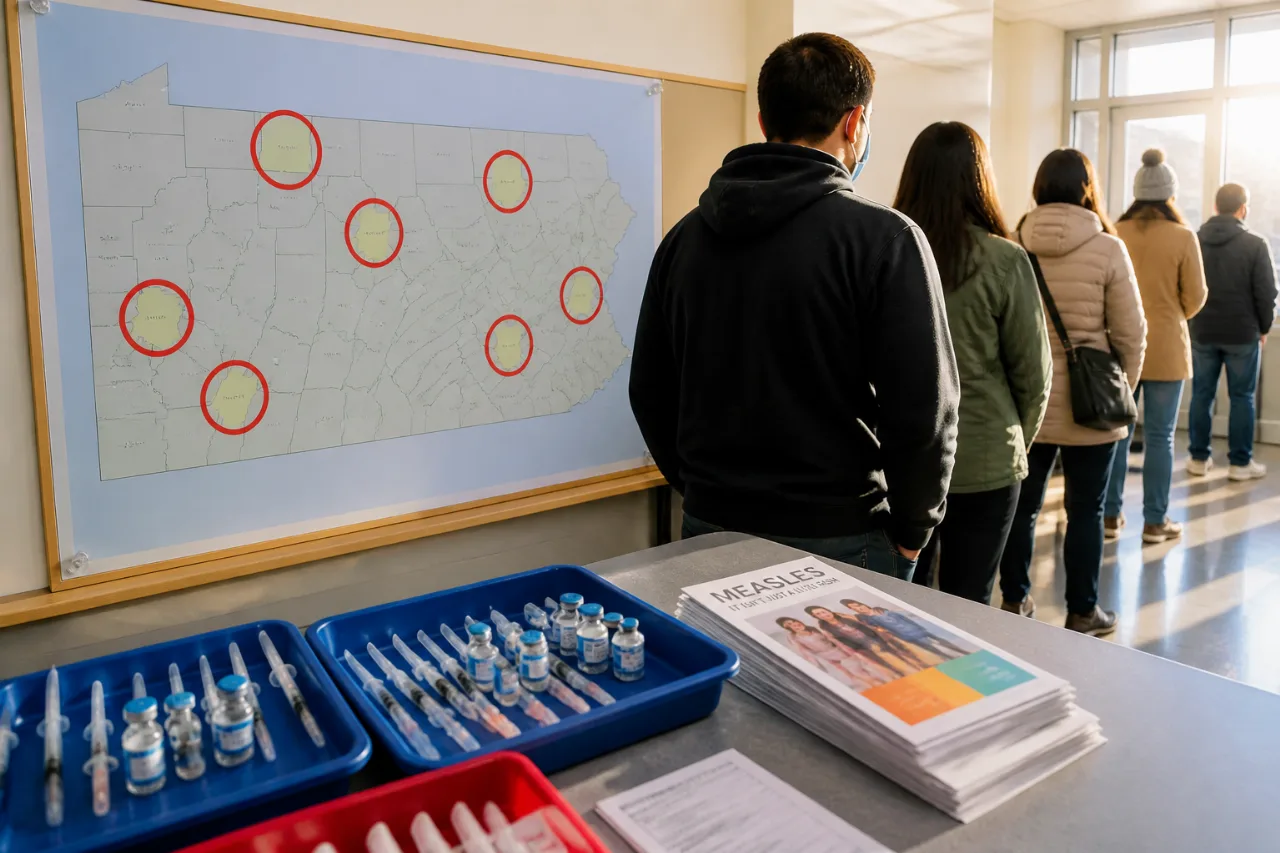
Pennsylvania has recorded more than 100 measles cases, with infections now reported in seven counties, state health officials said. The outbreak’s growth has raised concerns among public-health authorities about further community transmission and potential impacts on schools, clinics and other congregate settings.
Why this matters
Measles is among the most contagious vaccine-preventable diseases. An infected person can spread the virus to others before symptoms appear, and the virus can remain infectious in the air and on surfaces for hours. For counties and health systems, an expanding outbreak can require intensive contact tracing, testing and targeted vaccination efforts.
Public-health responses typically focus on limiting transmission through:
- Identifying and notifying close contacts of confirmed cases
- Providing or verifying immunity (vaccination or documented history) for exposed individuals
- Advising isolation for people with symptoms or confirmed infection
- Working with schools, child-care centers and health-care providers to prevent further spread
Basic facts about measles, public guidance
Measles can cause high fever, cough, runny nose, red eyes and a characteristic rash. Complications include pneumonia, dehydration and, rarely, inflammation of the brain (encephalitis). Vaccination with the measles-mumps-rubella (MMR) vaccine is the primary tool to prevent infection and limit outbreaks.
Health officials advise anyone who suspects they have measles or were exposed to contact their local health department or health-care provider promptly. People who are not fully vaccinated and who may have been exposed are often recommended to receive MMR vaccine or immune globulin depending on timing and individual risk factors.
| Metric | Current report |
|---|---|
| Reported cases | >100 |
| Counties affected | 7 |
Local health departments have key roles in outbreak control, including confirming cases, notifying contacts, supporting testing and vaccinations, and working with institutions to issue exclusion orders when required to protect vulnerable people.
As the outbreak evolves, state and county officials will likely update guidance on school attendance, event safety and vaccination clinics. Residents should monitor communications from their county health department for the most current instructions and clinic schedules.
For now, vaccination, early recognition of symptoms, and staying home when ill remain the critical measures to reduce further spread of measles across the commonwealth.