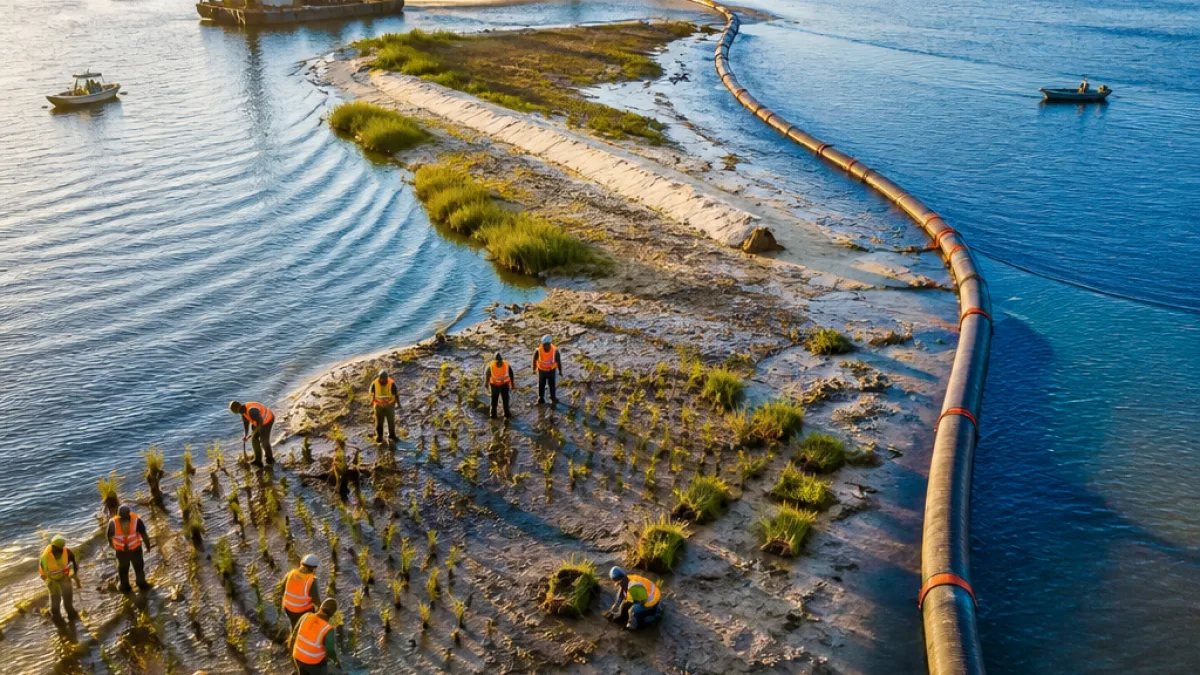
The state of Mississippi will lead a multi-million-dollar project to restore and renourish Grand Batture Island, a shrinking barrier feature in the northern Mississippi Sound near Moss Point that once stretched about five miles and now exists largely as a shoal. The effort, funded by a recent allocation from the Gulf Coast Ecosystem Restoration Council, aims to rebuild marsh and shoreline habitat crucial to brown shrimp, white shrimp, blue crab and other coastal species.
What was approved and why it matters
Last month the Gulf Coast Ecosystem Restoration Council approved $55 million to design, engineer and place material to return Grand Batture Island toward its historic footprint. State officials estimate the island’s seaward edge has shrunk to roughly one-fifth its length from 1850, when it measured about five miles.
Valerie Alley, director of the Office of Restoration at the Mississippi Department of Environmental Quality, summarized the stakes succinctly:
"Anything we like to eat comes out of an estuary," said Alley.
Restoring the island is intended to rebuild marsh grasses, reduce wave energy reaching interior marshes, and create nursery habitat for commercially and culturally important species. Officials say long-term erosion, boat wakes, storm action and rising sea levels have combined to erode sediment and allow channels to cut through the island. The system also lacks sufficient natural sediment supply because upland road crossings and changes in coastal processes interrupt the movement of material downstream.
Project components and local effects
- Design and engineering: Studies and plans to determine where to place material and how to protect future marsh development.
- Sediment placement: Dredged or otherwise sourced material will be deposited to rebuild shoreline, shoal and marsh areas.
- Marsh restoration: Planting or encouraging native marsh grasses to stabilize new sediment and create habitat.
Officials say the island straddles the Mississippi–Alabama boundary, extending into Alabama’s Grand Bay, and the restoration will be coordinated with neighboring jurisdictions. The work is expected to benefit local fisheries by increasing nursery habitat for shrimp and crabs, which could help commercial and recreational harvests over time.
| Item | Detail |
|---|---|
| Funding | $55 million from Gulf Coast Ecosystem Restoration Council |
| Location | Grand Batture Island, northern Mississippi Sound (near Moss Point), extends into Grand Bay, Alabama |
| Primary goals | Restore island footprint; rebuild marsh habitat; create shrimp/crab nursery areas |
Background and local context
Grand Batture Island’s decline reflects longer-term coastal trends affecting Mississippi’s barrier islands and marshes. Boat wake energy, repeated storms and rising seas accelerate erosion on low-lying sand and peat features. Where coastal systems once received seasonal pulses of sediment to rebuild marshes naturally, human infrastructure such as upland road crossings has altered sediment delivery downstream, leaving some shorelines starved for material.
For residents and fishers around Moss Point and the Mississippi Sound, the island’s loss has tangible consequences. Shrimp and crab varieties rely on protected shallow marshes as nurseries; without those sheltered areas, juvenile survival and local harvests can be reduced. The restoration project aims to address those ecological connections and provide a degree of resilience to coastal habitats that support local economies.
State and federal agencies will now move into project design and permitting phases. Local stakeholders, including fishers and coastal communities, are expected to be part of planning discussions as engineers finalize placement strategies and environmental safeguards.
This restoration represents a significant infusion of Gulf settlement funds into Mississippi-led coastal recovery work and will be watched closely by communities that rely on the Sound’s fisheries and wetlands for both livelihoods and natural storm protection.
— Jerome Patterson, Mississippi Correspondent