Progress is not enough to meet the deadline
Connecticut has reduced its greenhouse gas emissions by 28% since 2001, but the state is not on pace to reach the reduction required under its 2030 climate target. New projections indicate Connecticut could fall short by about 9%, making it more difficult to limit the local effects of a warming climate.
To meet the 2030 goal, the state must increase its overall reduction to 45% from the 2001 baseline. The figures were released in November by the Governor's Council on Climate Change as state agencies assess how emissions changed between 2023 and 2024.
| Measure | Reported figure |
|---|---|
| Reduction since 2001 | 28% |
| Reduction needed by 2030 | 45% |
| Projected shortfall | About 9% |
| Transportation increase, 2023-24 | About 500,000 metric tons |
Transportation is moving in the wrong direction
Emissions from transportation increased by approximately half a million metric tons in the latest year covered by the projections. The amount is comparable to the annual emissions from more than 110,000 motor vehicles, according to the report's comparison.
That increase offset some of the gains recorded in other parts of the economy. Emissions from homes, commercial buildings and electric power all declined between 2023 and 2024, according to the climate council's data. The changes show that Connecticut's progress is uneven: some major sources are producing less pollution, while transportation remains a significant obstacle to the state's 2030 objective.
State officials tie emissions to costs and flooding
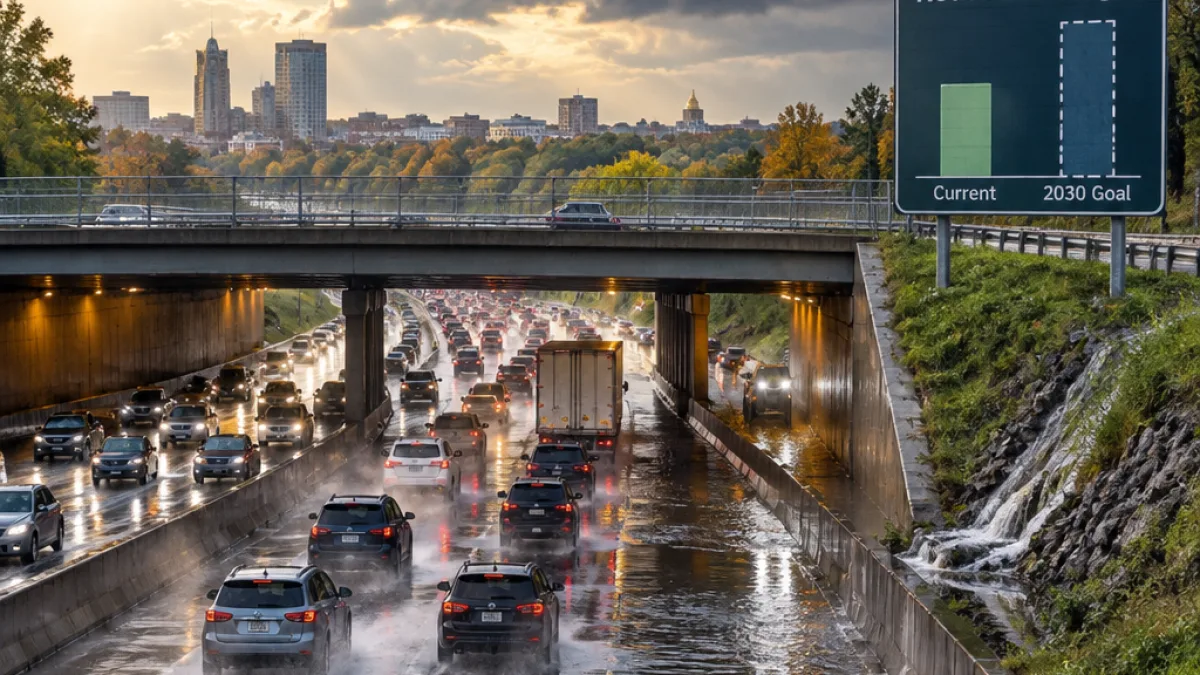
Emma Cimino, acting commissioner of the state Department of Energy and Environmental Protection, said reducing emissions is also a way to limit future expenses tied to severe weather. She pointed to a September rainstorm that dropped more than 7 inches of precipitation in Fairfield County, flooding homes, businesses and portions of Interstate 95.
“Addressing climate change is an affordability issue for our state.”
Cimino said heavier rainfall creates additional demands for roads, drainage systems, homes, businesses and other public infrastructure. She argued that preventing the most damaging effects of climate change would cost less than repairing damage caused by increasingly extreme weather events.
“Cutting greenhouse gas emissions is critical,” Cimino said, adding that the state needs to consider the consequences for infrastructure, natural resources and public health.
Building and power-sector emissions decline
Michael Malmrose, an associate research analyst with DEEP's Office of Energy Supply and Infrastructure, said emissions from buildings have fallen as more residents shift from home heating oil to natural gas. About 20% of people now use electricity, according to Malmrose.
Electric-power emissions also decreased as older, more polluting plants were replaced by gas generators and the Millstone Nuclear Power Station operated throughout 2024. The plant's reactors were offline for 89 days for refueling in 2023, a disruption that was not repeated for the full 2024 period described in the report.
Cimino characterized the reductions as meaningful because emissions have remained below pre-pandemic levels. The new projections nevertheless leave Connecticut facing a difficult path to its 2030 goal, with transportation growth and the costs of adapting to heavier rainfall adding urgency to the state's climate planning.