A U.S. Drought Monitor update this week found that large swaths of North Carolina remain in an intensifying dry spell, with 43.6% of the state classified in extreme drought — an increase of about 8 percentage points from the prior report — and 6% in exceptional drought, the highest and most severe designation.
Impact on agriculture and local supplies
State Agriculture Commissioner Steve Troxler told the Council of State and Gov. Josh Stein that farmers across the state are bracing for reduced yields and economic losses. He said growers are reporting generally poor crop conditions this season and warned that irrigation sources are increasingly strained.
“Quite frankly, it’s hard to find a farmer that will tell you that he has excellent crops this year,”
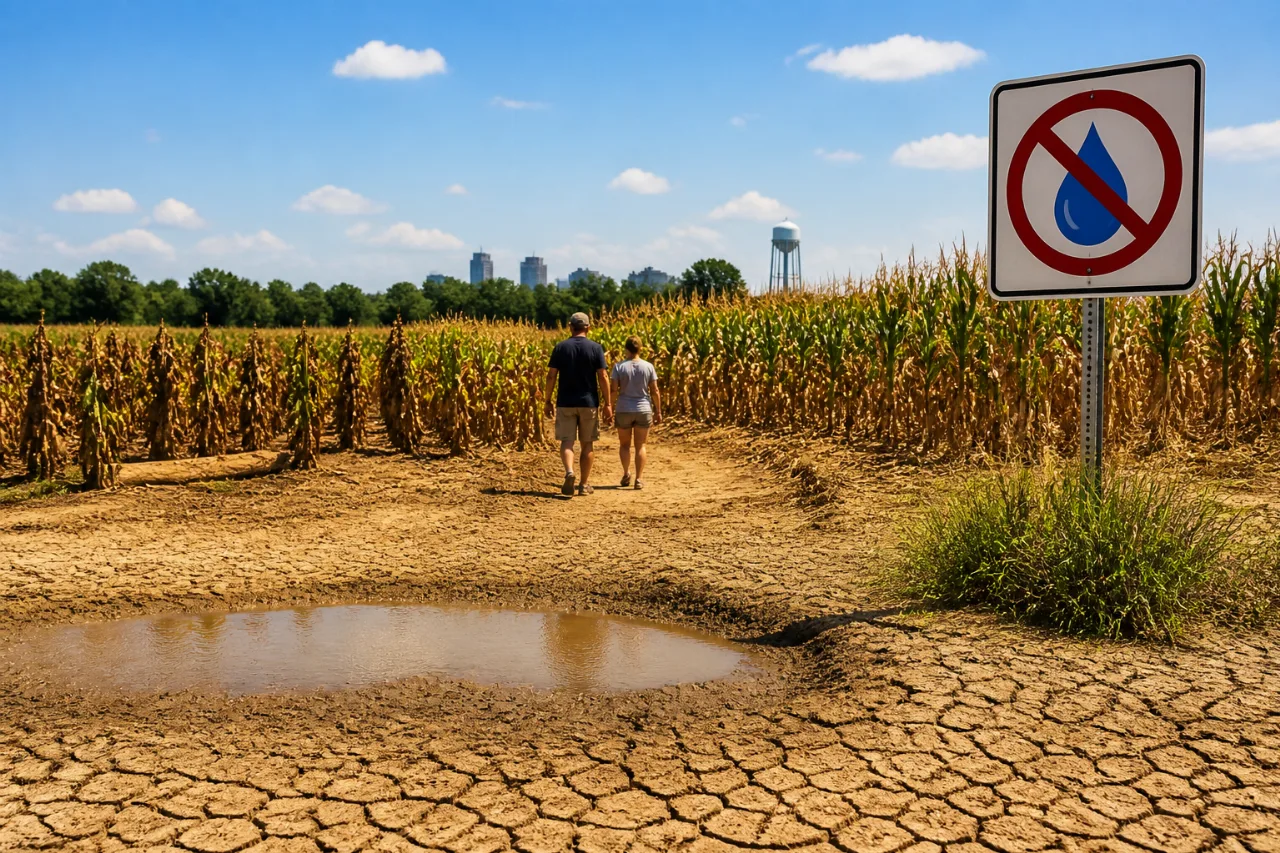
Troxler cited tobacco farmers in eastern counties who have noted yellowing leaves and slowed growth. He also said unusually warm temperatures this summer have exacerbated water shortages for agricultural ponds used to irrigate fields, raising the prospect of further declines in output as the season progresses.
Municipal water stress in Raleigh
Localized rain earlier this week did boost Falls Lake — Raleigh’s main drinking-water source — by roughly six inches, officials said. Still, city leaders have voted to give the city manager authority to quickly trigger Stage 2 water restrictions if conditions warrant. The city has urged conservation since April, but compliance has lagged, according to Raleigh Water.
“We’ve unfortunately gone in the wrong direction since mid-May,”
Raleigh Water reported that during the first week of July nearly half of the irrigation meters checked were not following restrictions, and that heavy residential irrigation contributed to single-day peaks well above the volume the city considers manageable.
Why this matters for counties and the state
The combined agricultural and municipal pressures underscore the drought’s ripple effects: lower crop yields can reduce farm incomes and local tax bases in rural counties; strained reservoirs and higher daily demand can force cities to impose tighter restrictions that affect residents and businesses. Water managers use staged restrictions to try to hold daily use within sustainable limits, but repeated hot, dry weather makes that task harder.
- Statewide extremes: 43.6% extreme drought; 6% exceptional drought.
- Agriculture: Reports of below-average crop conditions and irrigation pond shortages.
- Municipal response: Raleigh prepared to escalate restrictions after compliance slipped.
| Classification | Percent of NC |
|---|---|
| Extreme drought | 43.6% |
| Exceptional drought | 6% |
State and local officials will be watching forthcoming Drought Monitor updates and short-term forecasts to guide responses. For residents, officials continue to urge practical conservation measures — limiting outdoor irrigation, fixing leaks and following staged watering schedules — to reduce strain on public supplies as the state moves through the peak summer season.
Trevor Sloan, News Block.