
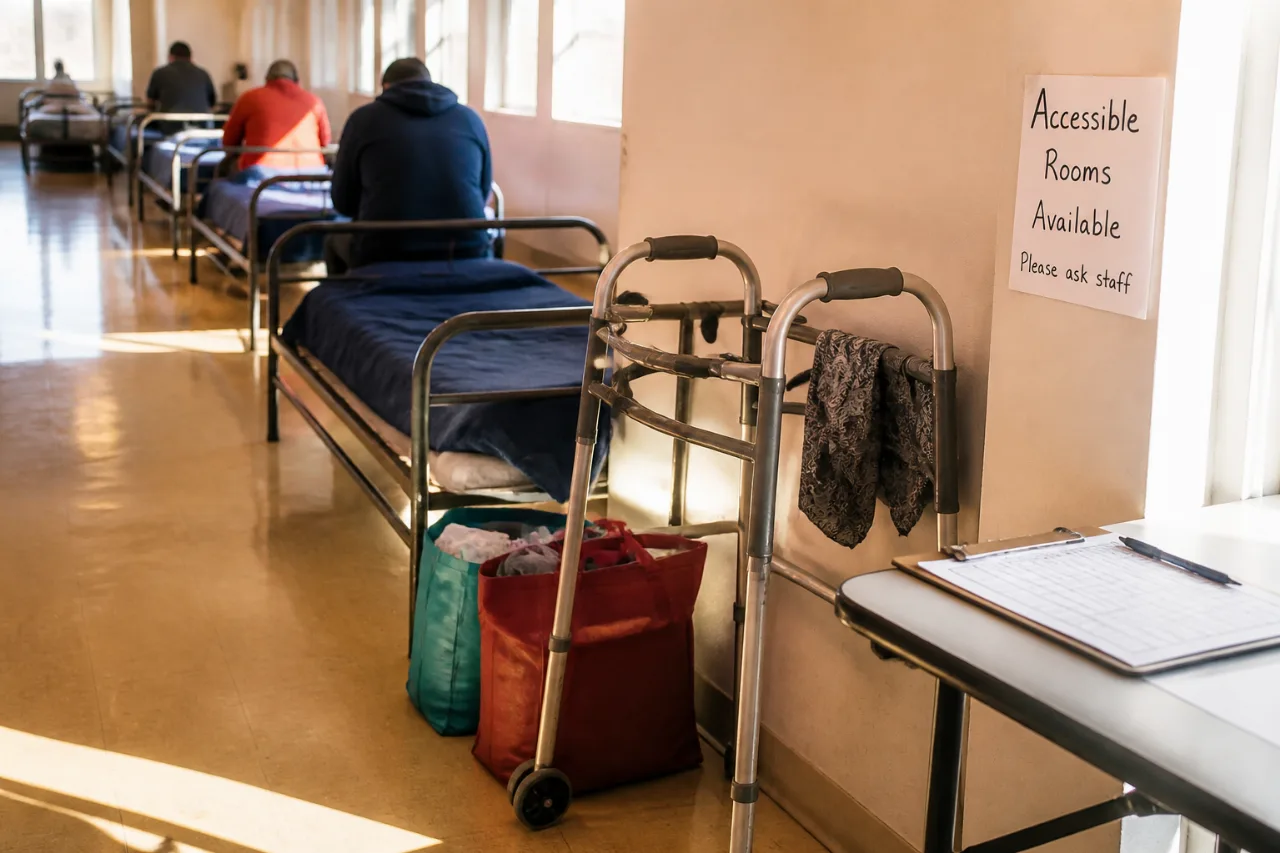
KEENE — Shelters and housing advocates across New Hampshire say they see a shifting profile of homelessness: more people in their 60s and older who worked, paid taxes and raised families in the state now find themselves unable to secure stable housing.
One woman's scramble for housing
Stacy Z., a 65-year-old Keene resident who asked that her full name not be used, described the end of 2025 as a race against time. With roughly a month to find a rent-subsidized unit, she contacted multiple social service agencies and completed more than 50 housing applications while coping with a mobility problem and waiting for hip surgery.
“I used every social service-related resource that I could find to try to find an alternative to becoming homeless, and I felt like a hamster on a wheel,” Stacy said. “I was running as fast as I could, and getting nowhere. People were really nice, but what I kept hearing over and over again was, ‘We can't help you.’”
When an accessible room opened at Hundred Nights, a shelter in Keene, Stacy moved in for three months before she secured a rent-subsidized apartment. Her experience left her determined to advocate for others facing similar crises.
Advocates point to rising housing costs, not individual failure
Housing groups across the Seacoast and beyond report a similar trend: older adults — some with medical or mobility needs — are turning to shelters for help, often for the first time. Kara Anne Rodenhizer, executive director of the Home for All Coalition, said the cases she and partner organizations see are usually not the result of personal missteps.
“We've certainly seen the face of homelessness is changing, and increasingly this is seniors who worked their entire lives, paid taxes, raised their families in communities across the region, and really never imagined that they would struggle to afford housing and retirement,” Rodenhizer said.
Advocates say the common thread is cost: housing expenses that outpace fixed incomes and retirement savings. For older adults with health or mobility limitations, the challenge includes finding accessible units and services that can accommodate medical needs.
What shelters and residents are reporting
- More frequent calls from older adults with medical or mobility concerns seeking shelter or subsidized housing.
- Long application waitlists for rent-subsidized units and limited availability of accessible housing.
- Shelters serving as short-term solutions while people navigate complex systems to secure long-term housing.
For people like Stacy, shelters can be a critical stopgap. But advocates caution that temporary shelter does not address the underlying shortage of affordable, accessible units for older residents living on fixed incomes.
| Event | Timing |
|---|---|
| Housing search and applications | End of 2025 |
| Stay at Hundred Nights shelter (Keene) | Three months |
| Secured rent-subsidized housing | After shelter stay |
Local service providers say the statewide picture matters because seniors displaced from their homes may require not only housing assistance but also connections to health care, mobility accommodations and income supports. Those resources are often administered by separate agencies and programs, creating additional hurdles for people already in crisis.
As more older adults present as homeless for the first time, community groups are calling for policies that expand the supply of affordable and accessible housing, strengthen rental assistance programs and coordinate services to meet medical and mobility needs. For now, shelters like Hundred Nights remain a vital, if temporary, lifeline for residents who have few other options.
Anyone seeking housing help in the Keene area can contact local social service agencies and shelter organizations. Advocates urge people facing an imminent housing loss to reach out early to explore emergency assistance, rental subsidies and shelter options.