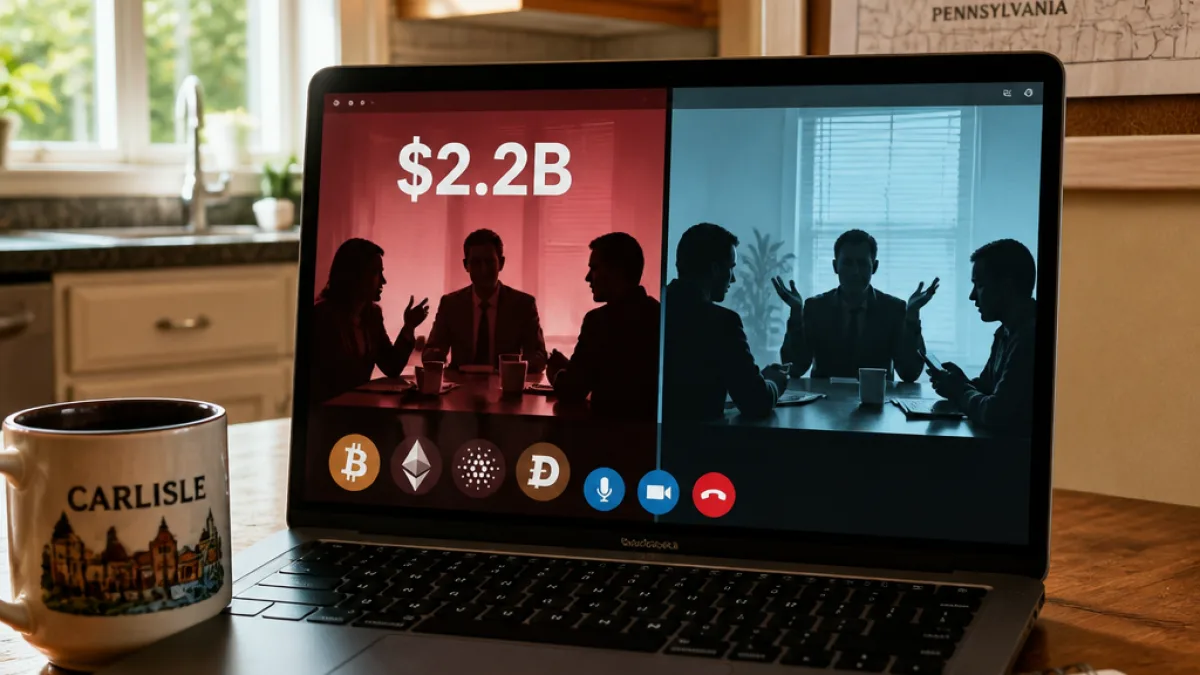
Key swing voters in Pennsylvania are sharply divided over President Donald Trump’s reported $2.2 billion in family business revenue last year, according to two online focus groups observed by NPR.
Split reaction among undecided voters
Participants — 12 registered voters identified only by first name and last initial — expressed a mix of concern and indifference about the president’s financial disclosures. Six said the earnings were troubling, while the other six largely shrugged off the news as part of broader public cynicism about political leaders and wealthy individuals.
| Focus group size | Participants troubled | Participants dismissive |
|---|---|---|
| 12 voters | 6 | 6 |
Those who waved off the disclosures framed them as typical behavior for rich people and politicians — an expression of low expectations for elected officials. Others said the scale of the earnings, much of it reported as coming from cryptocurrency activity, raised ethical concerns about mixing public office and private financial gain.
Why the reactions matter in Pennsylvania
Pennsylvania remains a battleground where small shifts among undecided and independent voters can influence statewide and national outcomes. These focus groups — conducted by Engagious with market researcher Sago and observed by NPR — are not scientific polls but are intended to illuminate how the kinds of voters who helped determine the 2024 result view recent developments.
“When it comes to ethics, moral and financial, I think that just about every politician is corrupt,”
The remark, attributed to one participant identified as Todd A., illustrates the depth of skepticism among some respondents. Rich Thau, who moderated the sessions, said the explanations given by those less troubled reflect a broader voice of cynicism: many voters expect that wealthy public figures will use money to generate more money and assume a degree of corruption is inevitable.
- Size of focus groups: 12 Pennsylvania swing voters in two online sessions.
- Reported figure: $2.2 billion in family business revenue last year.
- Main divide: Half of participants troubled, half dismissive.
For elected officials and campaign strategists, the takeaways are pragmatic: concerns about corruption are widespread, but they do not translate uniformly into political anger or changed voting intent. In Pennsylvania, where margins can be narrow, the persistence of deep cynicism suggests that messages about ethics may resonate variably and that ground-level engagement will remain crucial.
These conversations add texture to broader national surveys showing widespread concern about corruption in government, but they also underscore how individual voter interpretations of ethical questions differ — a dynamic campaigns must navigate in the months ahead.