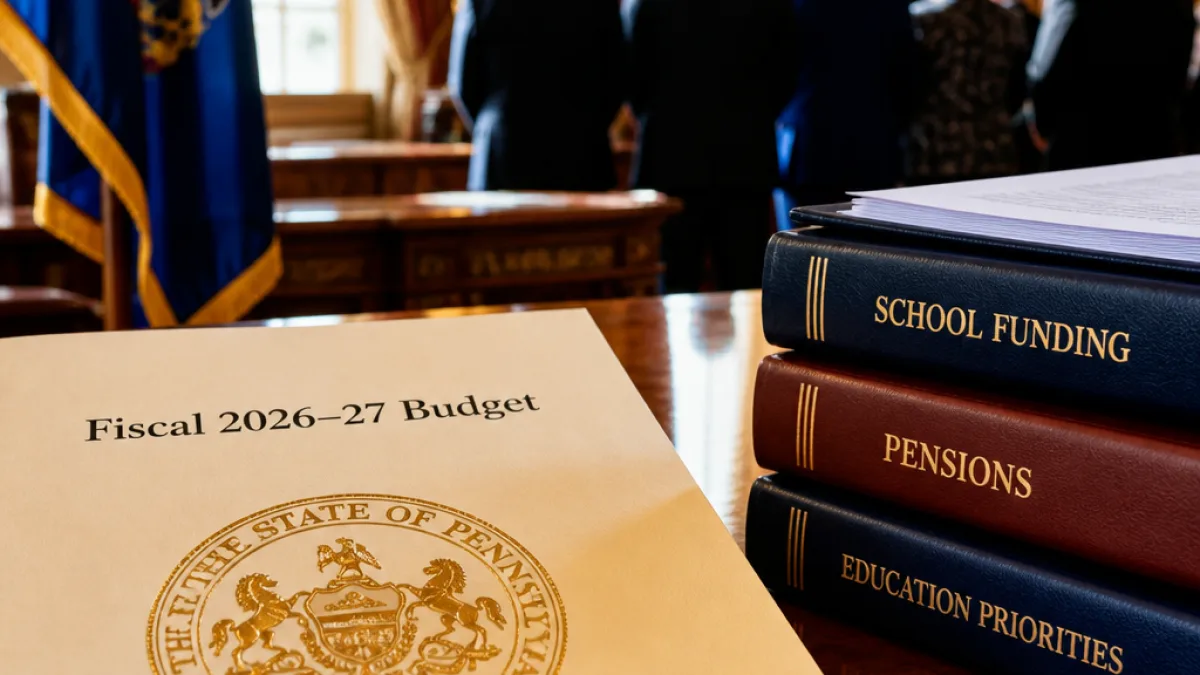
Gov. Josh Shapiro on Sunday signed a bipartisan package of bills enacting a $50.8 billion state budget for fiscal 2026-27 after the House and Senate approved the agreement earlier in the day. The plan, negotiated across party lines, spends roughly $2.4 billion less than the governor requested in his February budget address.
Compromise leaves several revenue ideas out
Lawmakers said the final product was the result of give-and-take in a divided government. The budget does not include several revenue measures the governor sought, including legalization of recreational cannabis and regulation of skill games, leaving those policy debates for another session.
“I knew there would have to be compromises in a divided government,”
Shapiro said, adding that the measure represents progress while acknowledging further work remains.
Legislative leaders from both parties characterized the package as compromise legislation that reins in spending compared with the governor’s initial proposal while still making targeted investments. Senate Appropriations Chairman Scott Martin (R-Lancaster) and House Speaker Joanna McClinton (D-Philadelphia) both emphasized that the document reflected concessions by members of both parties.
Key investments and omissions
Despite spending reductions, the budget contains notable new state investments and policy changes:
- Public education: More than $920 million in new state funding for schools, including a third installment of $565 million intended to fund public schools more equitably.
- Pensions: A long-sought increase for teachers who retired before 2001 is included.
- Energy and other policies: The package also advances new energy policies, along with provisions aimed at school safety, career and technical education, public safety, health care and affordable housing.
What leaders are saying
Senators frequently highlighted the necessity of compromise during floor debate; three quoted the Rolling Stones’ lyric “You Can’t Always Get What You Want” to make the point. Martin noted that while there are positive elements in the bill, there are also provisions some members would prefer not to accept.
McClinton said she was proud to shepherd a bipartisan budget that "makes substantial investments in schools, public safety, health care and affordable housing," and that it accomplishes those goals without raising taxes.
Numbers at a glance
| Item | Amount |
|---|---|
| Total spending | $50.8 billion |
| Reduction vs. governor's proposal | $2.4 billion |
| New K-12 funding | $920 million+ |
| Third installment for equitable school funding | $565 million |
The budget vote drew only a handful of opposing votes in each chamber, reflecting broad — if imperfect — agreement. Still, lawmakers from both parties acknowledged omissions of other policy priorities and revenue proposals that had been discussed earlier in the year.
The new spending plan will guide state finances for the coming year and shape legislative debates over revenue options and policy changes that were left out of the final package.
Reporting for this article relied on the updated Pennsylvania Capital-Star coverage of the budget and remarks from legislative leaders and the governor.