ALEXANDRIA — On July 9 this year, the city marks the 180th anniversary of a decision that reshaped its future: Congress voted to permit Alexandria and Alexandria County to retrocede from the District of Columbia and return to the Commonwealth of Virginia.
From hopeful capital port to frustrated river town
When Virginia ceded land for the new federal district in 1791, Alexandria’s leaders saw an economic opportunity. For a time, the city’s riverfront business benefited. But the War of 1812 and the burning of Washington in 1814 accelerated a decline in Alexandria’s commercial primacy. Baltimore and New York eclipsed the city as maritime and trading centers, and local resentment toward Congress grew.
Political and economic fears pushed the vote
Beginning in the 1820s, Alexandria had become a major hub of the domestic slave trade, with trading firms centered on Duke Street. As abolitionist pressure on Congress mounted, many white residents feared federal action to restrict or abolish slavery in the District. That anxiety became a decisive factor in calls to revert jurisdiction to Virginia, where state law protected the institution.
- July 9, 1846 — Congress approves retrocession legislation.
- Sept. 1–2, 1846 — Local referendum held at the Alexandria Courthouse.
- Sept. 7, 1846 — President James Polk proclaims the referendum results.
- March 13, 1847 — Virginia formally accepts the territory.
Referendum results and the celebration
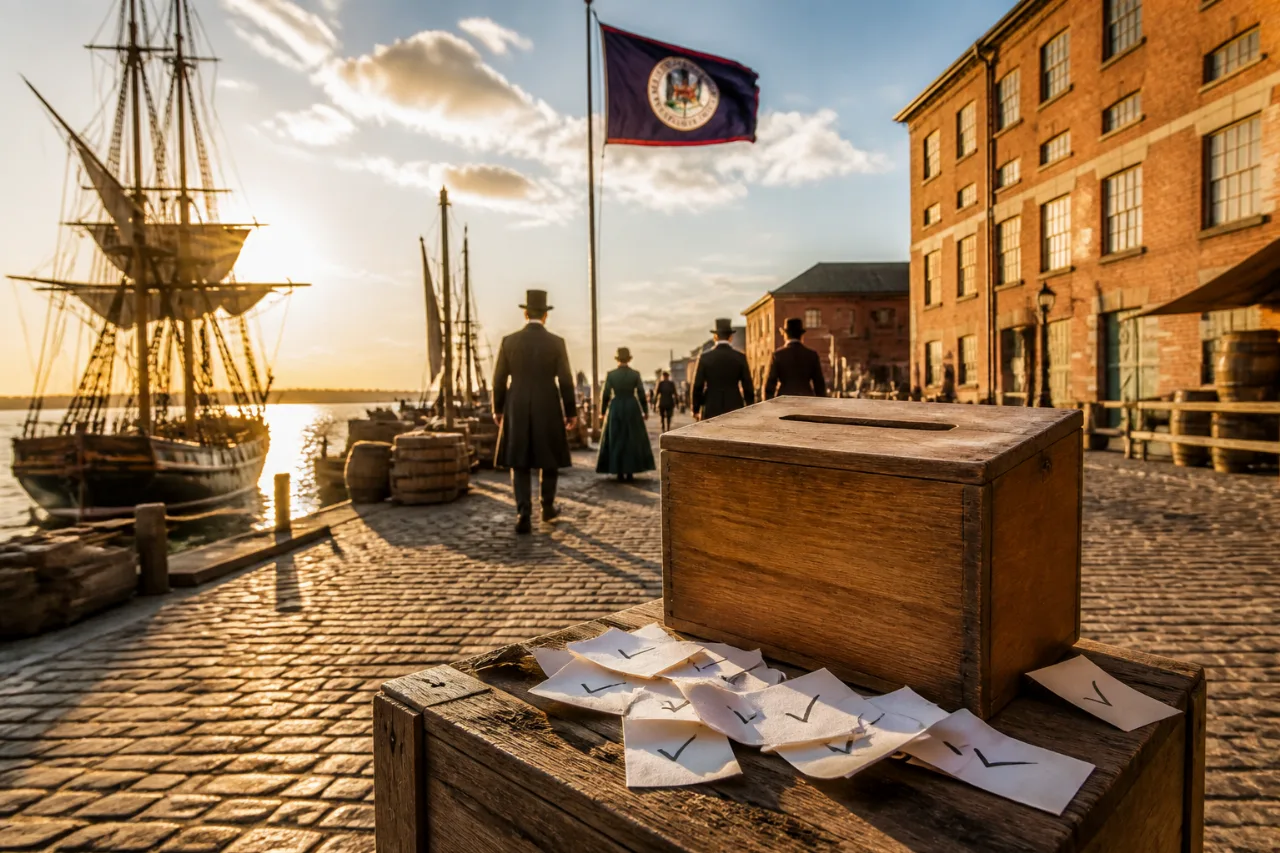
The referendum produced a decisive local result. Of 985 ballots cast, 763 favored retrocession and 222 opposed. White Alexandrians celebrated the change with a parade and public addresses; reports from the time describe widespread festivities. The Alexandria Gazette wrote that "Business was suspended through the day" and that the procession and addresses marked a jubilant return to Virginia governance.
| Date | Event | Result / Note |
|---|---|---|
| July 9, 1846 | Congress approves retrocession | Enabling legislation passed |
| Sept. 1–2, 1846 | Local referendum | 763 for, 222 against (985 ballots) |
| Sept. 7, 1846 | Presidential proclamation | President Polk declares results in effect |
| March 13, 1847 | Virginia accepts | Retrocession completed |
Costs borne by Alexandria’s Black community
The political and economic triumphs for some residents came with immediate harm to others. Many Black Alexandrians feared the return to Virginia and the consequences proved real: privileges they had enjoyed while in the District—access to certain schools and public gatherings—were curtailed or stripped away under Virginia law. Contemporary accounts note the closure of schools and other institutions that had served the city’s African American residents.
The episode is a reminder that territorial and constitutional decisions play out unevenly in communities. For Alexandria, retrocession shaped not just municipal boundaries but social and civic life for generations.
As the city reflects on the 180th anniversary, the story prompts questions about whose interests were served by political change and which residents paid the price—issues that still echo in conversations about governance, equity and the meaning of local history.
"Business was suspended through the day," the Alexandria Gazette reported of the parade and celebrations that followed retrocession.
Residents and visitors who walk the city’s historic streets encounter markers and sites tied to this era — from Duke Street’s old trade addresses to boundary stones and memorials along the Potomac — each a tangible link to a pivotal chapter in Alexandria’s past.