
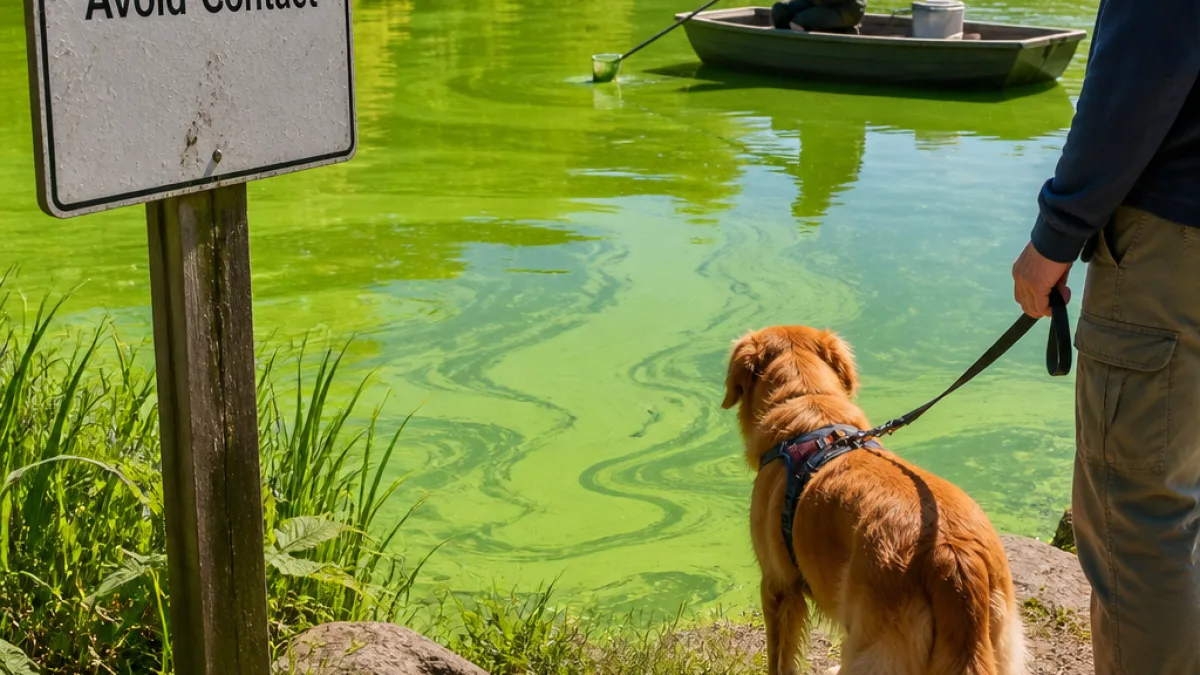
Warm, calm weather can transform a quiet Connecticut pond from clear to neon green in just days, state scientists say — and the sudden change can mean more than an unpleasant view for swimmers and pet owners.
The culprit is cyanobacteria, microscopic organisms that naturally exist in every lake and pond in the state but can multiply rapidly under the right conditions into dense surface blooms. Some blooms release toxins that can cause skin irritation, gastrointestinal illness and, in rare severe cases, liver or neurological harm to people and animals that swallow contaminated water.
What happened at Rainbow Reservoir
Staff from the Farmington River Watershed Association sampled Windsor's Rainbow Reservoir last July and found only a faint green tint. Five days later, the water was bright green and testing confirmed an active cyanobacteria bloom. Within two more days the bloom extended more than half a mile up the Farmington River and left thick green scum along shorelines, where it persisted for nearly a month.
Why blooms form and why they’re getting attention
Cyanobacteria are not foreign invaders, but native organisms that can become a nuisance when environmental conditions favor rapid growth. Officials point to warm temperatures, calm water and nutrient levels as factors that allow blooms to explode.
“It’s existed for a very long time,” said Mary Becker, supervising environmental analyst who oversees the Department of Energy and Environmental Protection’s water monitoring and assessment program. “What we’ve been seeing more recently are these frequent nuisance blooms that occur and have the potential to release toxins.”
Greg Bugbee, an associate scientist at the Connecticut Agricultural Experiment Station, emphasized that cyanobacteria differ from bacteria like E. coli, which are often introduced by runoff after storms. Cyanobacteria are already present in the water and become problematic when conditions align to encourage growth.
What residents should know and do
- Avoid swimming, wading or allowing pets in water with obvious blue‑green scum or paint‑like surface films.
- Do not drink untreated lake or pond water. Boiling does not remove cyanotoxins.
- Report suspected blooms to state or local authorities through the Department of Energy and Environmental Protection’s online reporting system so agencies can investigate and, if needed, post warnings.
- Heed advisory signs and updates at public beaches; DEEP has expanded monitoring at public swimming areas.
Because it is impossible to tell by sight whether a bloom is producing toxins, officials advise treating any obvious blue‑green bloom as potentially hazardous and avoiding contact until testing confirms it is safe.
| Potential symptom | Who it can affect |
|---|---|
| Skin irritation, rash | People, pets |
| Nausea, vomiting, diarrhea | People |
| Liver or neurological effects (rare) | People, pets |
Local watershed groups and state agencies continue to expand sampling and public education as warmer months increase the risk of blooms. Residents can help by avoiding activities that add nutrients to waterbodies, such as excessive lawn fertilizer use, and by reporting unusual surface scums when they appear.
For now, caution and quick reporting are the best tools for protecting swimmers, boaters and pets from the rapid, and sometimes toxic, changes in Connecticut’s lakes and ponds.