Connecticut has one of the densest networks of automated license plate reader cameras in the Northeast, a deployment that civil-liberty advocates and some residents say demands clearer rules and greater public oversight.
What the numbers show
Data compiled by DeFlock places Connecticut at roughly 1.78 ALPR cameras per 10,000 residents, and about 25th overall among U.S. states in per-capita camera count. The cameras are owned and run by a mix of municipal police departments and private businesses and scan the license plates and vehicle characteristics of passing cars.
| Metric | Connecticut figure |
|---|---|
| ALPRs per 10,000 residents | 1.78 |
| National per-capita rank | 25th |
How the systems work and what they record
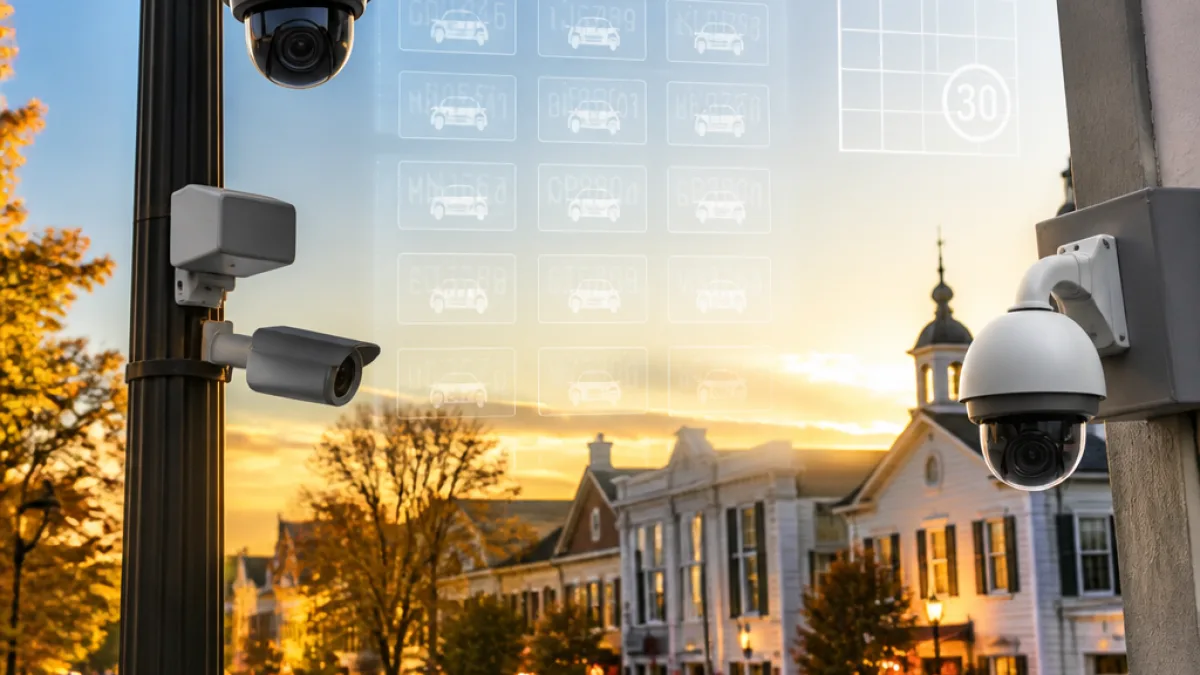
ALPRs use optical character recognition and other software to capture images of license plates and vehicle make and model. Cameras may be fixed to roadside poles or traffic lights, or mounted in police vehicles. Most of the plate reads are not linked to any criminal activity; agencies typically retain the data for limited periods — commonly around 30 days — before deleting it, according to reporting.
Law enforcement agencies say ALPRs do not capture identifying images of drivers and that searches of the data are conducted only when connected to a specific investigation. Still, privacy experts warn that the routine collection and central storage of location-linked vehicle records create the potential for broad, mostly unregulated tracking of everyday movements.
Concerns over sharing and oversight
Investigations and public reporting have found that municipal ALPR datasets are sometimes accessible to outside agencies, including federal authorities, and that police departments frequently grant other law enforcement entities the ability to query their records. Those practices have fueled calls for clear policy controls, public input and transparency about who can search the information and under what conditions.
- ALPRs are maintained by multiple agencies and private entities across the state.
- Data retention is often short — commonly about 30 days — but policies vary.
- Departments sometimes permit other local, state or federal agencies to access their databases.
What this means for Connecticut residents
For drivers, the expanding ALPR footprint means more routine recording of where and when vehicles travel. The implications become particularly significant when data sharing enables agencies far from the point of capture to query vehicle movements without a warrant or a local court order.
Local officials and law enforcement agencies have begun to adopt written policies in some jurisdictions, but advocates say state-level standards, public reporting requirements and stronger audit controls are needed to protect privacy while preserving legitimate investigative uses.
Residents concerned about policing technology can contact municipal police departments, attend local meetings where technology procurements are discussed, or ask elected officials about existing ALPR policies and data-sharing agreements.
Reporting for this article draws on DeFlock’s statewide comparisons and interviews with privacy experts and law enforcement perspectives on ALPR use and safeguards.
Olivia Ferraro is the Connecticut correspondent for News Block.