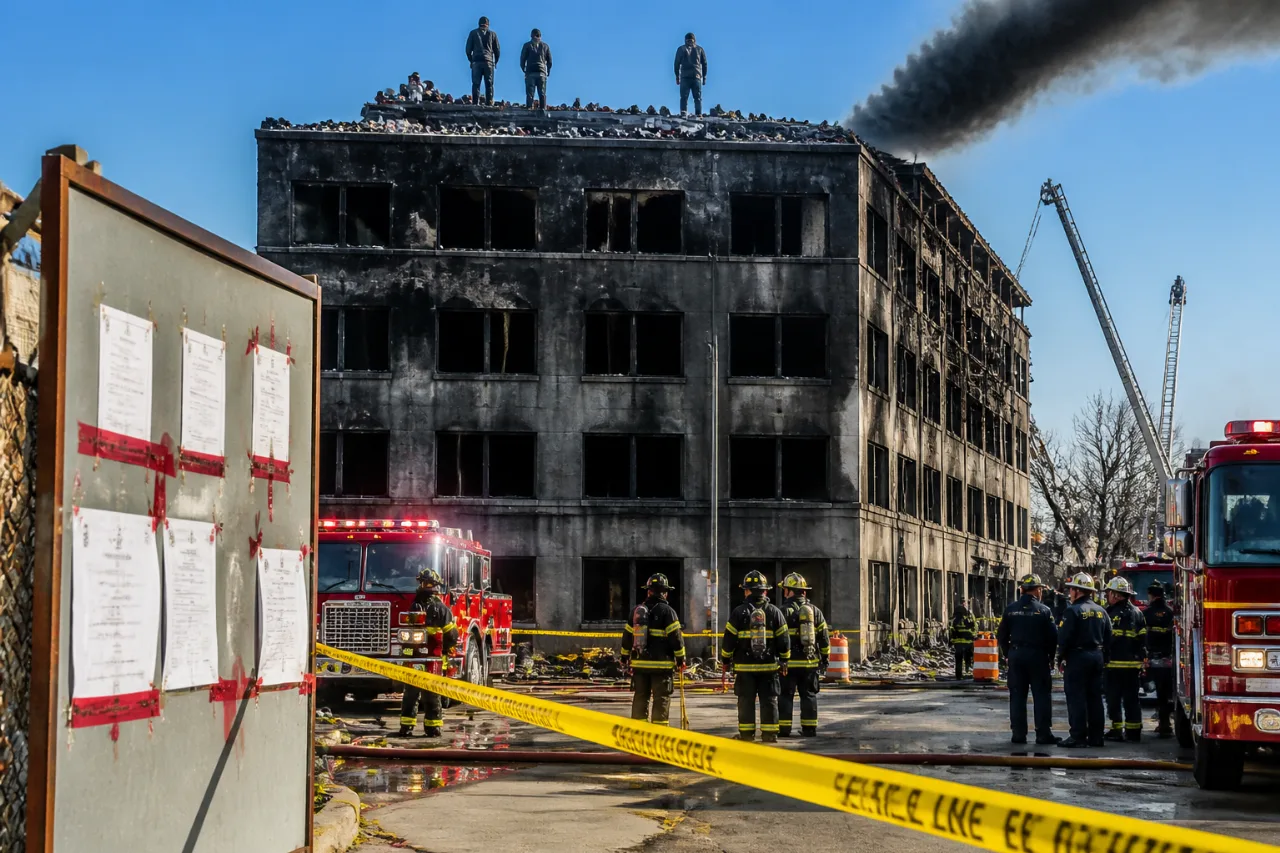
When flames swept through a five-story shoe factory in Jinjiang, in southeastern China’s Fujian province, workers were scrambling for exits and some found themselves trapped on the roof as thick black smoke rolled across the building. The blaze that began Thursday at the Fujian Huiteng factory left 28 people dead, authorities said, and renewed scrutiny of safety practices in China’s vast manufacturing hubs.
What happened
State media reported that the fire gutted the factory, where 237 workers and two visitors were inside when the blaze started. Rescue efforts brought out 213 people; two of those rescued later died in hospitals. Another 26 missing were subsequently confirmed dead by state broadcaster CCTV.
“Strictly hold those responsible accountable,”
Chinese President Xi Jinping urged a rapid probe and pledged that those responsible would face consequences, according to state reports. The state-run Xinhua News Agency said the search phase had ended and an investigation was under way into causes and responsibility. Local authorities arrested the factory’s owner and managers and froze the company’s accounts.
Safety context and local economy
Jinjiang is a major manufacturing center for athletic footwear, often described in state media as producing roughly one-fifth of the world’s athletic shoes — part of a regional industrial transformation Beijing has praised as the “Jinjiang Experience.” The factory reportedly made shoes for both domestic and foreign brands, according to product listings on online sales and import platforms.
- Location: Jinjiang, Fujian province
- Factory: Fujian Huiteng
- People inside at start: 239 (237 workers, 2 visitors)
- Rescued: 213 (2 later died)
- Total dead confirmed: 28
Fire specifics and rescue challenges
CCTV and local footage showed people on the roof as hoses sprayed below and flames were visible through upper-floor windows. Officials noted the building was a concrete structure with a workshop and warehouse on the ground floor. A local fire department official told state media that shoe sole materials piled in stairwells impeded firefighting efforts — a detail that speaks to the type of hazards that can magnify a blaze in crowded production spaces.
| Metric | Reported figure |
|---|---|
| People inside at ignition | 239 |
| Rescued | 213 |
| Confirmed dead | 28 |
China has for years issued directives and inspections aimed at curbing workplace hazards. Official statistics cited by state media show that in 2025 there were 18,261 deaths in nearly 20,000 workplace accidents, a decline from the previous year. Still, fatal incidents in factories, mines and construction sites persist, drawing attention at home and abroad to safety oversight in industries tied to global supply chains.
The Jinjiang area’s dense network of small workshops and larger factories has been central to China’s manufacturing ascent and export strength. For U.S. businesses and consumers, such industrial concentration can mean cheaper and abundant product supply — but disasters like this underline the human and operational risks embedded in those supply lines.
Authorities said the investigation is ongoing. Arrests of the factory’s owner and managers and a freeze on company accounts suggest officials are moving quickly to identify responsibility, and Beijing’s demand for accountability signals the political stakes of another high-profile industrial accident.