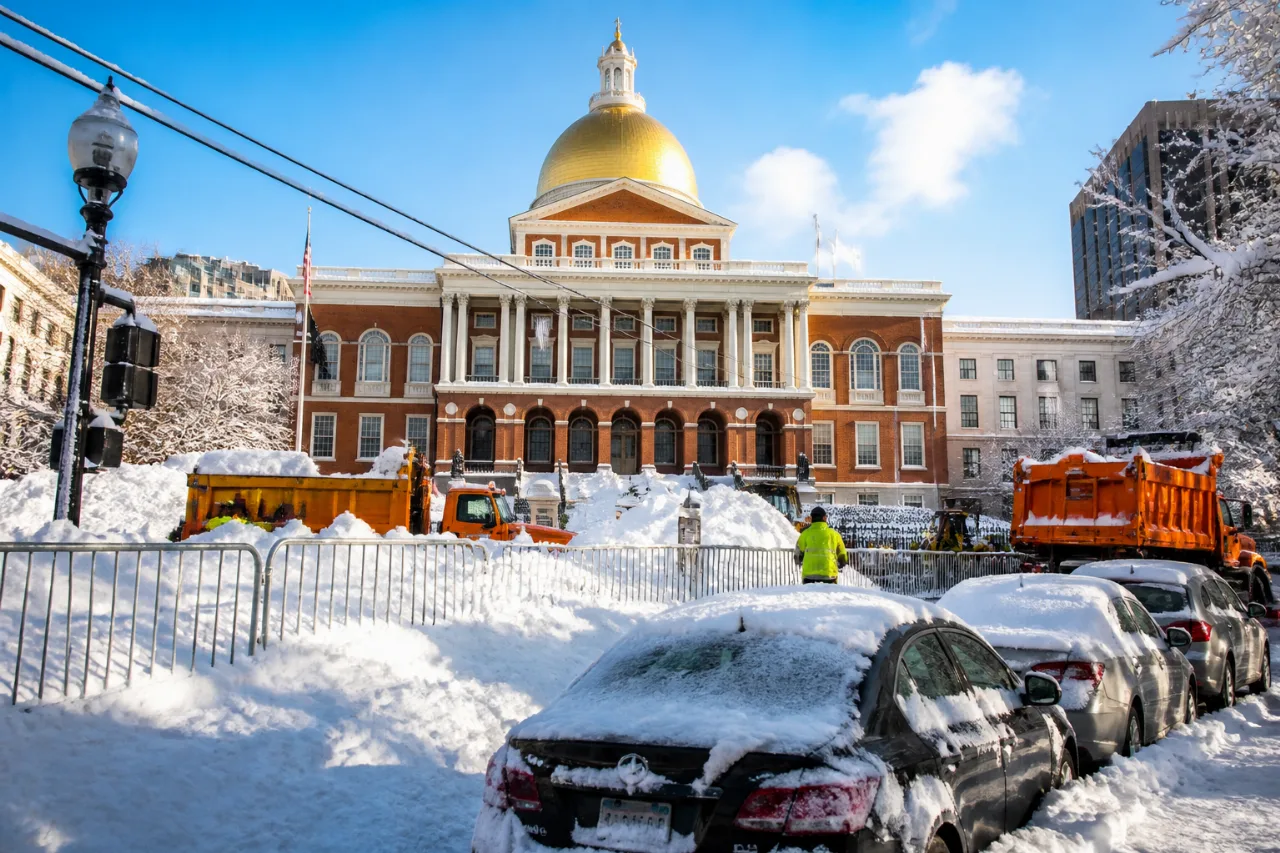
Massachusetts officials said Thursday they will pursue an appeal after the federal government declined to approve a request to designate the February blizzard that dumped more than 2 feet of snow across large portions of the state as a major disaster. The designation would have helped state and local governments recover costs tied to snow removal and other storm-related expenses.
State response and next steps
Gov. Maura Healey called the decision disappointing and said the administration will continue to press for federal assistance. The storm produced record totals in some areas of the South Coast, where communities reported more than 3 feet of snow in places, and it caused widespread outages affecting hundreds of thousands of residents.
“Massachusetts experienced one of the worst winter storms we've seen in decades. Our first responders, public works crews and local communities worked around the clock to keep people safe and begin recovery. They did their job, and now President Trump needs to do his,” Healey said. “When communities are recovering from extraordinary disasters, the President should be focused on helping people — not turning his back on states that need support. We intend to appeal, and we'll keep fighting to secure every federal dollar Massachusetts deserves.”
The state requested the major disaster declaration in April. If approved, that designation would provide eligible reimbursements to cities and towns for snow removal and other eligible expenses tied to storm response.
Political pattern noted in FEMA approvals
An analysis of FEMA public data cited by the state highlights a disparity in how requests were handled based on whether states supported the sitting president in the last election. The analysis found faster and more frequent approvals for requests from states that voted for the president compared with those that did not.
| States | Requests approved |
|---|---|
| States that voted for Trump in 2024 | 54 of 64 |
| States that voted for Harris in 2024 | 9 of 22 |
That analysis also indicated a difference in the speed of resolution, with requests from states that backed the president resolved roughly 50 days faster on average than those from the other group.
What this means locally
- Local governments may face increased out-of-pocket costs for clearing roads and restoring services.
- Municipal budgets already stretched by winter maintenance could see further strain if federal reimbursements are not provided.
- An appeal could delay any final determination of federal assistance and extend uncertainty for towns seeking reimbursement.
Healey’s pledge to appeal sets the stage for a federal review process that could hinge on documentation of expenses and state-federal negotiations over the storm’s qualifying impacts. For municipalities across Massachusetts, an overturned decision would unlock federal support; a final denial would leave recovery costs largely to state and local coffers.
The outcome will be watched closely by county officials and municipal leaders, particularly on the South Coast and other hard-hit communities, as they assess long-term fiscal impacts and plan for future extreme-weather events.