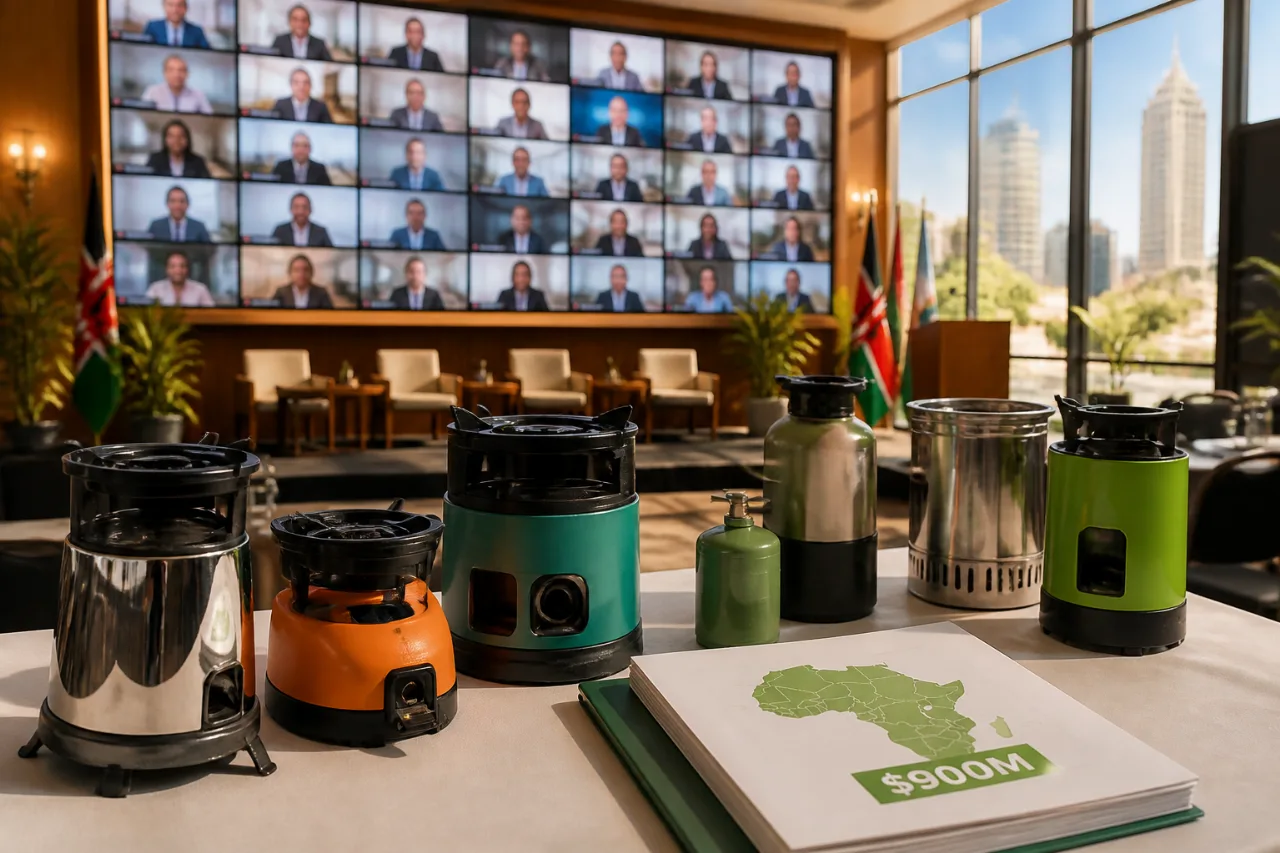
NAIROBI, Kenya — Donors and governments pledged an additional $900 million to expand access to cleaner cooking technologies across Africa during a virtual meeting convened by the International Energy Agency and Kenya, officials said Thursday. The funds raise the total mobilized for the continent to more than $3.1 billion.
What the money targets
The commitments build on financing announced at the first Africa Clean Cooking Summit in Paris in 2024, where roughly $2.2 billion had been pledged. Organizers said the combined resources will support wider distribution of low-emission fuels, cleaner stoves and essential infrastructure such as supply chains and distribution networks.
Nearly 1 billion people in Africa still rely on charcoal, firewood and other polluting fuels, the IEA estimates. Household air pollution tied to those fuels contributes to an estimated 850,000 premature deaths each year, making the transition a public health priority as well as an energy and climate issue.
U.S. and international leadership
The virtual meeting drew a mix of heads of state and energy officials, including Kenyan President William Ruto, Norwegian Prime Minister Jonas Gahr Støre, U.S. Energy Secretary Chris Wright and IEA Executive Director Fatih Birol, alongside African Union leadership.
“Access to clean cooking is one of the most impactful yet overlooked challenges of our time,” said Wright.
Ruto emphasized financing as the major barrier to universal access. “Ambition alone is not enough. It must be backed by investment,” he said. Birol noted that about $740 million of the Paris commitments had already been deployed across 22 countries, and framed the new pledges as a further step toward closing the funding gap.
Why it matters to the U.S.
The involvement of the U.S. Energy Department signals Washington's interest in supporting development and public health outcomes overseas while addressing energy access and emissions. Increased financing aims to spur private investment, scale up manufacturing and distribution, and reduce health burdens that disproportionately affect women and children.
- Total commitments now: more than $3.1 billion.
- New pledge announced: $900 million.
- Previously mobilized in Paris 2024: $2.2 billion.
- Already deployed: about $740 million across 22 countries.
| Metric | Amount |
|---|---|
| New commitments (this meeting) | $900 million |
| Paris summit mobilization (2024) | $2.2 billion |
| Total committed | More than $3.1 billion |
| Deployed so far | About $740 million (22 countries) |
Advocates and officials say sustained investment is needed to move households from traditional biomass to alternatives such as ethanol, biogas and electricity. Beyond health benefits, proponents argue cleaner cooking can limit deforestation, reduce greenhouse gas emissions and expand economic opportunities through new energy markets.
Participants at the meeting reviewed progress since Paris and outlined priorities ahead of the next summit scheduled later this year. Officials stressed that while financial commitments represent progress, delivery and on-the-ground scaling of technologies will determine whether the pledges translate into measurable improvements for families across Africa.