The Hawaii Department of Health has identified a travel-related case of dengue virus in an Oahu resident, officials said, raising the state’s tally to six cases this year.
Where the cases have appeared
Prior to this newest diagnosis there were four dengue cases reported on Oahu and one on Kauai. The Department of Health confirmed the most recent patient acquired the infection while traveling in a region where dengue is common.
| Island | Cases reported this year |
|---|---|
| Oahu | 5 |
| Kauai | 1 |
| Total (state) | 6 |
Response and risk assessment
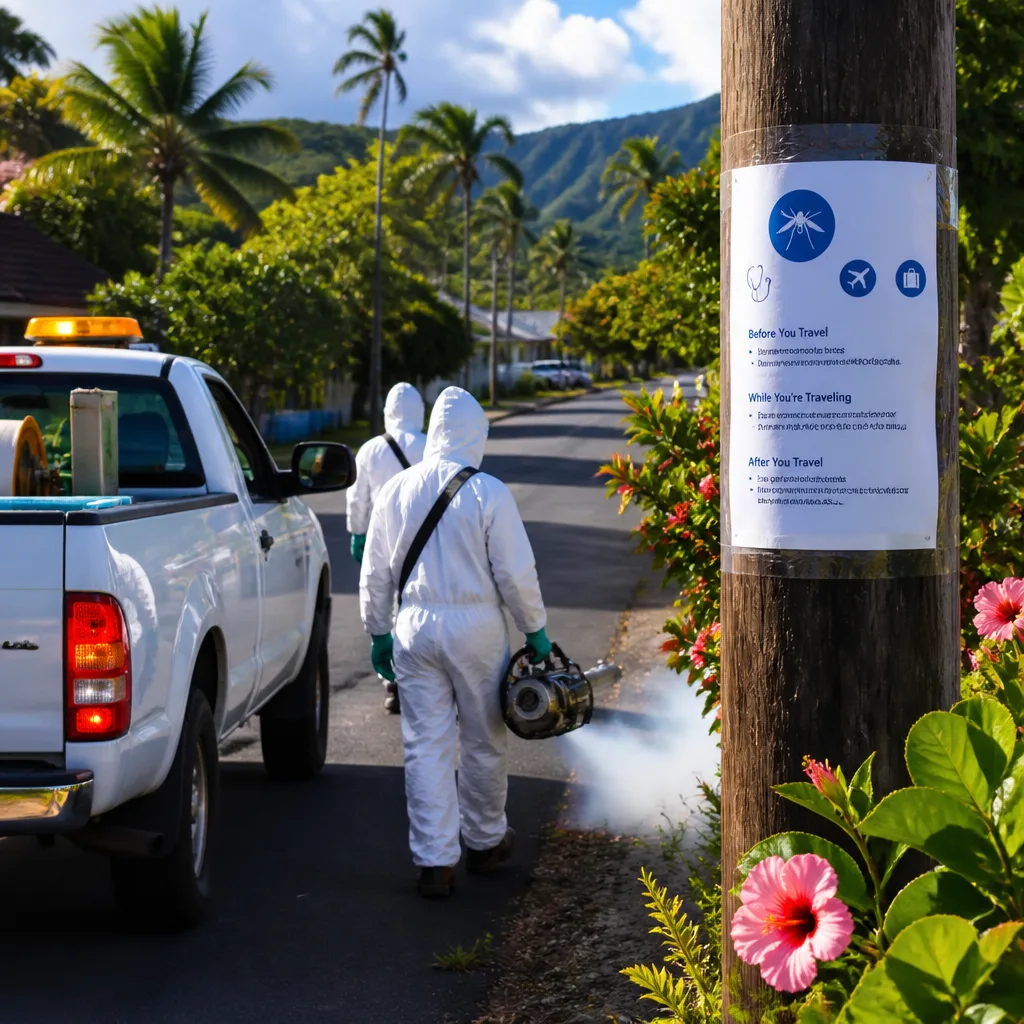
Health teams have been dispatched to inspect the affected area and carry out mosquito control measures, the agency said. Because of details specific to the case, the Department of Health characterizes the risk of onward transmission as low.
Dengue is spread by mosquitoes and is endemic in many tropical and subtropical regions worldwide. The department cited a number of countries currently reporting higher-than-usual case counts, including Samoa, Vietnam, Colombia, Cambodia, Maldives, Mali, New Caledonia, Timor-Leste, Bolivia and Guyana.
What travelers and clinicians should do
Officials urged residents and visitors to consult country-specific travel health information at least four to six weeks before travel to areas where dengue is common. Symptoms can range from mild to severe and may include fever, nausea, vomiting, rash and body aches. Anyone who recently traveled to a dengue-affected area and is symptomatic should contact a health care provider.
- Health care providers and the public who suspect dengue infection are advised to call Hawaii’s Disease Reporting Line at (808) 586-4586.
- Local mosquito control and inspection efforts are being carried out around the identified exposure site.
- Preventive measures include avoiding mosquito bites and checking travel advisories weeks before departure.
The department’s statement did not specify the travel destination or the clinical status of the individual patient. Officials’ emphasis on a low risk of local spread reflects the investigation’s finding that the infection was acquired abroad and identified upon return.
Public health authorities continue surveillance for additional cases and recommend that clinicians maintain a high index of suspicion for dengue among patients with compatible symptoms and recent travel history to affected regions.