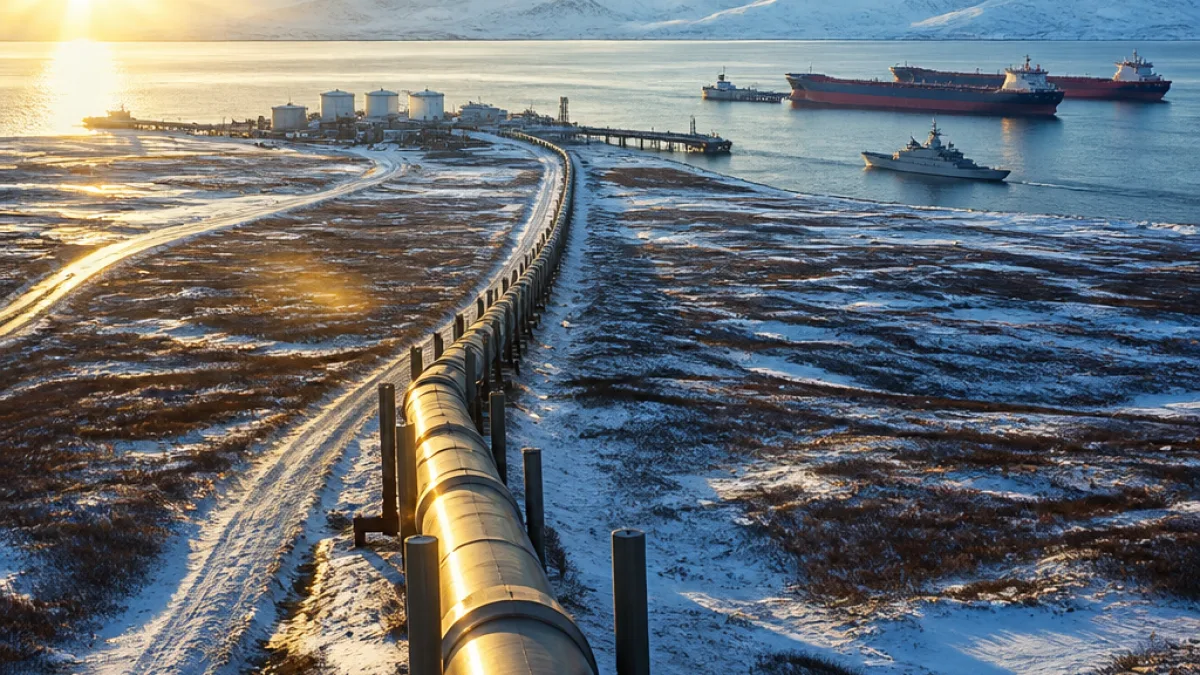
President Donald Trump said this week that pipelines in Texas and Alaska are being developed as “alternatives” to shipping through the Strait of Hormuz, comments that come as U.S. military action and maritime conflict have reduced commercial traffic through the strategic waterway.
Remarks come amid U.S.-Iran confrontations
The remarks were made during an interview with Fox News correspondent Trey Yingst, who noted a sharp drop in vessels transiting the strait. U.S. officials, meanwhile, have carried out repeated strikes against Iranian targets and reimposed a blockade in the Gulf of Oman after accusing Tehran of violating a recently signed memorandum of understanding.
“It’s open if people want to go through it,” the president said. “We’re not opening it for Iran. That’s the only one it’s closed for.”
Trump added that “pipelines are being built” and named Texas and Alaska as examples of locations developing alternatives, a claim that links energy infrastructure to efforts to reduce reliance on the narrow waterway that funnels a sizable share of the world’s oil shipments.
What the comment means for Alaska
Any suggestion that Alaska could provide an outsized role in replacing transit through the Strait of Hormuz raises questions about capacity, timing and the type of infrastructure referenced. The president’s comment did not specify particular projects, routes or timelines.
- Strategic context: The Strait of Hormuz is a critical chokepoint for global oil traffic; disruptions there can prompt shifts in shipping patterns and energy markets.
- Infrastructure limits: Existing Alaskan pipelines and export facilities are oriented toward domestic supply and Pacific markets; moving large volumes intended for markets served via Hormuz would require significant new capacity and logistics.
- Policy implications: Framing energy routes as geopolitical alternatives could accelerate federal and private planning, but practical implementation would involve regulatory, environmental and commercial hurdles.
| Issue | Known fact |
|---|---|
| U.S. actions | Bombing of Iranian targets and blockade in Gulf of Oman |
| Presidential claim | Pipelines in Texas and Alaska as alternatives to Strait of Hormuz |
| Maritime traffic | Observed sharp decline in vessels transiting the strait |
Analysts and local leaders have not been quoted in the interview cited, and the president did not outline concrete projects tied to Alaska. For Alaskans, the remark underscores the state's recurring role in national energy discussions, while also highlighting the complexities of turning a geopolitical statement into logistics and on-the-ground infrastructure.
As the situation in the Gulf continues to evolve, any moves to reroute energy flows or build new pipelines would involve long lead times, environmental review and coordination among federal and state authorities, industry and affected communities.
— Nora Kallio, News Block