Public safety trial draws sharp criticism, packed rooms
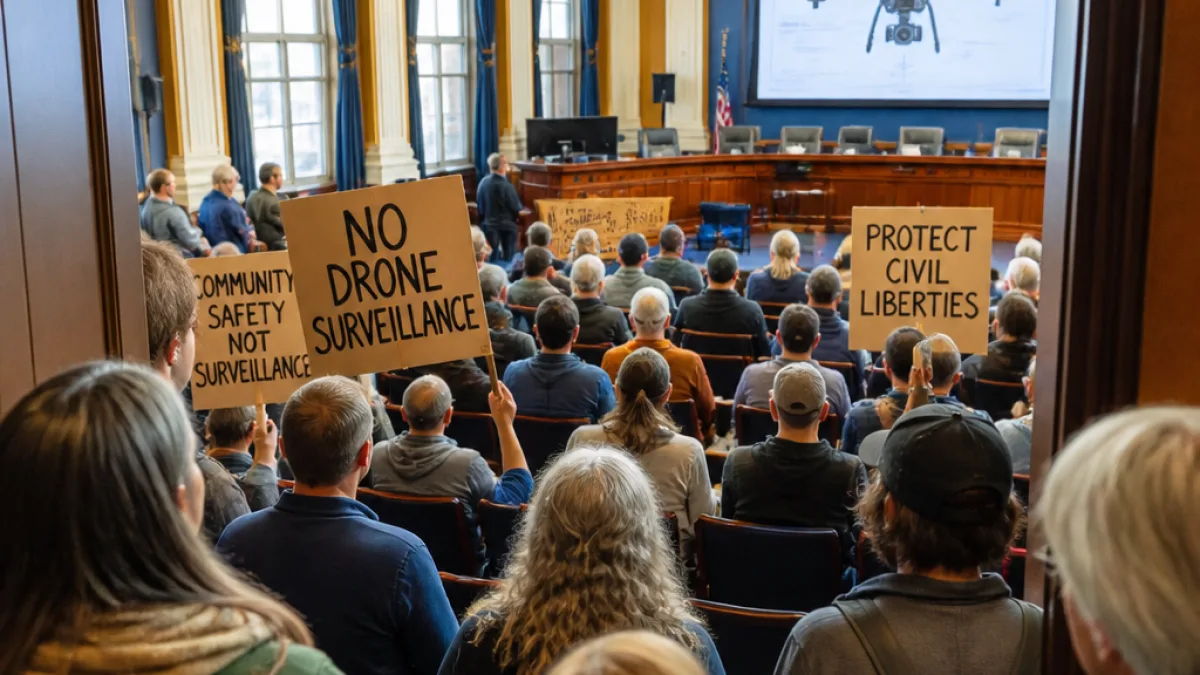
Minneapolis residents packed the Public Health, Safety and Equity Committee hearing July 8 to oppose a city proposal for a trial program of "drones as first responders" (DFRs) made by Skydio, a California-based manufacturer of autonomous surveillance drones. Both the meeting room and an overflow room reached capacity as more than 40 people testified, according to attendees.
Concerns center on company ties, surveillance and civil liberties
Speakers represented a range of community groups and raised two primary objections: Skydio’s reported sales to Israeli security forces and the potential for the Minneapolis Police Department to use drones in ways that could deepen surveillance of protesters and marginalized communities.
- Members of the Free Palestine Coalition organized turnout and urged rejection of the vendor.
- Advocates for demilitarizing policing argued DFRs could replicate tactics used in past crowd-control operations.
- Speakers stressed city values and prior council decisions on surveillance contracts as precedent for rejecting the proposal.
"You must decide to reject the contract with Skydio and continue to do the right thing... We don’t want our tax dollars going to companies profiting from the genocide," testified Sarah Martin of Women Against Military Madness.
Testimony also referenced law enforcement aviation and drone activity during the 2020 protests in Minneapolis as context for community mistrust. One speaker recalled helicopters and fixed-wing surveillance flown over neighborhoods in 2020 and noted federal agencies have used larger drones for data collection during local unrest.
Policy stakes for the city and state
The committee faces decisions that will affect how the city contracts for public safety technology and the parameters under which police may deploy autonomous systems. City leaders must weigh the promise of rapid aerial response against persistent community concerns about surveillance, racial equity and the geopolitics of procurement. Previous Minneapolis council actions — including a 2024 ceasefire resolution and a vote to avoid contracts with an Israeli surveillance firm — were cited by speakers as precedent and rhetorical leverage.
| Community concern | Example cited at hearing |
|---|---|
| International human-rights implications | Allegations Skydio drones have been used by Israeli forces |
| Local civil liberties | Potential surveillance of protesters and marginalized neighborhoods |
| Precedent | Council decisions in 2024 rejecting some surveillance vendors |
The committee did not immediately finalize action on the proposal. Council members must now balance technical assessments and procurement rules with sustained public concern. The debate extends beyond Minneapolis: how cities adopt emerging aerial technologies could influence state-level policy and procurement standards in Minnesota, particularly around law enforcement use of autonomous systems.
As the city reviews the proposal, Minneapolis officials and residents will continue to grapple with questions about transparency, oversight and the limits of public-safety technology in communities still recovering from the 2020 unrest.