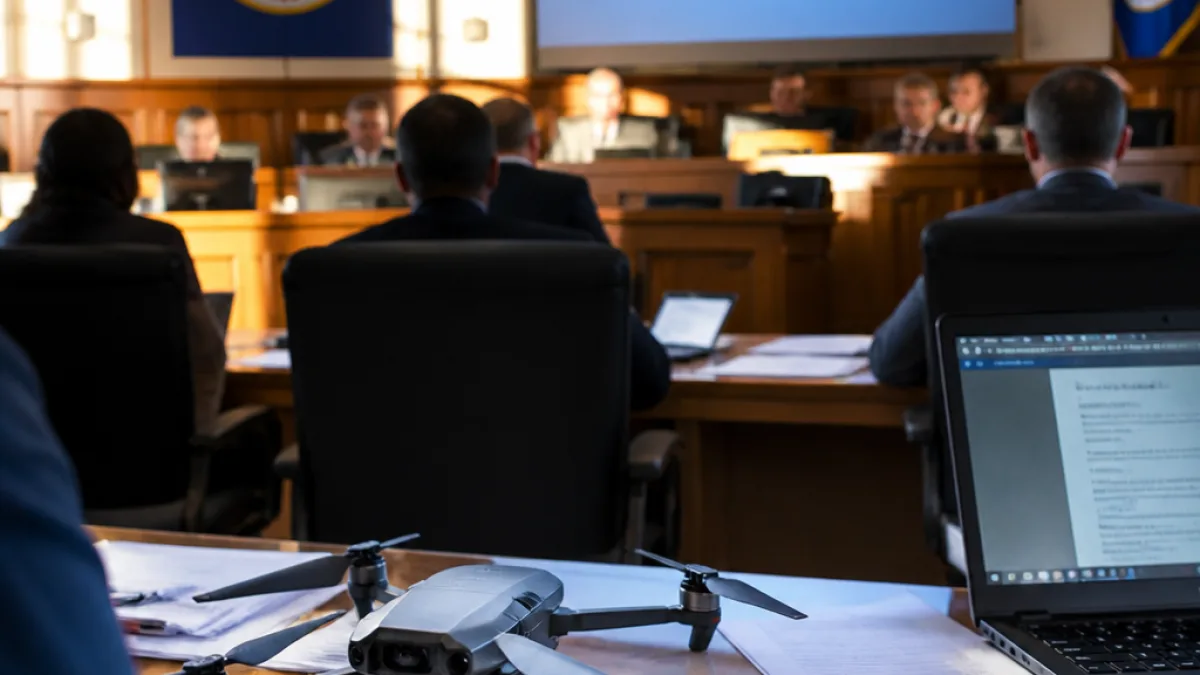
The Minneapolis City Council failed Thursday to approve a contract that would have given the Minneapolis Police Department a 75-day free trial to operate drones made by Skydio, a California-based company, after council members cited concerns the firm sold equipment to U.S. Immigration and Customs Enforcement.
Vote stalls pilot amid surveillance and trust concerns
The motion ended in a 6-6 tie, leaving the proposed pilot program off the books. Supporters argued the drones could reduce response times as the department contends with staffing shortages; opponents said partnering with a company that has worked with federal immigration authorities would further erode public trust.
“An abysmal mistake, and nothing is free. This costs the trust of our residents,”
City Council Member Aurin Chowdhury delivered that criticism before the motion failed. Other council members referenced the fallout after Operation Metro Surge, which preceded the deaths of two Minneapolis residents, Renee Good and Alex Pretti, and heightened scrutiny of law enforcement partnerships.
City Council Member Soren Stevenson warned that federal access to data was a realistic risk, saying council members should not assume ICE would be blocked from obtaining footage. Some council members also raised concerns about Skydio's prior sales to Israel and broader surveillance implications.
Split over policy consistency and public safety priorities
The council was divided over how to apply policy consistently. Council Member LaTrisha Vetaw, who had sponsored the proposal, argued that imposing a standard that barred work with any company that contracts with federal agencies would be impractical and would hinder efforts to deliver emergency help to residents.
Mayor Jacob Frey, who supported the pilot, contended the council’s rejection risked turning residents into "collateral damage because of geopolitics," and said refusing the program would not send a message to foreign governments.
Public reporting cited by council members indicates Skydio sold an AI-capable drone to ICE for $25,000 in September, a detail that helped drive the debate. At recent City Council meetings, Skydio has sought to address privacy concerns, saying footage not used as evidence would be deleted.
- Outcome: Motion to approve 75-day Skydio pilot failed on a 6-6 tie.
- Main concerns: Past Skydio sales to ICE, surveillance risks and erosion of public trust.
- Arguments for: Potential to reduce police response times amid staffing shortages.
| Item | Detail |
|---|---|
| Contract length | 75-day free trial |
| Council vote | 6-6 tie |
| Noted sale | AI drone sold to ICE for $25,000 (reported) |
The council’s decision leaves unanswered questions about how Minneapolis will pursue technological tools to address public safety gaps while safeguarding civil liberties. With council members split, any future proposal will likely require new safeguards or policy language aimed at limiting data access and clarifying deletion and retention rules.
For residents, the vote signals continued scrutiny of how city government chooses vendors and the weight given to privacy and immigration policy concerns when evaluating public-safety tools.