The University of North Dakota’s efforts to produce more locally trained clinicians are showing early success. In the first year of ND85, an initiative designed to boost the percentage of North Dakota residents admitted to UND’s medical doctor and physician assistant programs, in-state representation rose sharply — approaching the program’s target.
Why ND85 matters for health care access
North Dakota faces a longstanding shortage of physicians, with disparities pronounced between metropolitan, micropolitan and rural parts of the state. A 2025 report, “Health issues for the state of North Dakota,” found:
| Region | Physicians per 10,000 people |
|---|---|
| Metropolitan areas | 38.6 |
| Micropolitan areas | 15.2 |
| Rural areas | 5.9 |
| Statewide range (approx.) | low to mid-20s |
The Centers for Disease Control and Prevention reports the national physician rate at 28.23 per 10,000 people. Statewide shortfalls have been estimated at around 200 doctors, and pressures on the workforce are expected to grow as older residents age and current physicians retire.
Early results from ND85
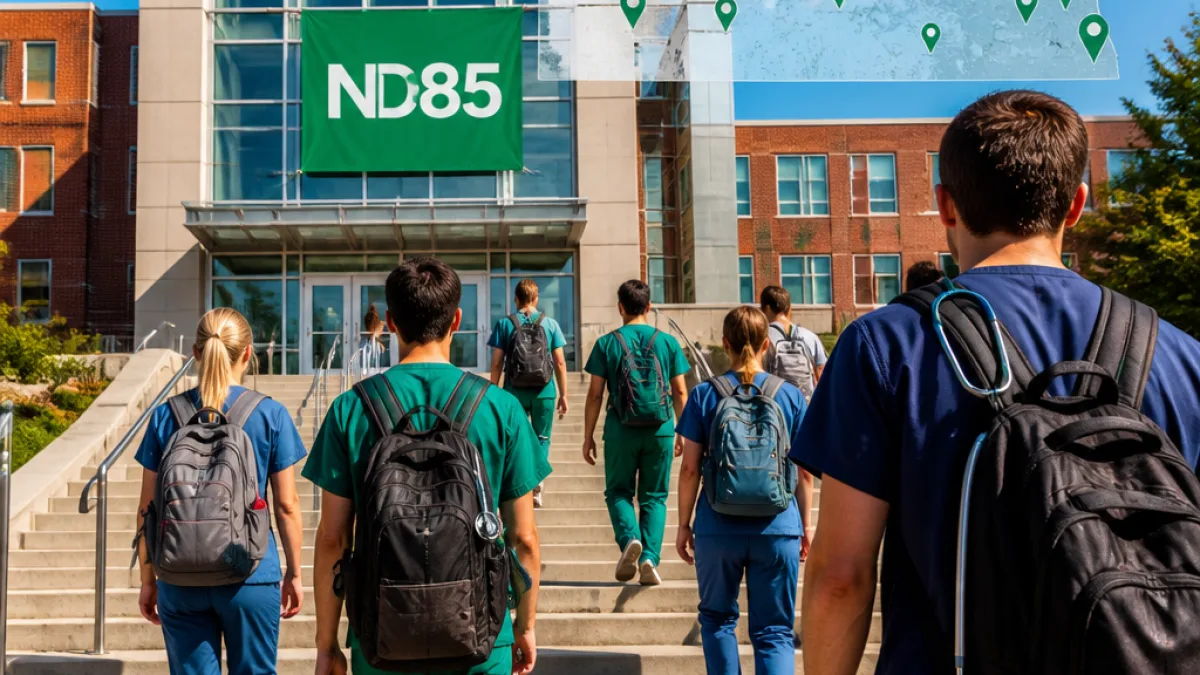
ND85 sets an explicit aim: have North Dakota residents make up 85% of enrolled students in UND’s MD and PA training programs. Before ND85 launched, roughly half to six in 10 students in those programs were North Dakota residents. After the first year of the program, the share of in-state students rose to about 83% in the MD program and 82% in the PA program, with one admitted MD candidate deferring entry to the following year.
- Typical annual applications to UND’s medical programs number about 1,800, but only around 100 usually come from within the state.
- The Legislature has recently increased funding for the School of Medicine to support expanded training and recruitment.
- ND85 focuses on growing the proportion of students who are North Dakota residents in the hope that more locally trained clinicians will stay and practice in the state.
“The best time to plant a tree was 20 years ago; the second best is today.”
The metaphor of planting a tree has been used to describe the strategy: invest now in trainees from North Dakota so the state reaps workforce benefits years down the road. That approach reflects long-standing evidence that medical students with local ties are more likely to practice near home.
What this means locally
For communities across North Dakota, especially in the western and rural counties where clinical shortages are most acute, a larger share of in-state trainees could translate to more clinicians remaining in-state after graduation. The 2025 report highlighted particularly thin physician densities in rural parts of the state, where the number of physicians per 10,000 people dipped into the single digits.
ND85’s initial shift toward higher in-state enrollment is measurable, but the program’s long-term impact depends on whether those students enter residencies and ultimately practice within North Dakota. The recent legislative investments in UND’s School of Medicine and Health Sciences are aimed at supporting that pipeline.
Observers and health planners emphasize that expanding the number of locally trained clinicians is only one piece of a larger strategy to address access: retention, practice incentives, site funding and postgraduate training opportunities also matter.
ND85 represents a targeted, data-informed step by state leaders and UND to address a challenge that many North Dakotans already feel in their communities: difficulty accessing timely, local medical care.