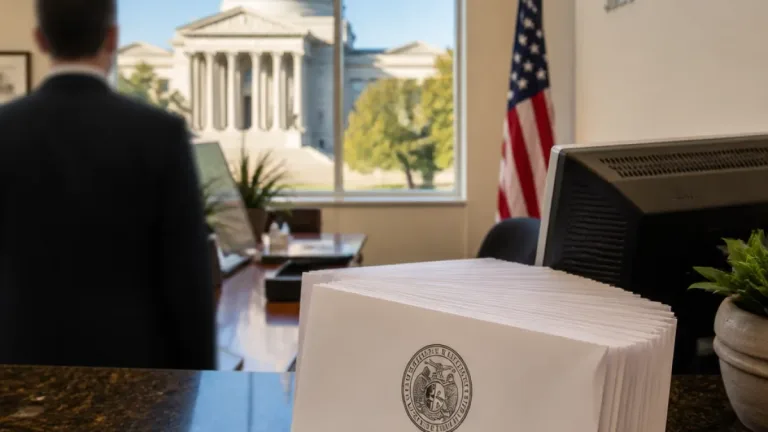
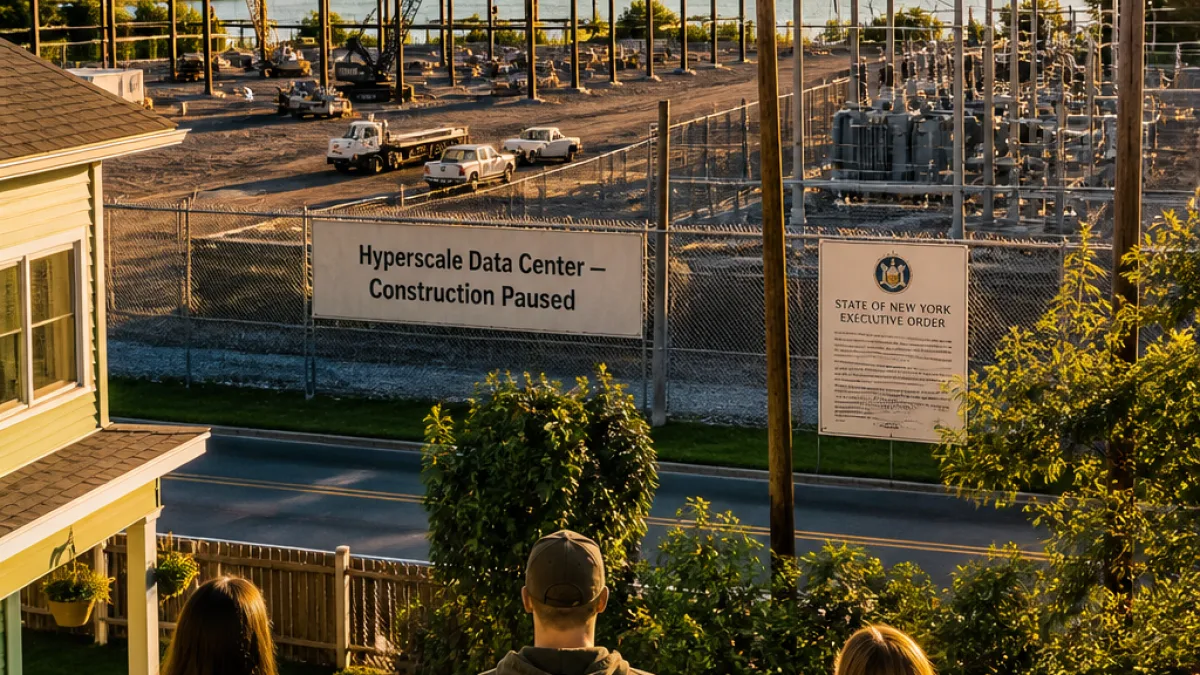
New York on Tuesday became the first state to impose a temporary ban on construction of new large-scale artificial intelligence data centers, as Governor Kathy Hochul signed an executive order halting projects that would draw 50 megawatts or more of power for up to one year.
Governor cites strain on grid and rising consumer costs
Speaking in New York City, the governor framed the move as a response to what she called an unprecedented economic and infrastructure challenge. Officials said hyperscale AI facilities consume enormous amounts of electricity and have the potential to outpace the state’s grid capacity. The announcement also highlighted the sharp rise in residential energy costs across the state, noting average prices climbed nearly 68 percent since 2019.
The executive order will pause approvals and construction of new data centers meeting the 50-megawatt threshold while state agencies study impacts and develop policy recommendations. The state did not set a specific end date beyond the one-year maximum allowed by the order.
Local backlash and environmental concerns
Community opposition has grown in towns where proposals have surfaced, including Lansing and East Fishkill. Environmental advocates have argued that hyperscale centers can strain not only power supplies but also water resources and local infrastructure.
- Threshold for moratorium: 50 megawatts or more
- Duration: up to one year
- Primary concerns cited: grid capacity, rising household electric costs, water and environmental impacts
"This one-year moratorium is a huge step forward for New York communities fighting against an onslaught of massive data center proposals," said Laura Shindell, director of New York State's Food & Water Watch.
What this means for projects and communities
The moratorium effectively freezes new large-scale proposals while the state evaluates siting standards, grid impacts and protections for ratepayers and natural resources. For communities that have recently mobilized against proposed facilities, the pause offers time for local planning boards, utilities and state regulators to coordinate more closely with residents.
Developers and local governments will need to watch forthcoming guidance from state agencies. The order creates a window for policymakers to consider measures such as stricter siting rules, requirements for water use mitigation, and ways to ensure that electricity demand from new facilities does not drive up costs for neighbors.
Fast facts
| Item | Detail |
|---|---|
| Power threshold | 50 megawatts |
| Length of pause | Up to one year |
| Reported residential electric price change since 2019 | Nearly 68% increase |
State and local officials now face practical questions about how to balance economic development and new-technology investment with long-term infrastructure planning and community health. For New Yorkers concerned about electric bills, water resources, and local land use, this executive order signals a significant policy shift and a chance for broader public input.
City and town officials, utilities and industry groups are expected to respond in the coming days with requests for clarification on the order’s scope and on how current projects — if any exceed the threshold — will be handled during the pause.